

Warli figures appear in museum gift shops in Europe, on walls at international design fairs, and in branding campaigns meant to signal “authenticity” to a global audience. Madhubani motifs surface in fashion collaborations abroad, stripped of text and context, translated into pattern. Pattachitra turns up in curated exhibitions on “traditional art,” far from the communities that practise it.
Indian folk art has always travelled. What’s different now is the scale, the polish, and the prestige of the spaces it moves through. The recent resurgence has brought visibility, funding, and institutional attention. But the artists who created these forms are far less mobile.
What’s unfolding is often described as a revival. In practice, it looks more like a redistribution of cultural value where visibility increases and control diminishes. Folk art enters international circuits as a premium aesthetic, while the people who have sustained it over generations remain largely absent from the spaces that now define its worth.
This imbalance becomes most visible outside India.
From 2026 to 2028, a major collaboration between the Indian Council for Cultural Relations (ICCR) and the Museum of Sacred Art (MOSA) in Belgium will bring Indian folk and tribal art to Europe through at least five exhibitions a year across seven countries, including Germany, France, Italy, and Hungary. Drawn from MOSA’s collection of over 1,500 works, the initiative is framed as a celebration of “authentic” traditions. It reflects a growing appetite among European institutions for Indian folk art, positioned as cultural heritage with global relevance.
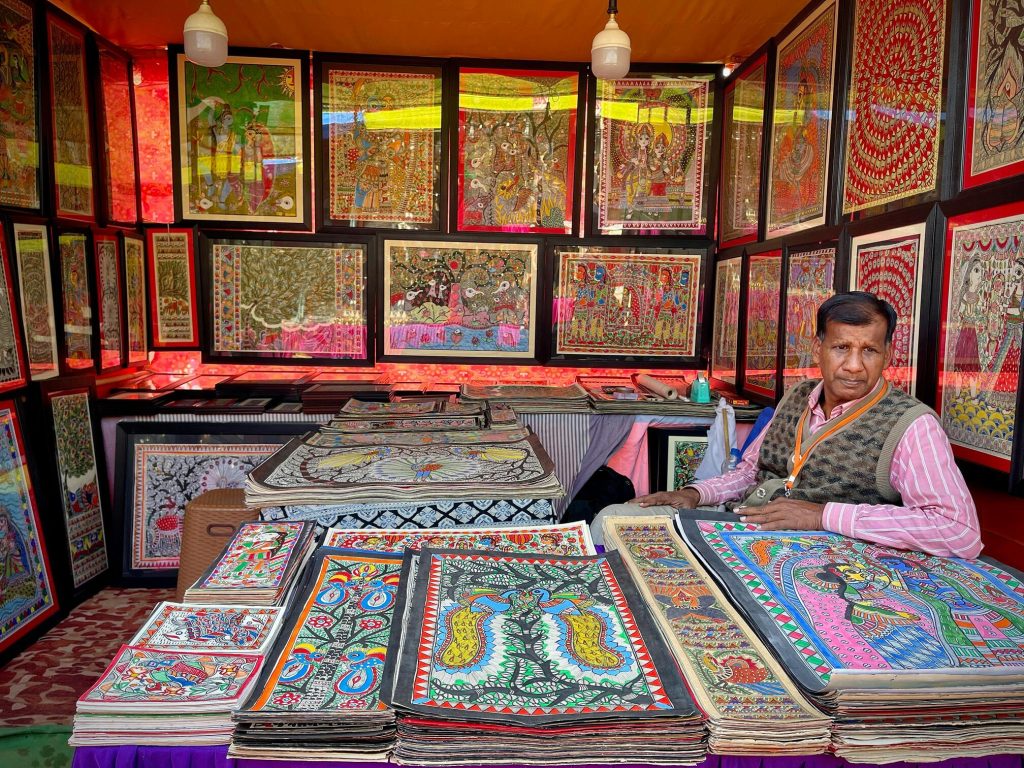
Similar moments are unfolding elsewhere. In London, the Runjeet Singh Gallery is exhibiting a collection of Mithila paintings acquired directly from artists in the 1970s as part of Asian Art in London. Online, international folk art exhibitions organised by foundations working with Madhubani and tribal artists have begun reaching global audiences. Warli artists such as Mayur and Tushar Vayeda have been featured in exhibitions across Europe, Japan, and Australia.
The work is travelling widely. The terms under which it travels are less clear.
In global exhibitions and design showcases, Indian folk traditions are often framed through curatorial language that emphasises heritage, symbolism, and timelessness. The art is presented as collective and ancient rather than authored and contemporary. That framing makes the work legible to international audiences, but it also erases the conditions under which artists might assert rights, negotiate credit, or influence how their work is reproduced.
Warli art offers a clear example. Developed by the Warli Adivasi community in Maharashtra, its visual language of stick figures, rituals, and everyday life has become a global shorthand for “indigenous India.” Designers and institutions often collaborate with Indian studios or illustrators to reinterpret the style for international markets. The original artists are rarely part of those transactions.
When artists are included, it is often through NGOs or intermediaries who control access, pricing, and timelines. While the work moves, the credit often does not.
The same pattern repeats with Madhubani. Once painted on walls and floors in Mithila using natural pigments, the form is now reproduced across textiles, stationery, and décor for export markets. Attribution is frequently reduced to “inspired by,” a phrase that dissolves responsibility. Inspiration carries no obligation to compensate, credit, or consult.
Artists are not unaware of this imbalance. “It’s not that people don’t want to work with us,” one Mithila painter told The Moment. “They just want us cheap. And quiet.”
This is not a uniquely Indian story. Indigenous Australian dot paintings circulate widely through international galleries and museum shops, even as Aboriginal artists continue to contest how their work is licensed and reproduced. West African textile traditions like adire are globally popular as “tie-dye,” their origins flattened into trend. In the United States, Native American motifs have long been absorbed into fashion and homeware under the banner of “Southwestern” design, often without collaboration or consent.
Across contexts, the pattern is familiar, communal art forms move easily through global markets, while the communities that sustain them remain peripheral to the value created.
What makes the current moment distinct is the status of the platforms involved. Folk art is no longer confined to tourist markets or state-sponsored exhibitions. It is being absorbed into the global premium economy, where cultural difference functions as distinction. Museum stores, fashion houses, and international festivals benefit from the aura of tradition without fully engaging with questions of authorship, labour, or rights.
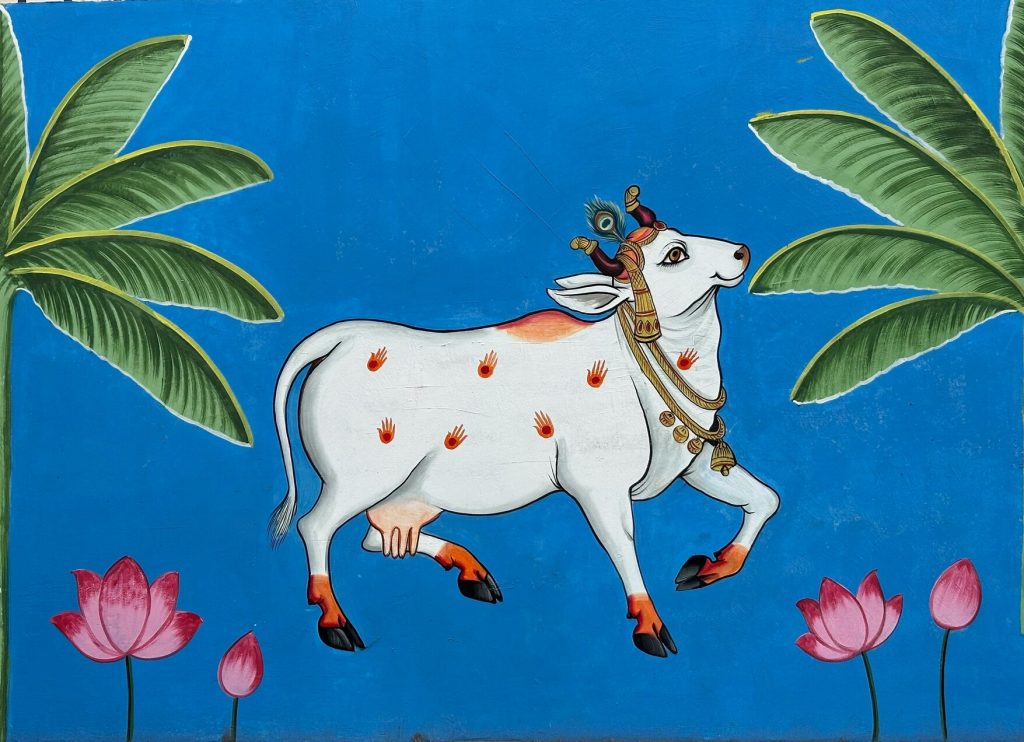
There are exceptions. Some organisations insist on naming artists, negotiating fair compensation, and sustaining long-term relationships rather than one-off commissions. Groups like Dastkar and artist-led collectives have pushed back against extractive models, while newer platforms are experimenting with licensing, profit-sharing, and direct representation. But these remain marginal within a system that continues to reward speed, scalability, and aesthetic flexibility over accountability.
The problem is not that Indian folk art is being seen globally. Visibility is not the enemy. The problem is that the structures governing its circulation were never designed to include artists as agents.
What we are calling a revival, then, is uneven by design. The forms travel, the value accrues, but the artists remain asked to perform continuity without power. Until that imbalance is taken seriously, Indian folk art will continue to be admired abroad while its makers remain peripheral to the success of their own work.
Folk art is moving faster than the systems meant to protect the people who make it. That gap, more than the revival itself, is perhaps the story of this moment.





Leave a Reply