Blog

  • Mumbai: The Ultimate City of Reinvention

    Core Memory, Colaba

    1992, outside the Taj Mahal Palace Hotel in Colaba. I wore an oversized Fresh Prince of Bel-Air T-shirt, Nirvana blasting through a ruby-red Walkman. At the curb, a vada pav stall hissed and smoked.

    My mother, knowing my stomach too well, said don’t; my father’s nod said otherwise. I bit in anyway: chilli, potato, butter, newspaper ink bleeding into my fingertips. We walked the frontage of the Taj while they watched me take the city in.

    Bombay, because that’s the city of my earliest memories, was intoxicating even then, a place where five-star hotels and pavement stalls shared the same stretch of sea-facing road, where a kid like me could taste both in a single bite.

    That night, paying for my bravado in chilli and butter, I knew this was a core memory. Not a judgment on my mother’s caution, a reminder that Bombay rewards small rebellions, the kind that stay with you long after the moment has passed.

    That was my first lesson in Bombay: you could step between worlds here, and no one asked you to choose.


    “
    The world was arriving, but on Bombay’s terms.
    ”


    Enhanced by AI

    When the World Walked In

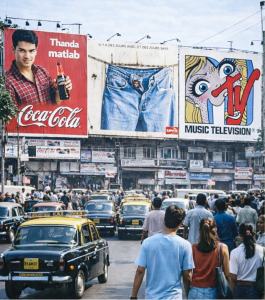
    In 1991, India’s economic reforms swung the doors open, and the city became the stage where the new world walked in. I was still in school then, old enough to notice that the city’s soundtrack was changing, that the hum of my childhood was giving way to something sharper, more outward-looking, and unmistakably global.

    Satellite TV antennas began appearing across terraces, and by 1992, MTV India had arrived, beaming global pop culture into homes that had, until recently, been tuned to grainy state broadcasts. Advertising shifted almost overnight. Pepsi and Coca-Cola were suddenly everywhere, and international brands like Levi’s began appearing in markets like Colaba Causeway.

    MTV played grunge, hip-hop, and Bollywood remixes into the same living rooms. It felt new, slightly chaotic, and impossible to ignore. 

    Music videos changed how people dressed. Foreign soaps introduced new accents and ways of speaking. Shops began stocking brands that felt, at the time, unmistakably global. But the city didn’t copy. It adapted. What arrived foreign didn’t stay that way for long.

    Liberalization wasn’t an abstract policy. You could see it in everyday life.

    Bombay began to resemble a new India: cable wires looping across terraces, film posters layered over political slogans, a city mid-transition but entirely sure of its direction.

    The world was arriving, but on Bombay’s terms.

    Once you’ve watched the city take in the world like that, you start to notice how often people here are changing direction, in what they wear, what they watch, and what they begin to want for themselves.


    The City on Screen
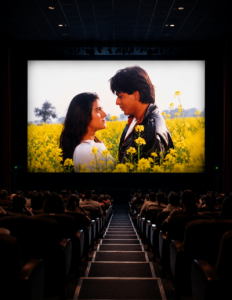
    Photographs taken by the late Danish Siddiqui

    Cinema has always shaped how Mumbai sees itself. Long before I understood policy or economics, I understood something about the city through its films. Growing up, it came to me through what I watched and heard, songs, scenes, fragments that travelled far beyond the screen.

    In Mumbai, what appears in film doesn’t stay contained for long. It slips quickly into popular culture, into the music people play, into everyday references, and into the way a film lingers in the city long after it leaves theatres.

    What people watched didn’t stay on screen for long. It showed up in how people dressed, spoke, and carried themselves.

    In Mumbai, films sit close to everyday life. They influence taste, language, and ambition in ways that are easy to spot if you’re paying attention.

    New films arrive every week, part of the 1,600 to 2,000 films India produces each year, more than any other country. The industry is valued at nearly ₹200 billion, or $2.4 billion, and sells more than 2.5 billion cinema tickets annually, far surpassing Hollywood. But its influence goes beyond box office numbers.

    From Leicester Square to Jackson Heights, the Indian diaspora has carried Bombay’s cinema into living rooms and local theatres across the world. A Mumbai film screens in Toronto, a wedding sequence is remixed in Nairobi, a premiere draws queues in Dubai. Over time, these stories travel back, shaped by the audiences who watched them.

    Take Dilwale Dulhania Le Jayenge. Still playing at Maratha Mandir decades later, it became more than a blockbuster. It became a habit. Generations kept returning, a sign that in a city defined by change, the theatre could offer something familiar.

    You could see the influence in small ways. A song picked up quickly. A style repeated across neighborhoods. A line from a film turning up in everyday conversation.

    Mumbai and its cinema have grown alongside each other. One reflects the city as it is. The other quietly shapes what it becomes.


    Imagination for Sale

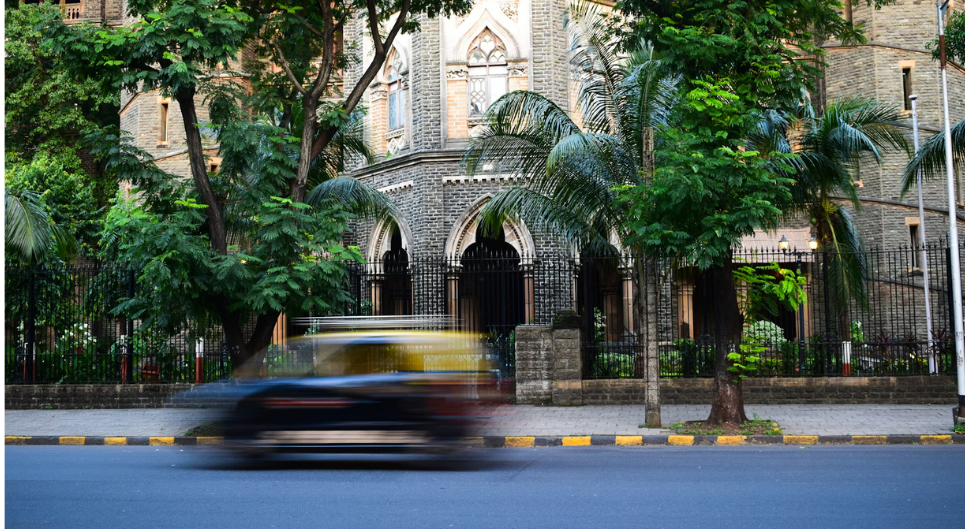
    By the 1980s and 1990s, South Bombay’s agencies were working with global clients while speaking directly to Indian audiences. Campaigns moved easily between Hindi, Marathi, and Hinglish, and began shaping what people noticed, wanted, and recognized.

    Television entered almost every living room, bringing soap operas, music videos, and commercials into daily routine. What people watched at night showed up the next day in conversation, in clothing, and in what shops chose to stock. Indian films and television also travelled abroad, reaching Indian communities overseas and extending Bombay’s cultural reach.

    Advertising didn’t create ambition here. It gave the city a new language, one people could see and respond to.

    Mumbai’s energy came from its people: Koli fisherfolk, Gujarati traders, Parsi entrepreneurs, Maharashtrian merchants and mill workers, and waves of North and South Indian immigrants. Over time, business and culture grew together until it was hard to separate one from the other.


    “
    From Leicester Square to Jackson Heights, the Indian diaspora has carried Bombay’s cinema into living rooms and local theatres across the world.
    ”


    The Many Lives of Mumbai

    Neighborhoods carry their own signals. In a members’ club in a northern suburb, film directors, screenwriters, and lyricists sit around in thick black Karan Johar–style glasses, part fashion, part shorthand for the world they belong to. In the same place, by day, a young woman works the front desk, managing members and conversations. By night, she heads to dance rehearsals, preparing for her stage debut in December.

    Across town in Kala Ghoda, Yazdani Bakery fills up each morning with bun maska and chai. The tables are worn, the pace is unhurried, and the same routines play out day after day. Some parts of the city change quickly. Others stay exactly as they are.



    Mumbai Dreaming

    What draws people to Mumbai is the feeling that you can begin again, even if you don’t fully know how.

    My flatmate trained as a behavioural economist in London, working with data sets and regression models. A few months ago, she was in Kashmir, between Dal Lake and Gulmarg, filming her first feature. That decision opened up a new way of living for her, and along the way, it set an entire chain of work in motion, from lyricists and composers to choreographers, managers, and full crews.

    And she isn’t alone. A former banker opens a restaurant. A copywriter starts a fashion label. A family-business heir picks up a camera and stays with it. People here allow themselves to try something else, and it rarely needs explaining.

    Cinema has always captured this about the city. Wake Up Sid got it right in its monsoons, its late nights, and the feeling of figuring things out as you go. It showed a version of Bombay that feels familiar if you’ve spent enough time here.

    The Coastal Road has begun to redraw parts of the city, changing how it moves and connects. Like everything before it, the city absorbs the change and keeps moving.

    Some things make sense only much later. You spend years understanding what you first felt instinctively. For me, that feeling began in Bombay, with that first bite. I’ve come back to the city because something in me was always drawn here, something I recognized long before I could explain it. Being here now, it feels less like a return and more like picking up a thread I never really left.

    Epilogue

    For Ipsitaa, Vishal, and Sayali, for their persistence, and for reminding us what this city makes possible.

  • The Quiet Revival of Indian Folk Art

    Warli figures appear in museum gift shops in Europe, on walls at international design fairs, and in branding campaigns meant to signal ‘authenticity’ to a global audience. Madhubani motifs surface in fashion collaborations abroad, stripped of text and context, translated into mere pattern. Pattachitra turns up in curated exhibitions on ‘traditional art’, far from the communities that practise it.

    Indian folk art has always traveled. What’s different now is the scale, the polish, and the prestige of the spaces it moves through. This recent resurgence has brought visibility, funding, and institutional attention to the art form. But the artists who created them are far less visible.

    Privileged people often describe what’s unfolding as a revival. In practice, it looks more like a redistribution of cultural value where visibility increases and control diminishes. Folk art enters international circuits as a premium aesthetic, while the people who have sustained it over generations remain largely absent from the spaces that now define its worth. 

    This imbalance becomes most visible outside India.

    From 2026 to 2028, a major collaboration between the Indian Council for Cultural Relations (ICCR) and the Museum of Sacred Art (MOSA) in Belgium will bring Indian folk and tribal art to Europe through at least five exhibitions a year across seven countries, including Germany, France, Italy, and Hungary. Drawn from MOSA’s collection of over 1,500 works, the initiative is framed as a celebration of ‘authentic’ traditions. It reflects a growing appetite among European institutions for Indian folk art, positioned as cultural heritage with global relevance.


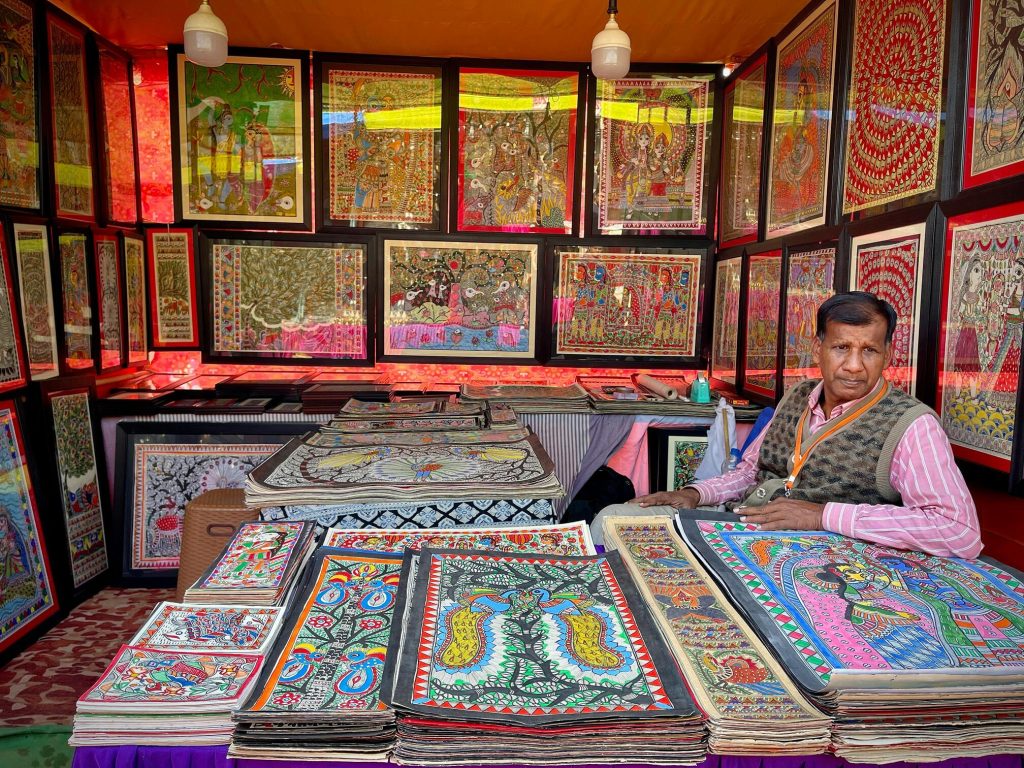
    An art stall display with Madhubani paintings | Image Credit: Nishant Aneja on Pexels


    Similar initiatives are unfolding elsewhere. In London, the Runjeet Singh Gallery is exhibiting a collection of Mithila paintings acquired directly from artists in the 1970s as part of Asian Art in London. Online, international folk art exhibitions organised by foundations working with Madhubani and tribal artists have begun reaching global audiences. Warli artists such as Mayur and Tushar Vayeda have been featured in exhibitions across Europe, Japan, and Australia.

    The work is travelling widely. The terms under which it travels are less clear.

    In global exhibitions and design showcases, Indian folk traditions are often framed through curatorial language that emphasises heritage, symbolism, and timelessness. The art is presented as collective and ancient rather than authored and contemporary. That framing makes the work legible to international audiences, but it also erases the conditions under which artists might assert rights, negotiate credit, or influence how their work is reproduced.

    Warli art offers a clear example. Developed by the Warli Adivasi community in Maharashtra, its visual language of stick figures, rituals, and everyday life has become a global shorthand for ‘indigenous India’. Designers and institutions often collaborate with Indian studios or illustrators to reinterpret the style for international markets. The original artists are rarely part of those transactions.

    When artists are included, it is often through NGOs or intermediaries who control access, pricing, and timelines. While the work moves, the credit often does not.


    “
    Folk art is no longer confined to tourist markets or state-sponsored exhibitions. It is being absorbed into the global premium economy, where cultural difference functions as distinction.
    ”


    The same pattern repeats with Madhubani. Once painted on walls and floors in Mithila using natural pigments, the form is now reproduced across textiles, stationery, and décor for export markets. Attribution is frequently reduced to ‘inspired by’, a phrase that dissolves responsibility. Inspiration carries no obligation to compensate, credit, or consult.

    Artists are not unaware of this imbalance. “It’s not that people don’t want to work with us,” one Mithila painter told The Moment. “They just want us cheap. And quiet.”

    This is not a uniquely Indian story. First Nations Australian dot paintings circulate widely through international galleries and museum shops, even as the artists continue to contest how their work is licensed and reproduced. West African textile traditions like adire are globally popular as ‘tie-dye’, their origins flattened into trend. In the United States, Indigenous American motifs have long been absorbed into fashion and homeware under the banner of ‘Southwestern’ design, often without collaboration or consent.

    Across contexts, the pattern is familiar, communal art forms move easily through global markets, while the communities that sustain them remain peripheral to the value created.

    What makes the current moment distinct is the status of the platforms involved. Folk art is no longer confined to tourist markets or state-sponsored exhibitions. It is being absorbed into the global premium economy, where cultural difference functions as distinction. 


    An example of a Pichwai painting | Image Credit: oskar holm on Unsplash


    There are exceptions. Some organizations insist on naming artists, negotiating fair compensation, and sustaining long-term relationships rather than one-off commissions. Groups like Dastkar and artist-led collectives have pushed back against extractive models, while newer platforms are experimenting with licensing, profit-sharing, and direct representation. But these remain marginal within a system that continues to reward speed, scalability, and aesthetic flexibility over accountability.

    The problem is not the global visibility of Indian folk art. The problem is that the structures governing its circulation were never designed to include artists as agents.

    What we are calling a revival, then, is uneven by design. The forms travel, the value accrues, but the artists remain asked to perform without power. Until that imbalance is taken seriously, Indian folk art will continue to be admired abroad while its makers remain peripheral to its success.

    Folk art is moving faster than the systems meant to protect the people who make it. That gap, more than the revival itself, is perhaps the story of this moment.

  • When AI Starts Speaking in Vernacular

     Imagine a woman in a government hospital in Bhopal, or Chennai, or Patna, trying to access a medical scheme she is entitled to. The online medical portal and the information about the scheme both exist, but the interface assumes a formal, stylized version of Hindi she does not speak, or Tamil in a register that belongs to textbooks rather than the street she lives on. The system is technically functional, but for her, it is a wall. 

    This is not a story about access to technology. It is a story about whether technology, once accessed, understands you at all.

    Language, always a significant feature of AI, becomes crucial the moment it moves into healthcare, education, and public services. At that point, it helps to accelerate communication between two speakers of different languages. And yet, like the woman in Bhopal (or Chennai, or Patna), that interface does not really speak their language.

    This happens because AI is trained only on one slice of society’s communications – from textbooks to television, all of it written, not verbal. A model trained on dictionaries can translate the words, but a model trained on lived language and unscripted human experience understands what the words actually signify — useful when translating metaphors, for example. 

    At one level then, this is about linguistic irregularities. But the implications are far wider —  it becomes the means by which people are either recognized by the state or invisible to it. That gap, between words and meaning, between spoken and written language, is where millions of people fall through. It is the predictable outcome of building at speed, at scale, with the data that already exists in large quantities, which is to say the data produced by populations that were already online, in languages that were already dominant. That dominant language is of course, English. Any language model adapted from English carries its assumptions into every language database, its grammatical logic, its ways of organizing meaning, its blind spots.


    A model trained on lived languages can understand context | Image Credit: Solen Feyissa on Unsplash


    In India, the scale of the problem is especially enormous. With 22 official languages, and hundreds of dialects, linguistic exclusion is not a liminal problem; it is the default condition of most digital systems. The government’s Bhashini program, the National Language Translation Mission launched in 2022, is an attempt to change that. The program builds open datasets and translation tools that work directly with Indian languages rather than routing everything through English first. 

    Similarly, Sarvam AI, a Bengaluru-based company founded in 2023, AI4Bharat (built by IIT Chennai’s Research Lab) and BharatGen are building large language models trained from the ground up on Indian data, in Indian languages. 

    Karya pays rural Indian workers, many of them women in communities with limited economic opportunity, to generate and annotate language data in over fifty Indian languages. Workers own their data and receive royalties from its use. The datasets they build are the raw material from which models that understand their languages will eventually be trained.

    What Sarvam, Karya and Bhashini are building is not just a technical correction. It is an argument about whose starting point counts, and at what scale that argument matters. India has more people living outside English and standard Hindi than most countries have people. If the systems being built now the technology doesdo not account for that, they it will not fail quietly; they it will fail at population scale, in hospitals and classrooms and government offices, for decades.

    The same solutions are being looked at elsewhere, in different countries and different languages.

    In Latin America, LatamGPT, led by Chile’s National Centre for Artificial Intelligence, with support from governments, universities, and civil organizations across 15 countries, is building a model trained on Latin American data and contexts. The goal is to build systems that understand how language is spoken across a region where Spanish varies sharply by country and class, and where millions speak Indigenous languages, like Guaraní in Paraguay, Nahuatl in Mexico, Mapudungun among Mapuche communities in Chile and Argentina. 


    “
    When machines begin to understand how people actually speak, they don’t just talk differently. They also listen differently.
    ”


    In Africa, Masakhane, whose name means “we build together” in isiZulu, is a grassroots research community working to build open, community-owned datasets for African languages, driven by the principle that Africans should own the data that represents them.

    Much of the world’s linguistic richness is not archived neatly online. It exists in oral histories, street theatre, voice notes, road signs, and the particular way a sentence gets finished in a specific neighborhood of a specific city. Turning that into training data is slow and complicated, raising questions of consent and ownership that scraping the public internet does not. Models such as Masakhane and Karya treat those questions as central rather than incidental, which is why their work is slower and messier than the dominant model, and more accountable to the people whose language it represents.

    When machines learn to understand how people actually speak, they do not just talk differently; they also listen differently. A healthcare system (such as the Microsoft-powered ASHABot) that understands colloquial Marathi can hear what a patient is actually describing. An education platform that works in Bhojpuri or Gondi can reach children in the language they think in. A government portal that speaks the way people speak can be used by the woman in the office in Bhopal, who is entitled to what it offers and should not have to translate herself to claim it. 

    The question of which languages machines learn to understand is also the question of which people the future is being built for. That is not a technical question. 

  • Where Did All Our Third Places Go?

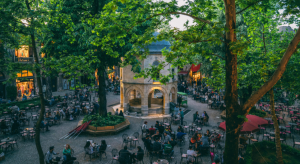
    Consider Shivaji Park. Every evening, elderly men walked its perimeter. Teenagers practised cricket with taped tennis balls. Women sat on the grass and talked. No tickets. No programming. No expectation that anyone needed to be doing something productive.

    Similar scenes existed elsewhere. In New York, urban activist Jane Jacobs wrote about Washington Square Park in the 1950s and 60s as a place people passed through, paused in, argued in, lingered in. In Seoul, neighbourhood parks and local jjimjilbangs functioned as everyday social infrastructure well before the city’s current emphasis on speed, efficiency, and twenty four-hour productivity. These spaces were not neutral or perfect, but they shared a defining feature: anyone could be there without explanation.

    That has become increasingly rare.


    Image Credit: Sami TÜRK on Pexels


    In 1989, American sociologist Ray Oldenburg gave these environments a name in The Great Good Place. He called them ‘third places’: informal, low-cost spaces outside home and work where people could gather without obligation. Oldenburg’s argument was not sentimental. What made third places work was not charm or design, but accessibility. They encouraged idleness. They allowed regulars without requiring paid memberships. They made room for people whose only reason for showing up was time.

    What has changed since then is not simply taste. It is structure.

    Most third places did not disappear overnight. They were slowly made inhospitable. In Mumbai, Irani cafés like Café Military and Café Ideal once functioned as all-day linger spaces, especially for people who had nowhere else to go between shifts or errands. Rising rents, shrinking margins, and redevelopment pressures have since pushed cafés toward faster turnover. Sitting too long now carries an implicit cost.

    In New York, public seating has been systematically reduced or redesigned. Benches are removed, divided, or made deliberately uncomfortable. Parks that once absorbed unstructured social life are increasingly surveilled, policed, or programmed. The goal is not gathering, but control. Space that does not circulate people efficiently or generate revenue is treated as a problem to be managed.

    This is not accidental. Cities over the last three decades have been redesigned around transit, productivity, and risk mitigation. Loitering becomes a security concern. Lingering becomes inefficiency. Free time, once an ordinary and necessary part of life, starts to read as indulgence.


    “
    So the question is not whether third places mattered. They did. The harder question is why we have become so comfortable designing cities that no longer tolerate them.
    ”


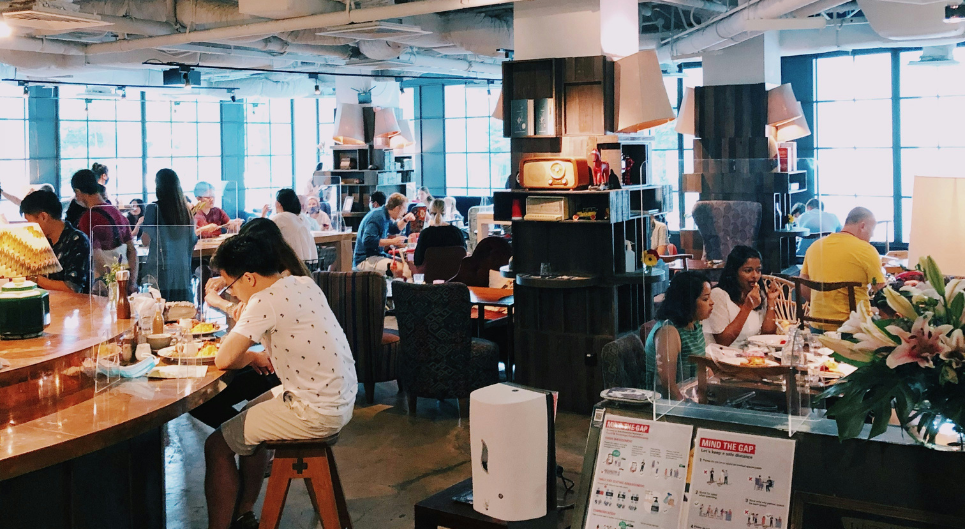
    The language follows the logic. ‘Third place’ now appears in real estate decks and brand strategy documents, used to describe co-working cafés, members’ clubs, or lifestyle lounges. These spaces promise community, but only through access. You can belong, but briefly. You can stay, but not for free. Presence is permitted only when it can be justified, monetized, or optimized.

    Functionally, this changes how social life feels.

    When cafés double as offices, sitting without a laptop becomes suspect. When libraries close or shrink, quiet public refuge disappears. When promenades are designed as backdrops for events and content, stillness feels out of place. The value of doing nothing together erodes, replaced by the expectation that time in public must produce something: work, networking, fitness.

    The pandemic accelerated this shift, but it did not invent it. Lockdowns disrupted social reflexes, and the return to public life came with new rules. Interaction felt safer when it was structured: a class, a workshop, a ticketed gathering. 

    What gets lost in this transition is difficult to measure, which is why it is easy to dismiss. It is not just space, but familiarity. The quiet recognition of seeing the same strangers every week. The trust that forms without conversation. These are social capacities that emerge slowly, and only in places where people are allowed to exist without performing usefulness.


    Image Credit: CHUTTERSNAP on Unsplash


    People sense this loss, even if they do not name it. That is why new, improvised versions keep appearing. Community fridges on street corners. Zine fairs in half-empty malls. Chai circles in parking lots. Skate crews occupying forgotten patches of city. These are not nostalgic recreations. They are workarounds, evidence that the desire for unstructured public life persists even as the conditions that once supported it are withdrawn.

    So the question is not whether third places mattered. They did. The harder question is why we have become so comfortable designing cities that no longer tolerate them.

    Not everything needs to be activated. Not every gathering needs a theme. Sometimes what is missing is not innovation, but permission: a place where you can sit, take up space, and not be asked what you are doing there.

  • The Cool Roof Revolution: How Cities Are Rediscovering Indigenous Methods to Combat Heat

    Step outside in most cities today and you’ll feel it immediately. The kind of heat that clings to walls, radiates from pavements, and turns your own home into an oven by noon. An urban summer is no longer just inconvenient, for most citizens it is unbearable. In many places, it’s becoming a structural problem, one that modern architecture and infrastructure were never designed to handle.

    As temperatures rise, cities have been looking for solutions. Air conditioning helps, but only if you can afford it, power it, and keep the grid from collapsing. So urban planners, architects and governments are being forced to ask a bigger question — what if the problem isn’t that we lack technology, but that we forgot how to build for heat in the first place?

    That question has led many of them back to the roof.


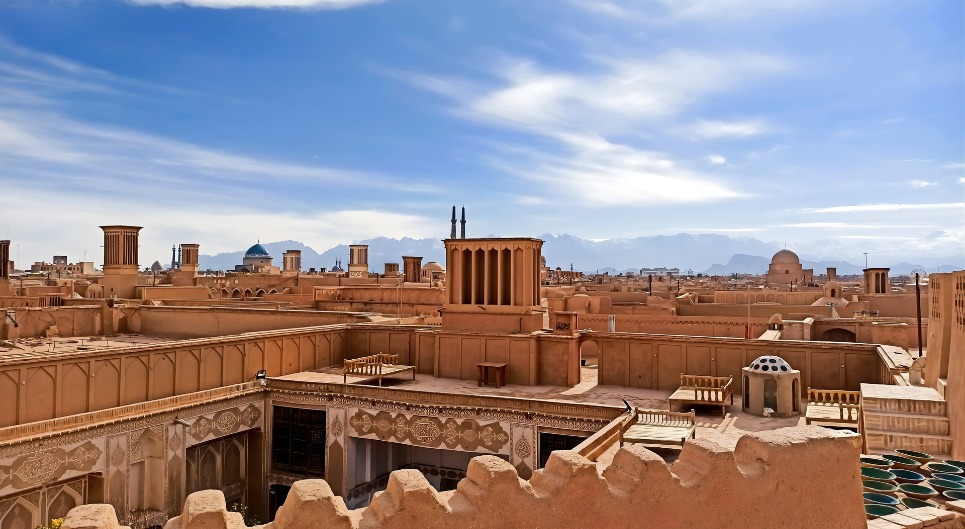
    A view of buildings in Yazd, Iran | Image Credit: Dad hotel on Unsplash


    In New York City, more than a million square feet of rooftops have been coated with reflective paint in recent years. The idea is simple. Lighter surfaces absorb less heat, which keeps buildings cooler and reduces the need for energy-intensive air conditioning. For residents without reliable cooling, that difference can be the line between discomfort and danger.

    But what’s most striking is how old this idea is.

    Long before ‘cool roofs’ entered climate policy documents, communities living with extreme heat had already figured out how to manage it. In parts of Rajasthan, lime-coated roofs reflected sunlight, keeping homes habitable through brutal summers. Across the Mediterranean, whitewashed buildings served the same function. These choices were practical responses to climate; only much later did we start viewing them as stylistic ones. Mud-brick construction in countries like Yemen and Mali insulates against extreme temperatures. Mashrabiya screens in Cairo filter sunlight while allowing ventilation. Stilted homes in parts of Southeast Asia lift living spaces above heat-trapping ground. None of these were designed with climate models in mind. They emerged from lived experience.

    This was the kind of design knowledge that was sidelined for decades. Contemporary construction favored speed, uniform materials, glass frontage, and darker surfaces that tended to trap heat. Cooling became something external machinery was expected to solve.

    Now, as those machines strain under rising temperatures, the older community logic is resurfacing. 

    Only recently has modern research begun to catch up. Studies now show that widespread use of reflective materials can lower ambient urban temperatures by up to two degrees Celsius, reduce cooling loads, and lessen health risks during heatwaves. What was once treated as informal knowledge is being validated in technical terms.

    In Tamil Nadu, state-led cool roof programmes have moved beyond small pilots. Hundreds of government schools have been retrofitted with heat-reflective coatings, not as an experiment, but as policy. In earlier pilots in Chennai and Perumbakkam, indoor temperatures dropped by as much as 3 to 8 degrees Celsius. Classrooms became bearable again, without additional electricity demand.

    In Ahmedabad, experimental cool roof projects in informal settlements have painted tin roofs with reflective coatings. The results are modest but meaningful, indoor temperatures fall, residents sleep better, and electricity use drops. No futuristic materials. No massive infrastructure overhaul.

    Just paint, applied with intent.


    “
    Studies now show that widespread use of reflective materials can lower ambient urban temperatures by up to two degrees Celsius, reduce cooling loads, and lessen health risks during heatwaves. What was once treated as informal knowledge is being validated in technical terms.
    ”


    The significance of this isn’t just technical. It marks a shift in which solutions are being valued. Instead of chasing expensive, high-tech fixes, governments are beginning to recognise that low-cost, passive interventions can make a measurable difference at scale.

    These old-school climate solutions are now gaining traction in some countries. In Tokyo, the resurfacing of uchimizu, sprinkling water on streets during peak heat, reflects a similar impulse to cool cities. In Mexico City, community-led lime washing programmes reduced heat absorption in dense neighbourhoods. In parts of the American Southwest, urban design guidelines are starting to acknowledge principles long embedded in Indigenous desert architecture including shade, reflectivity, and airflow matter.

    These approaches share a common trait. They work with the climate rather than against it.


    Cool roofs are also a feature of architecture in Santorini, Greece | Image Credit: iSAW Company on Unsplash


    There is an uncomfortable irony here. Many of these methods come from regions that were historically dismissed as ‘backward’ or ‘underdeveloped’. Their building practices were ignored in favour of globalized design norms, often from countries with colder climates, that assumed energy would always be cheap and plentiful.

    As that assumption collapses, cities are being forced to reconsider.

    These are not new ideas. They are responses shaped by necessity, refined over generations, and set aside too quickly. The solutions have been here all along. What’s changing is how we are looking at them.

  • Cricket as Diplomacy: The Indian Premier League’s Global Power

    It starts with a toss but ends with a cultural takeover. The Indian Premier League, now in its seventeenth year, is more than just a sporting phenomenon. Over time, it’s become India’s most potent soft power tool. What began as a domestic T20 tournament has evolved into a slick, high-gloss spectacle that shapes how the world sees India: fast, chaotic, competitive, and endlessly entertaining.

    At a time when national identity is increasingly built through pop culture and media, the IPL operates as a shorthand for modern India. It’s not just the cricket that draws global attention — it’s the Bollywood-backed team ownerships, international player rosters, drone-shot stadium cinematics, and theme music that sounds like it belongs in an action film trailer. For millions abroad, this is India at its most visible — a nation where entertainment and ambition collide in dazzling colour.

    The numbers reflect that reach. The IPL is one of the most-watched sporting leagues in the world, with streaming deals stretching across continents. For international brands — from Saudi tourism boards to global soft drink giants — IPL sponsorships are a way to tap into India’s massive consumer base while aligning with the league’s aspirational sheen.


    “
    If Hollywood was America’s soft power in the 20th century, the IPL may be India’s in the 21st. It packages sport, celebrity, nationalism, and commerce into a single, irresistible export.
    ”


    But the IPL’s soft power isn’t just external. It also reflects India’s self-image. In the league’s aesthetic, we see a country willing to negotiate tradition and hypermodernity — cricket whites have been replaced with neon kits, devotional chants have been repurposed as crowd anthems, and local dialects have been woven into high-production promos. The IPL champions hustle culture, regional pride, and pan-Indian unity — all on a three-hour broadcast.

    That said, this cultural diplomacy comes with contradictions. The tournament’s embrace of spectacle can overshadow deeper conversations around labour rights, gender parity in sport, and access to resources. And while Indian players are front and centre, the tournament is still often run with a corporate logic that flattens regional nuance into easily marketable archetypes.


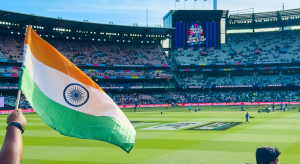
    Image Credit: Raunaq Sachdev on Pexels


    Still, if Hollywood was America’s soft power in the 20th century, the IPL may be India’s in the 21st. It packages sport, celebrity, nationalism, and commerce into a single, irresistible export. And whether you’re watching from Chennai or Chicago, one thing’s clear — this isn’t just about cricket anymore. It’s about image. And India knows exactly how to play the game.

  • The Body Is the Score

    It’s 7am and the gym is full. The sound of dumbbells clanking against racks and the whir of treadmills fill the lavender-diffuser-scented air. This place, one would imagine, would be riddled with athletes this early in the morning. But it’s not. It’s full of consultants, founders, and analysts lifting in silence before work. Later, these same people will appear in office corridors, on LinkedIn profile photos, and in business coverage, where fitness is increasingly framed as a marker of a way of life.

    Over the past year, a particular image has begun to circulate with unusual consistency. Coverage of toned arms and strength training now appears not only in lifestyle writing but in business reporting, fashion analysis, and workplace commentary. Fitness is increasingly framed as seriousness rather than hobby, discussed less as something you do and more as a way of structuring adult life. The shift shows up in where these bodies appear and how they are described. They are less about taste and more about what they seem to prove.


    Image credit: mileycyrus/Instagram


    People have always read bodies through the conditions around them. In societies where food was unreliable and physical labor constant, softness signals access to rest and resources rather than excess. So, in old portraits, bigger bodies lounging signaled social class and hierarchy. 

    In the late nineteenth and early twentieth centuries, physical fitness became tied to productivity, particularly in industrial economies and nationalist projects that linked strong bodies to efficiency, readiness, and strength. With time, consumption became easier and restraint more visible, so thinner frames came to be associated with self-control and moral discipline. Think about it, when you watch an old film, or even most cinema from the 90s, how many times did you see washboard abs? The way we perceive wellness and bodies is closely tied to economies and access. 

    That ideal has since shifted. The dominant language is no longer thinness, but strength.

    What feels distinct now is not that one body type dominates, but how directly fitness operates as a legible signal across social and professional life, particularly in environments like knowledge work where output is harder to measure and visible discipline becomes a proxy for reliability, a shift reinforced by the expansion of the fitness and wellness industry and the evolution of body ideals documented in historical timelines.


    “
    Fitness is increasingly framed as seriousness rather than hobby, discussed less as something you do and more as a way of structuring adult life.
    ”


    In 2026, fitness globally reads less as something personal and more as something public. Maintaining it depends on having time that can be rearranged and money that can be spent regularly. Strength training, supplements, recovery routines, wearables, and gym access all signal the same thing. It indicates that someone can afford to organize their life in this way. The body becomes a commodity.  

    This shift has accelerated alongside the expansion of digital work and social media. As professional identity becomes harder to measure through output alone, visible signals, like the body, become proxies for discipline, consistency, and control. A fit body has to be maintained and gaps show quickly. When routines slip or access disappears, the signal fades. What remains visible is not effort, but interruption.

    The structure of the market reflects this logic. The global fitness and wellness economy is now estimated at over 1.8 trillion dollars, built largely on subscriptions to gyms, fitness apps, coaching programs, and recurring purchases like supplements and equipment. Gyms, classes, supplements, training plans, and tracking tools all rely on the assumption that improvement is ongoing and that the work is never finished. There is always another metric to improve, another phase to begin, another version of the body to work toward. Goals move just enough to remain achievable, but never final. So, the incompleteness is not a failure of the system, it is what keeps people engaged. 


    This logic shows up in how these systems are designed. Progress is tracked, but never completed. Which is perhaps why body dysmorphia is not incidental to this economy. Bodies that fall outside the ideal are framed as unmanaged or lacking discipline, often without being named directly. These judgements move quietly through hiring decisions, dating preferences, media representation, and workplace norms, often without being acknowledged. Research on attractiveness bias has repeatedly shown that people perceived as fitter or more conventionally attractive are often assumed to be more competent, disciplined, and reliable, even in professional settings where those qualities have not actually been demonstrated. A body that signals control is read as reliability. A body that does not, can be read as risk. Stigma introduces that risk, and risk encourages continued spending.

    The costs show up elsewhere. Healthcare systems in the US deal with eating disorders, overtraining injuries, hormonal disruption, and long-term dissatisfaction. Mental health strain follows when bodies are constantly assessed and compared. These consequences are shared socially, while profit remains private. What individuals spend to maintain the signal is counted. What societies spend managing the fallout is not.

    The language surrounding fitness increasingly borrows from care and wellbeing. Rest is scheduled, recovery is tracked, and softness is acceptable only when it is intentional and temporary. The body starts to feel less like something you live in and more like something you oversee. Discomfort becomes something to be corrected or optimized. Rarely is it treated as an opportunity that prompts reflection on where these feelings are coming from.


    “
    Fitness is increasingly framed as seriousness rather than hobby, discussed less as something you do and more as a way of structuring adult life.
    ”


    None of this requires fitness itself to be harmful. Physical training offers strength, health, and community. What has changed is how thoroughly these practices have been absorbed into economic logic and repurposed as measures of worth. 

    Economics helps here because it helps this behavior make sense. In a moment marked by unstable work and fragile status, the body becomes one of the few things that can still be made to look consistent. It is visible, cumulative, and hard to maintain without resources. Which is perhaps why what can often read as discipline is a reflection of the pressure to appear reliable, controlled, and worth backing.

    This does not mean that only those with resources have strong or capable bodies. Manual laborers often have greater physical endurance and strength. What is being rewarded here is not strength itself, but a particular kind of managed, aestheticised fitness that signals control within a certain class context.

    Seen this way, fitness is less a measure of health than a language of value. It translates time, money, and control into something instantly visible and often unmissable. The question is not whether bodies should be cared for, but why this particular form of care has become so legible, and so rewarded. And once we know that better, it’s easy to see why this particular signal has become so useful now

  • ID, Please: Are We Moving Towards an Adults-Only Social Media?

    When Facebook first launched in 2004, it started as a social media platform for college students only. If your email ID had a .edu suffix, it won you eligibility. By the time Facebook went global in 2006, it allowed anyone over the age of 13 with a valid email address to access the platform.

    Two decades later, as many countries debate bans on social media access for children under the age of 16, the question that arises is this: do these bans mean social media is an adults-only space now? And if it is, what implications does that have on today’s internet culture? 

    The bans reveal deeper truths about how we define adulthood. We self-censor when we see children around us, hoping to not make a negative impression on a young person still feeling their way around the world. Will a child-free social media then impact censorship and self-censorship? In 2024, X (formerly Twitter) amended its policy to allow users to post ‘consensually produced’ mature content, including nudity and pornography. That might have opened the door to Grok being asked to digitally undress people. While women are perhaps the greatest victims of this, children too became targets. Will an adult-only platform then further empower users to make such problematic requests? (In India perhaps, this is now a moot point, since all adult content has been banned by the Indian government from March 2026.)


    If social media needs to be governed by age restrictions, we must also then question all content about or featuring children that is posted on these platforms. 

    After all, the core reason for most bans is to keep children safe from being exposed to harmful content and abuse online. The other reason is to place limits on their screen times, which have been on the up and up. But does that line of decision-making then impinge on the rights of children below 16? The bans seem to gesture at that age-old parenting position: only we know what’s best for you.

    The other concerns are practical. If the only security measure to verify age online is to enter your birth date, that’s an easy step for children to manipulate; it’s no different than using fake IDs and hoping to get into a bar. Reportedly, kids in the UK and Australia have admitted to entering fake birth years and drawing fake moustaches to make accounts on the sly. This sort of cheating will likely have a negative influence on children who are still learning socio-cultural concepts of trust and honesty.


    “
    If social media needs to be governed by age restrictions, we must also then question all content about or featuring children that is posted on these platforms.
    ”


    This restriction takes an interesting turn in patriarchal societies. In India, for instance, girls still face much greater social and cultural restrictions than boys. For many young girls, social media is the one democratized space where they can interact unrestricted with people who live outside of the social mores of their milieu. When such bans are enacted in India, it further empowers restrictive setups to keep girls and women off the internet altogether, all under the garb of doing it for ‘their safety’. Statistically, only 33.3% of women have ever reported using the internet in India, as opposed to 57.1% of men. With a large gender divide between urban and non-urban centers yet to be bridged, the ban may have more negatives than positives.

    On the other hand, shows like Adolescence very effectively depict the negative impact of children being influenced by the internet, especially in spaces that their parents are not actively monitoring. The show also touches on concepts of ‘the manosphere’, where adult men are the primary drivers of problematic content about being alpha males. While such content is harmful for children, these bans don’t quite consider the impact on other adults who might be equally malleable. Recent studies have shown that the adolescent phase of the brain lasts from the age of 9 to 32, which means that those even beyond the age of 16 might be susceptible to such harmful messaging. And so, while these bans imply trust in adult discernment, they also send out another message about adulthood to children: not all adults know better, but we’re the ones looking out for you.


    Yes, the world is watching with bated breath how these bans play out within the countries that have taken the first step, Australia being patient zero, in many ways. But when the onus continues to fall on the habits of users, rather than the growing ambit of the platforms and the need for them to take accountability on making the internet a safer place for all, it does bring into question who these bans are intended to serve.

    What they ultimately reveal is not just how we think about children online, but how much we overestimate adulthood itself.

  • The New Loneliness Market

    Open any major platform and a pattern appears. A stranger studies quietly on TikTok Live, a creator walks through a supermarket with viewers trailing behind, meditation apps offer modes that resemble shared presence, and AI companions send morning greetings. Productivity tools now include virtual coworkers. These features look like entertainment or efficiency hacks, yet they are built to give people the sense that someone is nearby.

    A decade ago, loneliness felt like an interior mood. Now it shapes product decisions across the tech industry. Companies have realised that users return more reliably when something feels companionable. The numbers reflect this shift. Low-interaction livestreams on TikTok have grown steadily over the past two years, AI companion apps have pulled in tens of millions of users around the world, and long, quiet study videos on YouTube continue to draw consistent viewing. The engagement holds even when very little is happening.

    The reasons stretch beyond technology. Remote work reduced daily contact, and many shared spaces either changed or disappeared. Cafés raised prices, libraries shortened hours, and neighbourhood spots became harder to maintain. A global survey in 2024 by Meta and Gallup reported that around one in five adults experiences frequent loneliness. It tracks with what people describe in their own lives. As familiar rhythms faded, they began looking for softer forms of connection that could slip into unpredictable days.


    Image Credit: Libby Penner on Unsplash


    AI accelerated the trend. Companion apps offer a feeling of steadiness without the weight of social performance. Conversations take place at a pace people can manage, which often makes them easier than real ones. The appeal here is quiet. Many users are not searching for romance or fantasy. They want acknowledgement that fits into the edges of a scattered routine.

    Livestreams and shared-task videos serve a different purpose. Someone’s presence, even through a screen, can create a backdrop that softens the day. Walking streams, cooking sessions, and silent study rooms are simple formats, yet they mimic the comfort of being around others who are also going about their lives. These spaces carry no pressure, which explains their endurance.


    “
    Many people are not seeking grand emotional narratives or deep conversation. They want a softer kind of company that can sit beside work, chores, or study, and the world does not offer that easily anymore.
    ”


    The behaviour is most visible among younger users, yet it crosses age groups. Many people feel stretched by erratic schedules, high expectations, and social environments that sometimes feel too demanding. A low-demand connection can feel reliable in a way traditional social life often does not. A livestream does not ask you to keep up. A digital companion stays even when you step away.

    Companies respond to what they see. Some now measure engagement in terms of presence rather than taps or clicks. A few creators who hold attention simply by showing up regularly. The idea is straightforward. People trust spaces that feel steady, and steadiness keeps them returning.

    Of course there are concerns about how these habits develop. Platforms gain when users stay inside their ecosystems, so these environments can expand quietly. Hours drift by. A stream that starts as background company sometimes takes up a larger share of the day than expected. Comfort and habit can merge without much notice.


    Image Credit: Amanda Vick on Unsplash


    Even with the risks though, it is clear that these tools fill a gap. Many people are not seeking grand emotional narratives or deep conversation. They want a softer kind of company that can sit beside work, chores, or study, and the world does not offer that easily anymore. Technology stepped into the space left behind by changes in work, housing, mobility, and community life.

    The loneliness market is less a verdict on people and more a reflection of the current moment. It shows how individuals are rearranging their emotional routines when older forms of connection no longer appear without effort. Digital companionship, even when light, offers a sense of continuity that is hard to find elsewhere. The behaviour will shift as the world changes, yet the need that drives it feels durable. People want to move through their day with some feeling of closeness, even when that closeness takes a different shape from what they expected.

  • How India’s App Economy Learned to Read You

    Turn on a phone in India and it is easy to miss how little effort is involved. Dinner appears on Swiggy before your hunger has even fully registered. Groceries arrive speedily from Zepto, timed neatly between meetings. CRED nudges you with a reward that feels oddly well placed. Nothing breaks, nothing asks too many questions, and largely, the system works for its users.

    What disappears under that smoothness is how much machine learning hides under it. Over the last decade, India’s app economy has become exceptionally good at recognising behavioural patterns, not just what users do, but when they do it, how often, and in what sequence. The most successful platforms no longer compete primarily on features or price. They compete on prediction. 

    How did the country get here? Between 2016 and 2020, the Indian government pushed for large-scale digital expansion across the country. In 2025, approximately 85% of Indian households had at least one family member with a smartphone, according to the Government of India’s Press Information Bureau. It is amongst the world’s largest markets for smartphones and surveys reveal that it has amongst the world’s highest social media users. Millions of users came online in a compressed window of time, often mobile-first and app-first. 

    That scale changed the economics of apps almost overnight. Food delivery, quick commerce, and fintech became winner-take-most markets. By 2022, India’s food delivery market was dominated by two platforms controlling the vast majority of orders (even while battling critiques of exploited labor). Simultaneously, leading fintech apps reported that repeat users generated a disproportionate share of revenue. Margins were thin, competition was intense, and customer acquisition costs rose quickly. Retention mattered more than novelty. Engagement mattered more than differentiation. Behaviour became the most reliable signal platforms had. 


    Image Credit: Erik Mclean on Pexels


    So apps began to observe closely. Not in the cinematic sense of surveillance, but in the infrastructural sense of logging patterns. When people open an app, how long they linger, which offers they ignore, which ones they redeem late at night after a long day. Late-evening discount nudges on food delivery apps, for instance, are often timed to coincide with historically higher order completion rates, especially among repeat users. Over time, these traces form behavioural profiles that are less about identity and more about rhythm. Hunger has a schedule, spending has a mood, and attention has a curve.

    The country is overwhelmingly an Android market, which means lower-cost devices, faster adoption, and looser default permission settings. Android accounts for over 95 percent of smartphones in active use in India, a sharp contrast with the United States, where iOS takes the lead. Digital literacy varies widely, and privacy controls are often abstract problems for users, compared to the immediate payoff of convenience. In this environment, behavioural data is easier to capture than explicit intent, and far easier to monetize. Industry studies consistently show that personalized, behavior-timed notifications convert at significantly higher rates than generic promotions, making prediction more valuable than stated preference.

    The result is a different relationship between user and platform. The app does not need to ask what you want. It waits, infers, and nudges. Rewards systems, flash offers, and personalised notifications are calibrated around timing rather than persuasion. The aim is not to change behaviour, but to meet it at its most predictable moment.

    This is why many Indian apps feel intuitive. They are not responding to conscious choice. They are responding to repetition.


    “
    But consent is not often taken seriously enough, and not always understood. In return for speed, convenience, and small moments of pleasure, users offer up parts of their daily life.
    ”


    There is also a cultural dimension to this dynamic. In a country shaped by inequality and aspiration, everyday behaviour becomes a resource. Fintech apps learn when users feel optimistic enough to spend. Delivery platforms learn when exhaustion overrides frugality. Patterns drawn (mostly) from urban and semi-urban users are packaged into predictions and fed back as ease. 

    None of this is illegal. Much of it is disclosed, technically, through consent screens and privacy policies. But consent is not often taken seriously enough, and not always understood. In return for speed, convenience, and small moments of pleasure, users offer up parts of their daily life.

    This is not a uniquely Indian story. American platforms pioneered many of these techniques. But India is where the model sharpens. Cheap data, dense competition, and a massive, heterogeneous user base make behavioural optimization unusually valuable. The app economy does not need to persuade users to behave differently. It simply learns how they already behave. Over time, this changes what products are built for. The most valuable users are not the most satisfied ones, but the most predictable ones. Behaviour becomes capital.

    Seen this way, India’s app boom is not just a story of innovation or convenience. It is a story about how everyday life is being translated into signals, and how those signals now sit at the centre of consumer capitalism. The system works because it feels frictionless. But that frictionlessness has a cost. It makes the trade invisible. And that may be the most consequential shift of all.