Category: tech & business

  • The Ragebait Economy: Why Brands Want You Slightly Angry

    On a weekday morning in New York, the subway car settles into its usual choreography. Headphones in. Eyes lowered. Everyone practises a small, private neutrality to get through the day. Then someone glances up and frowns. A poster, bold, smug, a little too pleased with itself, has broken the spell. Faces follow the gaze, a ripple of annoyance travels down the carriage, and for a moment strangers are united by a single, shared reaction.


    The ad has succeeded. Not because people liked it, but because they couldn’t ignore it.


    Ragebait used to belong to political campaigns or the murkier corners of the internet. Now it’s creeping into beauty ads, grooming brands, tech startups, sparkling-water companies, places that once sold pleasure or convenience. And that shift isn’t accidental. It’s a clue to the emotional climate of American public life, and to the new tactics brands are using to cut through a landscape thick with noise.


    The rise of irritation as strategy


    Provocation has become a design choice. Marketers may not call it ragebait, but the vocabulary is unmistakable: “disrupt the scroll,” “spark conversation,” “stop people in their tracks.” It’s the language of rupture, not persuasion.


    This approach works because irritation is more legible than charm. Charm takes effort; irritation is instant. Digital platforms long ago taught brands that strong emotions travel fastest, and anger, even mild anger, generates reactions. Reactions keep content circulating. 

     

    Provocation has become a design choice | Image Credit: Anthony Hortin on Unsplash


    Circulation becomes visibility. And visibility is the currency that every brand is scrambling for.


    What’s new is how this digital logic is spilling into the physical world. The subway has become a testing ground for emotional disruption. You’re captive. You’re overstimulated. Your guard is down. A provocative poster doesn’t feel playful. It feels like an intrusion. And that’s precisely why advertisers place it there.


    How public space absorbs online atmosphere


    Walk through any major American city and you can sense the shift. Once, public advertising aimed to entertain or inform. Now it often aims to interrupt. The mood mimics the internet — quick, reactive, slightly abrasive. Public space begins to feel less like a commons and more like a comment section.


    The effect is subtle but cumulative. Irritation becomes ambient. The day begins with a small jolt of friction rather than ease. Not enough to push anyone over the edge, but enough to raise the emotional temperature by a degree or two.


    In a landscape where calm is scarce, irritation becomes oddly efficient. A shortcut to visibility. A cheap emotional spike. Brands aren’t creating the exhaustion; they’re capitalising on it.


    This isn’t about sensitivity. It’s about the atmosphere. When brands treat everyday life as raw material for agitation, the commute becomes a site of emotional extraction. The poster isn’t merely selling a product. It’s shaping the emotional texture of the morning.


    The cost to brand identity


    The strategy delivers attention, but attention is not loyalty. This is the quiet paradox of ragebait: a brand can win the moment and lose the meaning.


    If a company irritates you into remembering them, they become associated with irritation — not trust, not aspiration, not desire. Even if people don’t consciously reject the product, they mentally downgrade the brand. The emotional temperature sticks to the name.


    The long-term danger is erosion. Warmth disappears. Coherence dissolves. Consumers may recall the punchline but not the product. And gimmicks rarely scale. What provokes today becomes wallpaper tomorrow, and suddenly the brand has trained its audience to expect stunts rather than substance.


    Provocation is incredibly easy to copy and nearly impossible to own. When every brand starts raising its voice, no one stands out. The volume goes up, but the meaning drains out.


    A culture stretched thin


    It’s tempting to blame algorithms or generational habits, but the deeper cause is cultural fatigue. Americans are overwhelmed by the sheer velocity of stimuli — alerts, feeds, notifications, headlines, ads stitched onto every inch of public and private space.


    In a landscape where calm is scarce, irritation becomes oddly efficient. A shortcut to visibility. A cheap emotional spike. Brands aren’t creating the exhaustion; they’re capitalising on it. But desperation is not a strategy.

     

    Campaigns are being built on gentleness instead of aggression | Image Credit: Olena Kamenetska on Unsplash


    What comes after the provocation


    Every emotional cycle has a counter-cycle, and small signs of a cultural correction are emerging. People seek quieter retail spaces, restaurants with no screens, hotels that emphasise stillness, even “silent flights.” The desire is not only for escape but for clarity. Calm becomes a commodity.


    Some brands are already leaning into this shift. Campaigns built on gentleness instead of aggression. Long-form storytelling instead of short-term shock. A return to consistency rather than spectacle.


    The cultural pendulum is moving toward relief — brands that lower the temperature rather than raise it. Not purity, not nostalgia, but something subtler: the pleasure of not being yelled at by your own commute.


    What this moment reveals


    Ragebait advertising isn’t a trend so much as a symptom. It reveals something about the current American mood: overstimulated, emotionally thin-skinned from too much noise, and increasingly attuned to disruption as the default instead of the exception.


    When public ads adopt the tone of online conflict, the boundaries between physical and digital life blur. We start to inhabit the same emotional posture everywhere — reactive, watchful, slightly on edge.


    Subways have always been cultural barometers. They show you the city’s preoccupations long before the city can name them. Today they tell us something subtle but important: irritation has become ambient. Not explosive, not dramatic, just a faint, steady buzz.


    And if that buzz becomes the norm, it’s worth asking who benefits, who adapts, and what emotional costs we’ve quietly agreed to pay.

  • Why Gen Z Turns to Social Media for Financial Advice

    Scroll long enough and you’ll find a Gen Z creator explaining compound interest with the same energy someone else uses for a GRWM. Another breaks down taxes the way friends dissect breakups. It’s oddly comforting. Financial advice, once the domain of suits and spreadsheets, now arrives with trending audio and jump cuts.


    For Gen Z, money lessons don’t come from a person in a blazer across a mahogany desk. They come from social media. From Instagram Reels explaining how to budget on ₹45,000 a month in a metropolitan city. From TikToks that start with, “Here’s what I wish I’d known at 18.” And while that might sound unserious at first glance, it makes more sense the longer you sit with it.


    Nearly 70 per cent of Gen Z turns to social media for financial guidance | Image Credit: rupixen on Unsplash


    This is a generation that grew up watching adults lose jobs overnight, watching rent climb faster than salaries, watching the 2008 financial crisis ripple through their families, and watching student debt turn into something closer to inheritance. They’re not hostile to financial knowledge. They’re wary of how it’s been delivered. Too formal. Too opaque. Too late.


    So they go where explanations already live, their feeds.


    A recent US study found that nearly 70 percent of Gen Z turns to social media or the internet for financial guidance, compared to 57 percent of millennials and 38 percent of Gen X. TikTok leads the pack, followed by Instagram, podcasts, and online communities. That hierarchy matters. TikTok isn’t just popular. It’s where the language feels native. Short. Fast. Personal. No jargon, no shame, no assumption that you already know the basics.


    Social media didn’t replace banks, advisors, or financial education. Institutions left a gap, and the internet filled it. Not always accurately. Not always safely.


    What older observers often miss is that Gen Z doesn’t treat social media advice as gospel. Many openly acknowledge the risks. They cross-check tips on Google, Reddit, or with a friend who “knows this stuff.” They follow multiple creators precisely because they don’t fully trust any single one. The appeal isn’t blind credibility. It’s accessibility.


    Formal finance still feels like a club with a dress code. Social media feels like you can walk in wearing pyjamas.


    This shift isn’t limited to the United States. In India, “share market” creators explain SIPs and stock basics through memes and masala edits. In Brazil, TikTokers dance while breaking down inflation. In Nigeria, young creators teach forex trading with the same cadence others use for makeup tutorials. In South Korea, finance YouTubers cut advice with K-drama clips and jokes about anxiety that land a little too close to home.


    Across contexts, the tone is the same: peer-to-peer, informal, and emotionally fluent. What differs is the risk profile. Misinformation spreads easily. So do exaggerated claims and casual scams. The line between a helpful tip and a dangerous shortcut can blur in a 30-second reel.


    Regulators have started to notice. In Australia, nearly one in three young adults follows at least one financial influencer, and most admit those influencers have changed their behaviour. In India, new SEBI guidelines require “fin-fluencers” to disclose sponsorships and avoid offering unlicensed advice. The UK and Brazil are moving in similar directions. The goal isn’t to shut these creators down, but to acknowledge that they’ve become part of the financial ecosystem, whether institutions like it or not.


    But focusing only on regulation misses the larger point.


    Gen Z lives in an economic reality where traditional markers of stability feel increasingly distant. Homeownership feels abstract. Inflation eats entire paychecks. Long-term planning feels like a luxury reserved for people with cushions. In that context, advice that feels human, immediate, and survivable carries more weight than advice that feels correct but unreachable.


    Gen Z lives in a time where traditional stability feels increasingly distant | Image Credit: Leeloo The First on Pexels


    Authority used to look like expertise delivered from above. Now it looks like someone slightly ahead of you, explaining what worked and what didn’t, without pretending to have solved everything. That doesn’t mean institutions are obsolete. It means they failed to meet people where they were.


    Social media didn’t replace banks, advisors, or financial education. Institutions left a gap, and the internet filled it. Not always accurately. Not always safely. But in a way that feels immediate, democratic, and legible to a generation used to decoding the world in motion.


    For older readers trying to understand this shift, the question isn’t why Gen Z trusts TikTok. It’s why so many formal systems still make understanding money feel like homework instead of a conversation.


    Once you answer that, the feed starts to make a lot more sense.

  • When AI Starts Speaking in Vernacular

    Ask a mainstream AI chatbot for directions in Quechua, or try to joke with it in colloquial Marathi, and something feels off. The words may come back technically correct, but the meaning doesn’t quite land. The response sounds like someone who learned the language formally and missed how it’s actually used.


    That gap isn’t accidental. It reflects where today’s most widely used AI systems come from.


    Large language models are overwhelmingly trained on English-language data, much of it drawn from formal writing, Western media, and standardised registers. When other languages appear, they tend to show up in their most polished forms: textbook Hindi, European Spanish, or standard French. Everyday speech, regional slang, oral traditions, and cultural reference points are far less visible.


    For people outside those defaults, using AI often means translating yourself first.


    That’s beginning to change, largely through regional efforts to rebuild the interface itself.


    Across Latin America, a coalition of universities and researchers is working on LatamGPT, a regionally developed language model trained on Latin American data and contexts. The goal is not scale, but representation, and to build systems that understand how language is actually spoken across the region.


    That matters in a place where Spanish varies sharply by country and class, and where millions speak Indigenous languages such as Guarani in Paraguay, Nahuatl in Mexico, or Mapudungun among Mapuche communities in Chile and Argentina. These languages carry grammatical structures, metaphors, and ways of reasoning that don’t map cleanly onto English.


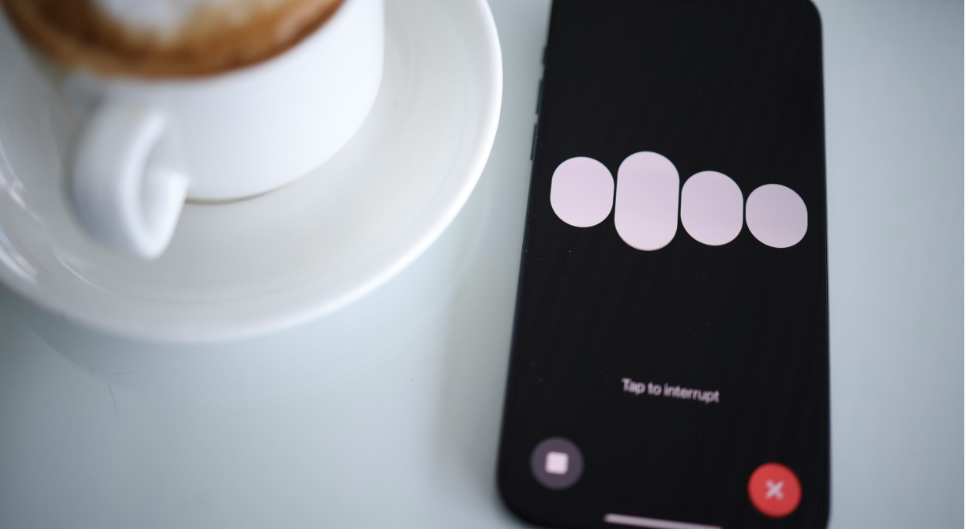
    A model trained on lived languages can understand context | Image Credit: Solen Feyissa on Unsplash


    The challenge goes beyond vocabulary.


    In 2023, ChatGPT was asked to translate the Mexican idiom “me cayó el veinte.” The literal output, “the twenty fell on me,” missed the point entirely. What the phrase actually means is closer to “I finally got it” or “the penny dropped,” a reference to old payphones that only worked once a 20-cent coin clicked into place.


    A model trained on dictionaries can translate the words. A model trained on lived languages understands the context.


    That distinction explains why regional models are gaining urgency.


    India faces a parallel problem at a different scale. With 22 official languages and thousands of dialects, linguistic exclusion is built into digital systems by default. The government-backed Bhashini programme aims to create open language datasets that allow translation and speech tools to function across Indian languages. Alongside it, companies like Sarvam AI are building Indic-language models trained primarily on Indian data, rather than adapting English-first systems after the fact.


    When machines begin to understand how people actually speak, they don’t just talk differently. They also listen differently.


    These efforts mirror earlier shifts in digital adoption. WhatsApp’s success in India wasn’t just about cost. It was about accommodation. Voice notes, regional scripts, and flexible keyboards allowed people to communicate without switching registers. Users didn’t have to learn the platform. Instead, the platform learned them for the users.


    Building AI that works this way requires different data and different ethics.


    Much of the world’s linguistic richness isn’t archived neatly online. It exists in oral histories, local television, community radio, street signs, and WhatsApp messages. Turning that into training data raises questions of consent and ownership.


    Projects like Masakhane in Africa and Karya in India approach this collaboratively, paying contributors and keeping datasets open and community-owned. The work is slower and messier than scraping the web. It is also more accountable.


    What’s emerging is not just a technical correction, but a shift in power.


    As AI moves into healthcare, education, and public services, language stops being a cosmetic feature. It becomes the interface through which people are recognised or ignored. When systems understand only formal, standardised speech, they privilege certain users over others.


    When machines begin to understand how people actually speak, they don’t just talk differently. They also listen differently.

  • How India’s App Economy Learned to Read You

    Open a phone in India and it is easy to miss how little effort is involved. Dinner appears in Swiggy before hunger has fully registered. Groceries arrive from Zepto in under ten minutes, timed neatly between meetings. CRED nudges you with a reward that feels oddly well placed. Nothing breaks, nothing asks too many questions, and the system works.


    What disappears in that smoothness is how much learning sits underneath it. Over the last decade, India’s app economy has become exceptionally good at recognising behavioural patterns, not just what users do, but when they do it, how often, and in what sequence. The most successful platforms no longer compete primarily on features or price. They compete on prediction.


    This shift did not begin with manipulation. It began with scale. Between 2016 and 2020, India underwent one of the fastest digital expansions in the world. After Reliance Jio entered the telecom market in 2016 with ultra-cheap data plans, mobile internet usage surged across income groups. Today, four out of five Indian households have a smartphone, and India ranks among the world’s largest consumers of mobile data by volume. According to India’s Ministry of Information & Broadcasting, smartphone penetration crossed 80 percent of households by 2023, while average monthly mobile data usage per user exceeded 20 GB, among the highest globally. Hundreds of millions of users came online in a compressed window of time, often mobile-first and app-first.


    That scale changed the economics of apps almost overnight. Food delivery, quick commerce, and fintech became winner-take-most markets. By 2022, India’s food delivery market was already dominated by two platforms controlling the vast majority of orders, while leading fintech apps reported that repeat users generated a disproportionate share of revenue. Margins were thin, competition was intense, and customer acquisition costs rose quickly. Retention mattered more than novelty. Engagement mattered more than differentiation. Behaviour became the most reliable signal platforms had.


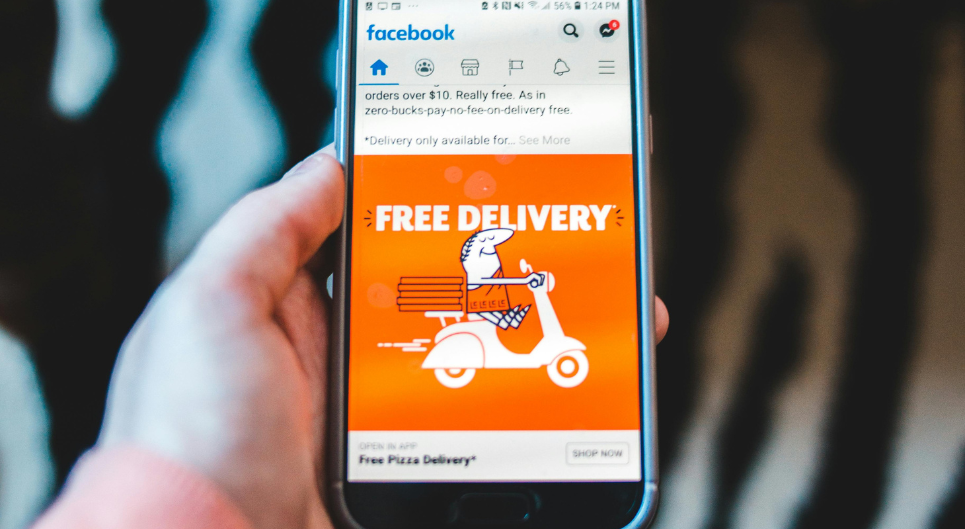
    Food Delivery became one of the winner-takes-most markets | Image Credit: Erik Mclean on Pexels


    So apps began to observe closely. Not in the cinematic sense of surveillance, but in the infrastructural sense of logging patterns. When people open an app, how long they linger, which offers they ignore, which ones they redeem late at night after a long day. Late-evening discount nudges on food delivery apps, for instance, are often timed to coincide with historically higher order completion rates, especially among repeat users. Over time, these traces form behavioural profiles that are less about identity and more about rhythm. Hunger has a schedule, spending has a mood, and attention has a curve.


    The country is overwhelmingly an Android market, which means lower-cost devices, faster adoption, and looser default permission settings. Android accounts for over 95 percent of smartphones in active use in India, a sharp contrast with the United States, where iOS and Android usage is more evenly split. Digital literacy varies widely, and privacy controls are often abstract compared to the immediate payoff of convenience. In this environment, behavioural data is easier to capture than explicit intent, and far easier to monetise. Industry studies consistently show that personalised, behaviour-timed notifications convert at significantly higher rates than generic promotions, making prediction more valuable than stated preference.


    The result is a different relationship between user and platform. The app does not need to ask what you want. It waits, infers, and nudges. Rewards systems, flash offers, and personalised notifications are calibrated around timing rather than persuasion. The aim is not to change behaviour, but to meet it at its most predictable moment.


    This is why many Indian apps feel intuitive. They are not responding to conscious choice. They are responding to repetition.


    Cheap data, dense competition, and a massive, heterogeneous user base make behavioural optimisation unusually valuable. The app economy does not need to persuade users to behave differently. It simply learns how they already do.


    There is also a cultural dimension to this dynamic. In a country shaped by inequality and aspiration, everyday behaviour becomes a resource. Fintech apps learn when users feel optimistic enough to spend. Delivery platforms learn when exhaustion overrides frugality. Patterns drawn disproportionately from urban and semi-urban users are packaged into predictions and fed back as ease.


    None of this is illegal. Much of it is disclosed, technically, through consent screens and privacy policies. But consent here is ambient rather than deliberate. The exchange is rarely stated plainly. In return for speed, convenience, and small moments of pleasure, users offer up patterns of daily life.


    What makes this system powerful is not that it hides, but that it feels normal. This is not a uniquely Indian story. American platforms pioneered many of these techniques. But India is where the model sharpens. Cheap data, dense competition, and a massive, heterogeneous user base make behavioural optimisation unusually valuable. The app economy does not need to persuade users to behave differently. It simply learns how they already do. Over time, this changes what products are built for. Success is measured less by usefulness and more by stickiness. The most valuable users are not the most satisfied ones, but the most predictable ones. Behaviour becomes capital.


    Seen this way, India’s app boom is not just a story of innovation or convenience. It is a story about how everyday life is being translated into signals, and how those signals now sit at the centre of consumer capitalism. The system works because it feels frictionless. But that frictionlessness has a cost. It makes the trade invisible. And that may be the most consequential shift of all.

  • The Payment Revolution Was Not Televised

    In November 2016, the lines began forming before dawn. Outside banks and ATMs across India, people stood clutching ₹500 and ₹1000 notes, the very lifeblood of the cash economy, suddenly rendered worthless. The Indian government had announced demonetisation overnight, pulling most of the nation’s currency out of circulation in a bold (and widely debated) move against corruption and black money. For millions, it felt like the ground had shifted. What followed was weeks of chaos, and then, a quiet transformation.


    In the absence of physical cash, Indians turned to something new, a real-time digital payment system called UPI.


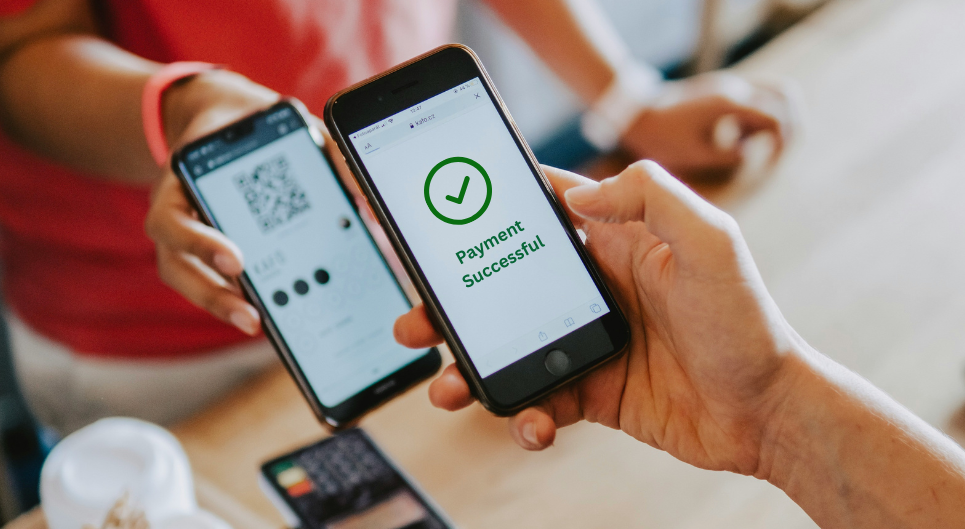
    In 2025, India saw 228 billion UPI transactions across the year | Image Credit: Nathan Dumlao on Unsplash


    By the end of 2025, that system was processing record volumes. In December alone, UPI logged 21.6 billion transactions, the highest monthly total since its launch. Across the year, it handled roughly 228 billion transactions worth close to ₹300 trillion. While most of the world wasn’t watching, India quietly built one of the largest public digital payment systems anywhere, leapfrogging plastic cards and bypassing private fintech monopolies.


    So what exactly is UPI, and why are people from Nigeria to France now paying attention?


    What Is UPI?


    UPI, or Unified Payments Interface, is a real-time, mobile-first system developed by the National Payments Corporation of India (NPCI), a non-profit entity backed by India’s central bank.


    At its simplest, UPI lets anyone send money to anyone instantly, 24/7, and directly from their bank account, using only a phone number or a virtual ID. There’s no need for a credit card, transfers are typically free for everyday use, and there’s no waiting for settlements.


    UPI doesn’t resolve the contradictions inherent in digital finance. It simply shows what happens when the infrastructure itself is treated as something everyone is allowed to use.


    What makes UPI unusual is its structure. While it deals with transactions, it is not a financial product. Simply put, it is actually a form of public infrastructure. Like roads or railways, it’s open to all and owned by none. Any bank, app, or fintech can plug into it. There are varieties to choose from, but the rails remain the same.


    How Is It Different?


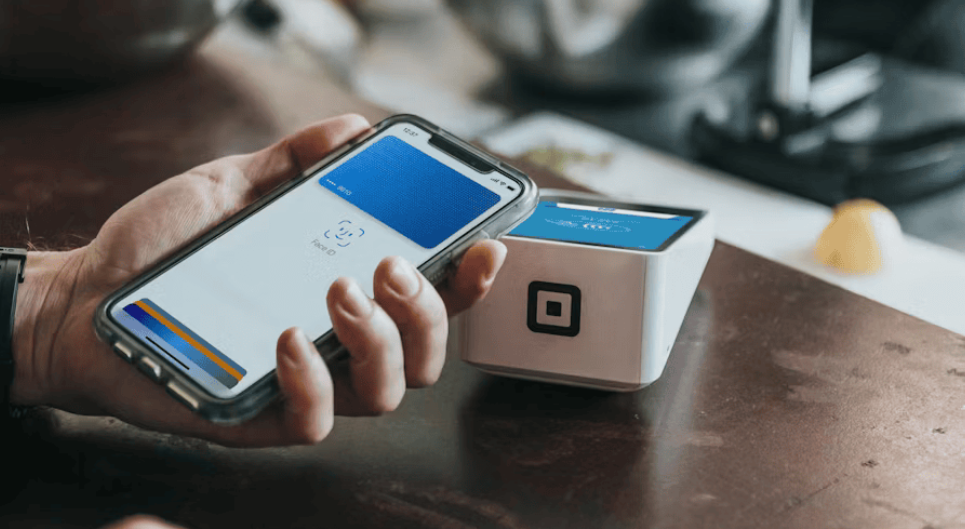
    In the US, digital payments often come with a fee and multi-day delays. Venmo, Zelle, PayPal, and Apple Pay are convenient, but fragmented. But, more importantly, they’re all private.


    UPI, by contrast, is unified and universal. It works across platforms, banks, and economic classes. You can pay a street vendor with Google Pay, split a bill in a fancy restaurant via PhonePe, or receive a government subsidy, all using the same system.


    Perhaps its other most significant and distinct aspect is that it is interoperable. The system doesn’t privilege one brand or bank over another. It was also built with financial inclusion in mind. So, small transactions are typically free, interfaces exist in multiple Indian languages, and users don’t even need a smartphone to be able to use it. UPI can work via basic phones using USSD codes.


    In the Indian context, this story is about efficiency.


    In 2023, the US launched FedNow, its long-awaited instant payment system. It was a significant step, but a limited one. By the time it arrived, Americans were already relying on a patchwork of private platforms that work well enough for most people, even as credit cards continue to dominate retail payments, along with their fees and fraud risks.


    Apple Pay has smoothed some of that friction, but only within its own ecosystem.


    India took a different route. Instead of building around private platforms, it invested early in shared rails and let banks and apps compete on top of them. That decision came with trade-offs. Privacy concerns haven’t gone away. State involvement in technology still makes many uneasy. There are unresolved questions about fees, governance, and who ultimately bears the cost of keeping the system running.


    Other countries have navigated similar tensions in different ways. In Kenya, M-Pesa made mobile money possible without bank accounts. In Brazil, Pix spread quickly as a state-backed alternative to cards. In China, WeChat Pay and Alipay became everyday tools, tightly held by corporate ecosystems.


    UPI doesn’t resolve the contradictions inherent in digital finance. It simply shows what happens when the infrastructure itself is treated as something everyone is allowed to use.


    So, maybe the payment revolution wasn’t televised. But you know what, it certainly was scanned.