Category: homepage

  • How India’s App Economy Learned to Read You

    Open a phone in India and it is easy to miss how little effort is involved. Dinner appears in Swiggy before hunger has fully registered. Groceries arrive from Zepto in under ten minutes, timed neatly between meetings. CRED nudges you with a reward that feels oddly well placed. Nothing breaks, nothing asks too many questions, and the system works.


    What disappears in that smoothness is how much learning sits underneath it. Over the last decade, India’s app economy has become exceptionally good at recognising behavioural patterns, not just what users do, but when they do it, how often, and in what sequence. The most successful platforms no longer compete primarily on features or price. They compete on prediction.


    This shift did not begin with manipulation. It began with scale. Between 2016 and 2020, India underwent one of the fastest digital expansions in the world. After Reliance Jio entered the telecom market in 2016 with ultra-cheap data plans, mobile internet usage surged across income groups. Today, four out of five Indian households have a smartphone, and India ranks among the world’s largest consumers of mobile data by volume. According to India’s Ministry of Information & Broadcasting, smartphone penetration crossed 80 percent of households by 2023, while average monthly mobile data usage per user exceeded 20 GB, among the highest globally. Hundreds of millions of users came online in a compressed window of time, often mobile-first and app-first.


    That scale changed the economics of apps almost overnight. Food delivery, quick commerce, and fintech became winner-take-most markets. By 2022, India’s food delivery market was already dominated by two platforms controlling the vast majority of orders, while leading fintech apps reported that repeat users generated a disproportionate share of revenue. Margins were thin, competition was intense, and customer acquisition costs rose quickly. Retention mattered more than novelty. Engagement mattered more than differentiation. Behaviour became the most reliable signal platforms had.
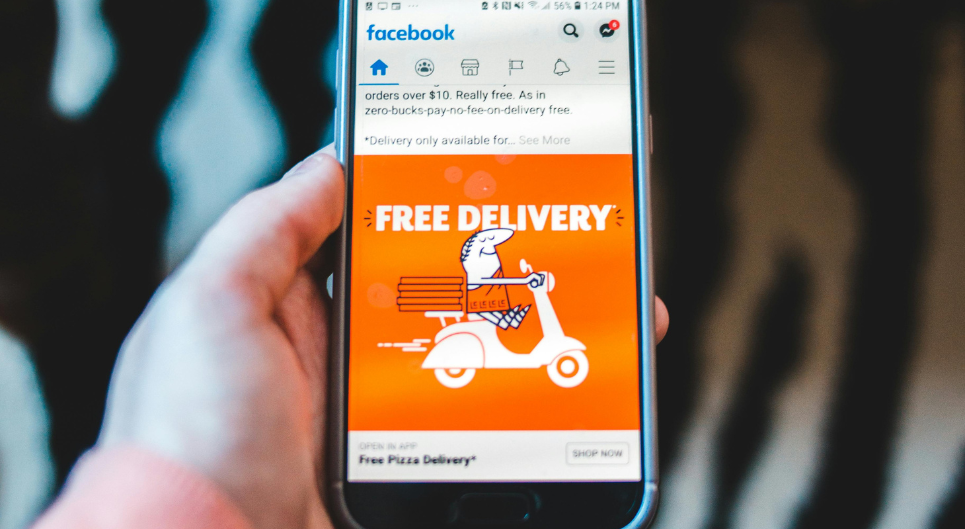
     

    Food Delivery became one of the winner-takes-most markets | Image Credit: Erik Mclean on Pexels


    So apps began to observe closely. Not in the cinematic sense of surveillance, but in the infrastructural sense of logging patterns. When people open an app, how long they linger, which offers they ignore, which ones they redeem late at night after a long day. Late-evening discount nudges on food delivery apps, for instance, are often timed to coincide with historically higher order completion rates, especially among repeat users. Over time, these traces form behavioural profiles that are less about identity and more about rhythm. Hunger has a schedule, spending has a mood, and attention has a curve.


    The country is overwhelmingly an Android market, which means lower-cost devices, faster adoption, and looser default permission settings. Android accounts for over 95 percent of smartphones in active use in India, a sharp contrast with the United States, where iOS and Android usage is more evenly split. Digital literacy varies widely, and privacy controls are often abstract compared to the immediate payoff of convenience. In this environment, behavioural data is easier to capture than explicit intent, and far easier to monetise. Industry studies consistently show that personalised, behaviour-timed notifications convert at significantly higher rates than generic promotions, making prediction more valuable than stated preference.


    The result is a different relationship between user and platform. The app does not need to ask what you want. It waits, infers, and nudges. Rewards systems, flash offers, and personalised notifications are calibrated around timing rather than persuasion. The aim is not to change behaviour, but to meet it at its most predictable moment.


    This is why many Indian apps feel intuitive. They are not responding to conscious choice. They are responding to repetition.


    Cheap data, dense competition, and a massive, heterogeneous user base make behavioural optimisation unusually valuable. The app economy does not need to persuade users to behave differently. It simply learns how they already do.


    There is also a cultural dimension to this dynamic. In a country shaped by inequality and aspiration, everyday behaviour becomes a resource. Fintech apps learn when users feel optimistic enough to spend. Delivery platforms learn when exhaustion overrides frugality. Patterns drawn disproportionately from urban and semi-urban users are packaged into predictions and fed back as ease.


    None of this is illegal. Much of it is disclosed, technically, through consent screens and privacy policies. But consent here is ambient rather than deliberate. The exchange is rarely stated plainly. In return for speed, convenience, and small moments of pleasure, users offer up patterns of daily life.


    What makes this system powerful is not that it hides, but that it feels normal. This is not a uniquely Indian story. American platforms pioneered many of these techniques. But India is where the model sharpens. Cheap data, dense competition, and a massive, heterogeneous user base make behavioural optimisation unusually valuable. The app economy does not need to persuade users to behave differently. It simply learns how they already do. Over time, this changes what products are built for. Success is measured less by usefulness and more by stickiness. The most valuable users are not the most satisfied ones, but the most predictable ones. Behaviour becomes capital.


    Seen this way, India’s app boom is not just a story of innovation or convenience. It is a story about how everyday life is being translated into signals, and how those signals now sit at the centre of consumer capitalism. The system works because it feels frictionless. But that frictionlessness has a cost. It makes the trade invisible. And that may be the most consequential shift of all.


  • The Payment Revolution Was Not Televised

    In November 2016, the lines began forming before dawn. Outside banks and ATMs across India, people stood clutching ₹500 and ₹1000 notes, the very lifeblood of the cash economy, suddenly rendered worthless. The Indian government had announced demonetisation overnight, pulling most of the nation’s currency out of circulation in a bold (and widely debated) move against corruption and black money. For millions, it felt like the ground had shifted. What followed was weeks of chaos, and then, a quiet transformation.


    In the absence of physical cash, Indians turned to something new, a real-time digital payment system called UPI.


    In 2025, India saw 228 billion UPI transactions across the year | Image Credit: Nathan Dumlao on Unsplash


    By the end of 2025, that system was processing record volumes. In December alone, UPI logged 21.6 billion transactions, the highest monthly total since its launch. Across the year, it handled roughly 228 billion transactions worth close to ₹300 trillion. While most of the world wasn’t watching, India quietly built one of the largest public digital payment systems anywhere, leapfrogging plastic cards and bypassing private fintech monopolies.


    So what exactly is UPI, and why are people from Nigeria to France now paying attention?


    What Is UPI?


    UPI, or Unified Payments Interface, is a real-time, mobile-first system developed by the National Payments Corporation of India (NPCI), a non-profit entity backed by India’s central bank.


    At its simplest, UPI lets anyone send money to anyone instantly, 24/7, and directly from their bank account, using only a phone number or a virtual ID. There’s no need for a credit card, transfers are typically free for everyday use, and there’s no waiting for settlements.


    UPI doesn’t resolve the contradictions inherent in digital finance. It simply shows what happens when the infrastructure itself is treated as something everyone is allowed to use.


    What makes UPI unusual is its structure. While it deals with transactions, it is not a financial product. Simply put, it is actually a form of public infrastructure. Like roads or railways, it’s open to all and owned by none. Any bank, app, or fintech can plug into it. There are varieties to choose from, but the rails remain the same.


    How Is It Different?


    In the US, digital payments often come with a fee and multi-day delays. Venmo, Zelle, PayPal, and Apple Pay are convenient, but fragmented. But, more importantly, they’re all private.


    UPI, by contrast, is unified and universal. It works across platforms, banks, and economic classes. You can pay a street vendor with Google Pay, split a bill in a fancy restaurant via PhonePe, or receive a government subsidy, all using the same system.


    Perhaps its other most significant and distinct aspect is that it is interoperable. The system doesn’t privilege one brand or bank over another. It was also built with financial inclusion in mind. So, small transactions are typically free, interfaces exist in multiple Indian languages, and users don’t even need a smartphone to be able to use it. UPI can work via basic phones using USSD codes.


    In the Indian context, this story is about efficiency.


    In 2023, the US launched FedNow, its long-awaited instant payment system. It was a significant step, but a limited one. By the time it arrived, Americans were already relying on a patchwork of private platforms that work well enough for most people, even as credit cards continue to dominate retail payments, along with their fees and fraud risks.


    Apple Pay has smoothed some of that friction, but only within its own ecosystem.


    India took a different route. Instead of building around private platforms, it invested early in shared rails and let banks and apps compete on top of them. That decision came with trade-offs. Privacy concerns haven’t gone away. State involvement in technology still makes many uneasy. There are unresolved questions about fees, governance, and who ultimately bears the cost of keeping the system running.


    Other countries have navigated similar tensions in different ways. In Kenya, M-Pesa made mobile money possible without bank accounts. In Brazil, Pix spread quickly as a state-backed alternative to cards. In China, WeChat Pay and Alipay became everyday tools, tightly held by corporate ecosystems.


    UPI doesn’t resolve the contradictions inherent in digital finance. It simply shows what happens when the infrastructure itself is treated as something everyone is allowed to use.


    So, maybe the payment revolution wasn’t televised. But you know what, it certainly was scanned.

  • Fashion’s Borrowings Across Borders

    For centuries, Kolhapuri chappals have been the footwear of farmers and townsfolk across Maharashtra. In 2019, they were formally recognized as a Geographical Indication, protecting their heritage and regional identity. In 2025, they walked the Prada runway.


    The sandal seemed unremarkable at first glance: slim leather straps, clean lines, a muted palette that matched Prada’s minimalist ethos. Yet, for many Indians, its outline was unmistakable. The centuries-old footwear, long sold in bazaars, carried a lineage Prada never acknowledged; sparking backlash less about the price tag and more about the absence of credit. Within days, the Italian house issued a rare apology.


    The Prada episode was not an isolated misstep but part of a much older story. Fashion has always transformed everyday cultural objects into global commodities, sometimes with credit, often without. Each time, the same questions surface: what separates appreciation from appropriation? And perhaps more urgently, who profits and who disappears in the process?


    A century before Prada’s sandal, Paul Poiret staged a Parisian craze around “harem pants.” The billowing trousers, derived loosely from Middle Eastern and South Asian silhouettes, were marketed as revolutionary, liberating women from corsets and skirts. French society debated their propriety; critics called them scandalous. But for Poiret, the scandal became a celebrity. The garment’s layered histories, its regional makers, were barely in the room.


    Half a century later, American counterculture reached for similar vocabularies. Hippies adopted kurtas, Nehru jackets, and, most iconically, paisley — a motif with its own long, winding journey: once a Persian boteh, then woven into Kashmiri shawls, later mass-produced by Scottish mills, before being rebranded as a universal symbol of bohemia in 1960s America. To wear a paisley shirt in San Francisco was to signal rebellion; to weave one in Kashmir was to survive an economic system that now saw its work framed as “exotic.”


    The tension, then, isn’t simply about “borrowing.” It’s about who gets to be remembered as visionary and who gets left as background. Poiret is remembered as an innovator; the hippies as style revolutionaries. The artisans and cultures whose forms they borrowed were treated as raw material.


    A portrait of Nigerian textile designer Chief Nike Davies-Okundaye | Image Credit: foluartstudio on Instagram


    Not Just the West


    It would be easy to frame appropriation as a simple story of the West borrowing from “the Rest.” But the truth is more complicated, and less comfortable. Even within India, fashion replicates the same hierarchies of visibility and erasure.


    On the runways of Delhi and Mumbai, mirrorwork from Kutch, ikat from Odisha, or phulkari from Punjab reappear in luxury collections. These crafts are recast as “contemporary Indian chic,” while the artisans themselves remain invisible. A couturier’s reinterpretation might be hailed in fashion glossies, while the cluster that keeps the tradition alive is relegated to the backdrop. The credit sticks to the designer, not the community.


    Bollywood, too, has been a major appropriator. Costumes borrow freely from regional dress — the nauvari sari of Maharashtra, a nine-yard drape designed for ease of movement, or the phanek of Manipur, a handwoven wraparound skirt with deep cultural and ritual significance. Restyled for spectacle and glamour, stripped of context, what was once an everyday identity marker becomes either caricature or fleeting “trend.”


    The erasures deepen with caste and community. Dalit and Adivasi aesthetics — tattoos, beadwork, woven textiles are sometimes lifted into urban “boho” fashion without acknowledgment. What appears as edgy styling in a Mumbai boutique is the same design stigmatized when worn by its origin community.


    It’s tempting to keep asking the familiar question — was this respectful, or was it offensive? But that binary feels increasingly inadequate. The more urgent question is: what structures exist to ensure visibility, credit, and compensation travel alongside the aesthetic?


    And these borrowings aren’t just internal. Indian fashion has long absorbed silhouettes from elsewhere in South Asia — Pakistani salwar kameez, or the angarkha, a traditional Indian tunic, once tied at the side and flowing like a frock, often flattened under the vague label “Indo-fusion.” Meanwhile, our own luxury houses borrow freely from Western codes of chic: tuxedo tailoring, Art Deco embellishments, the “little black dress.” We are both borrowers and the borrowed-from.


    All of which underscores the deeper point: appropriation isn’t solely about geography — East vs. West, North vs. South. It is about power. Who gets to transform a craft into couture, and who is left unnamed in the process? Who crosses borders freely, and who is told their dress is “too ethnic,” “too traditional,” or “too niche”?


    But cultural borrowing isn’t always doomed to misfire. Done with care, collaboration, and credit, it can open doors rather than close them. Dior’s 2023 show at Mumbai’s Gateway of India, for instance, wasn’t perfect — some critics noted the spectacle outweighed the storytelling, but it did something rare: it placed Indian craft on a global luxury stage, with artisans visibly acknowledged in pre-show materials.


    Elsewhere, designers like Stella Jean have built collections around collaborations with artisans from Haiti to Burkina Faso, ensuring royalties and credit flow back to the communities whose work inspires the clothes. In menswear, labels like Wales Bonner and Bode have shown how heritage can be central, not ornamental — drawing from Caribbean tailoring or American workwear without reducing them to moodboard aesthetics.


    In India, too, smaller labels like Raw Mango and Pero set a different precedent: naming weavers, spotlighting craftspeople in campaigns, and making sure the ‘handmade’ isn’t just marketing gloss but a living partnership.


    In 2019, Gucci marketed a $790 turban on Nordstrom’s website. For Sikh communities in the US and abroad, the sight was painful: a sacred article of faith rebranded as novelty accessory. Nordstrom pulled the listing after backlash, but the incident underscored how cultural symbols are emptied of meaning when filtered through retail systems.


    A side-by-side comparative of a Kolhapuri chappal and the Prada leather sandal


    Patterns Across the World


    This cycle isn’t confined to South Asia. In Mexico, the Mixe community has repeatedly pushed back against designers lifting their traditional blouse patterns without consent. In Nigeria, Yoruba adire — the indigo-dyed resist textile now displayed in global museum shows and reimagined on luxury runways — still leaves its makers with fragile livelihoods. And in Morocco, the caftan drifts in and out of Western trend reports as “boho chic,” stripped of its grounding as a living garment tradition. Across geographies, the story repeats: sacred or everyday dress becomes exoticised, repackaged, resold — with the origin community forced to fight for recognition as custodians rather than decoration.


    What Real Recognition Looks Like


    It’s tempting to keep asking the familiar question — was this respectful, or was it offensive? But that binary feels increasingly inadequate. The more urgent question is: what structures exist to ensure visibility, credit, and compensation travel alongside the aesthetic?


    Homage is not about moodboards or polite footnotes. It’s about contracts that outlive a season, royalties that flow beyond the runway, and credits that show up not just in show notes but on the product tag. Imagine a Kolhapuri sandal carrying the name of its maker as proudly as the house that sells it.


    Fashion has always been about circulation — of cloth, of silhouettes, of symbols. But circulation without recognition is erasure. The industry doesn’t need to stop borrowing; it needs to start acknowledging that borrowing comes with responsibility.


    Because in the end, the Kolhapuri is not just a sandal. The turban is not just a headpiece. The paisley is not just a motif. They are cultural legacies — reshaped, rebranded, resold. And each time they travel, they tell us less about the garment than about the hands we choose to see, and the hands we don’t.

  • The Rise of Sober Curiosity in Urban India

    For much of the past decade, alcohol functioned as shorthand for social fluency in cities around the world. Rooftop lounges in Mumbai, weekend brunches in New York, and club nights in Madrid were as much about signalling ease as they were about what was in the glass. To drink was to belong. To refuse a round, even for personal reasons, often came with questions.


    That assumption is beginning to loosen, though not everywhere, and not in the same way. Among Gen Z, shifts in drinking habits and social rituals are becoming more visible. This change is not about wholesale teetotalism. It is about curiosity and choice.


    In recent years, a growing number of people globally have begun questioning their relationship with alcohol. Not by quitting outright, but by asking smaller, situational questions: Do I actually want a drink tonight? Do I need it to socialise? To unwind? To feel like I belong? This orientation has come to be known as sober curiosity, a loosely defined movement that encourages moderation, intentional drinking, or opting out altogether, without moralising abstinence.


    In the United States and Europe, sober curiosity emerged largely as a response to excess. Youth drinking declined, wellness culture took hold, and the pandemic reshuffled ideas of productivity and self-care. Choosing not to drink became associated with control, mindfulness, and even moral clarity.


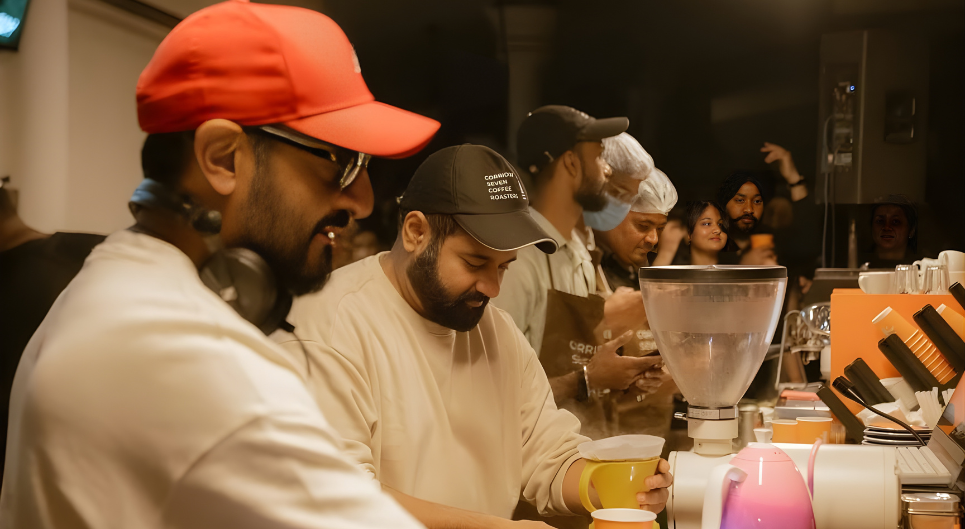
    A coffee rave underway at Corridor Seven Coffee Roasters in Nagpur | Image Credit: Mithilesh Vazalwar on Instagram


    India’s version looks different, and that difference is the story. For much of the past decade, alcohol in India’s major cities also functioned as a social shortcut, but under different conditions. Drinking was not just about taste or leisure. It was about urban fluency. To drink was to signal modernity and belonging in spaces that were already classed, gendered, and regulated.


    Now, across metros and increasingly in tier-2 cities, young professionals are opting out of alcohol situationally rather than ideologically. They are skipping rounds without apology, leaving earlier than expected, or choosing daytime socialising altogether. This is not prohibition, and it is not a backlash. It is conditional participation. Alcohol is no longer an automatic assumption for a social hang.


    Globally, sober curiosity emerged as backlash. In India, it looks more like recalibration. Less about excess. More about time, cost, and permission.


    Globally, this behaviour fits under the banner of sober curiosity. In India, it arrives with complications. Unlike Western markets, where sobriety often signals restraint from abundance, India’s relationship with alcohol has always been uneven. Large sections of the population abstain for religious, cultural, or economic reasons. What is new is not sobriety itself, but who gets to frame it as intention rather than constraint.


    In English-speaking, urban spaces, not drinking is slowly becoming legible as a choice. That shift is visible in the market. India’s non-alcoholic and zero-proof beverage industry, valued at roughly ₹1.37 lakh crore in 2023, is projected to cross ₹2.10 lakh crore by the end of the decade. Bars in Mumbai and Delhi now offer zero-proof cocktails priced like their alcoholic counterparts, complete with garnish, glassware, and ceremony. The point is not abstinence. It is equivalence. You can opt out without opting out socially.


    But the more revealing shift is not happening in bars. Across cities like Pune, Indore, Nagpur, and parts of Mumbai, early-morning “coffee raves” are drawing crowds that once would have gathered at nightclubs. Loud music, packed dance floors, caffeine instead of alcohol, and an exit time before noon. Similar sober daytime parties exist in New York or London, but in India their appeal is structural. They replace nightlife rather than supplement it. They fit around long workdays, shared housing, family expectations, and cost.


    This is where India diverges sharply from Western sober-curious narratives. The appeal is not only wellness or mindfulness. It is also efficiency. Alcohol costs time. Hangovers interfere with already compressed schedules. Late nights disrupt routines in cities where commutes are long, private space is scarce, and burnout is ordinary. In this context, sobriety reads less as self-denial and more as control. Not drinking is not about virtue. It is about being functional.


    A bottle of Pomegranate Kombucha | Image Credit: Shannon Nickerson on Unsplash


    Still, this permission is uneven. Choosing not to drink is celebrated when it appears intentional and curated. It is far less visible when abstention is expected or imposed. Women in India have long navigated sobriety without praise. Working-class abstention has rarely been framed as lifestyle. The current moment becomes visible largely because a certain class can afford to turn moderation into identity.


    That tension is what makes India’s sober curiosity worth paying attention to. This is not a wholesale rejection of drinking culture. Alcohol remains central to many social scenes. What is changing is the default. Refusal no longer requires justification everywhere. Social life is slowly learning to accommodate absence.


    Globally, sober curiosity emerged as backlash. In India, it looks more like recalibration. Less about excess. More about time, cost, and permission. This shift, uneven and easy to overstate, still marks something real. It reflects a change in how people gather, celebrate, and belong. In a culture where participation has long demanded conformity, opting out without disappearing is a meaningful shift.