Category: Self & Society

  • The New Loneliness Market

    Open any major platform and a certain pattern appears. A stranger studies quietly on TikTok Live, a creator walks through a supermarket with viewers trailing behind, meditation apps offer modes that resemble shared presence, and AI companions send morning greetings. Productivity tools now include virtual coworkers. These features look like entertainment or efficiency hacks, yet they are built to give people the sense that someone is nearby.


    A decade ago, loneliness felt like an interior mood. Now it shapes product decisions across the tech industry. Companies have realised that users return more reliably when something feels companionable. The numbers reflect this shift. Low-interaction livestreams on TikTok have grown steadily over the past two years, AI companion apps have pulled in tens of millions of users around the world, and long, quiet study videos on YouTube continue to draw consistent viewing. The engagement holds even when very little is happening.


    The reasons stretch beyond technology. Remote work reduced daily contact, and many shared spaces either changed or disappeared. Cafés raised prices, libraries shortened hours, and neighbourhood spots became harder to maintain. A global survey in 2023 by Meta and Gallup reported that around one in four adults experiences frequent loneliness. It tracks with what people describe in their own lives. As familiar rhythms faded, they began looking for softer forms of connection that could slip into unpredictable days.
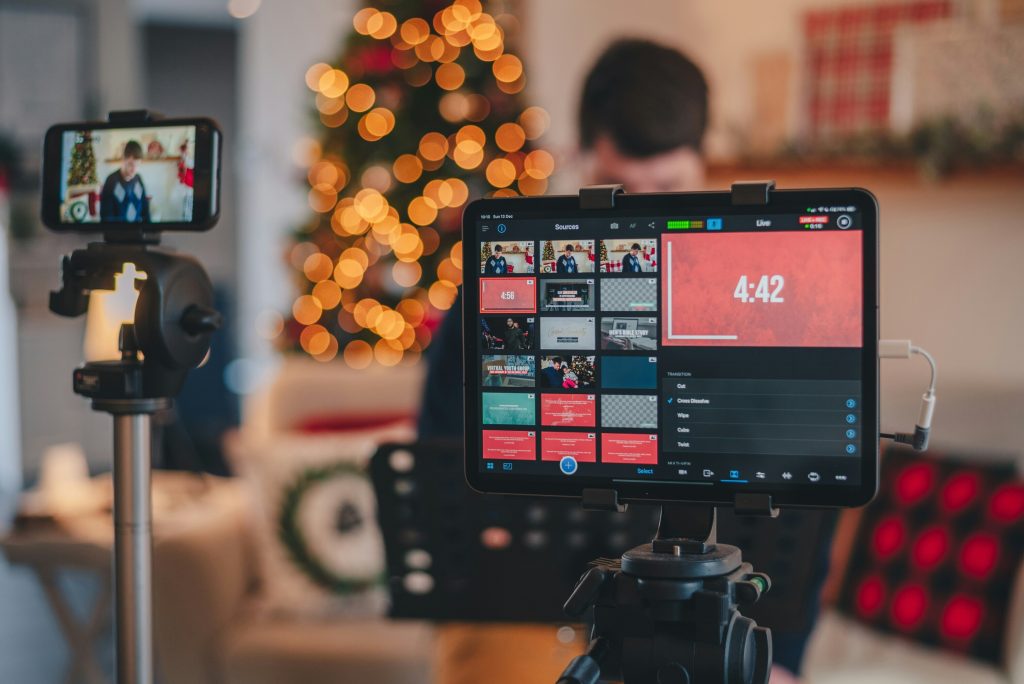
     

    Someone’s presence in the background, even through a screen, can soften the day | Image Credit: Libby Penner on Unsplash


    AI accelerated the trend. Companion apps offer a feeling of steadiness without the weight of social performance. Conversations take place at a pace people can manage, which often makes them easier than real ones. The appeal here is quiet. Many users are not searching for romance or fantasy. They want acknowledgement that fits into the edges of a scattered routine.


    Livestreams and shared-task videos serve a different purpose. Someone’s presence, even through a screen, can create a backdrop that softens the day. Walking streams, cooking sessions, and silent study rooms are simple formats, yet they mimic the comfort of being around others who are also going about their lives. These spaces carry no pressure, which explains their endurance.


    Many people are not seeking grand emotional narratives or deep conversation. They want a softer kind of company that can sit beside work, chores, or study, and the world does not offer that easily anymore.


    The behaviour is most visible among younger users, yet it crosses age groups. Many people feel stretched by erratic schedules, high expectations, and social environments that sometimes feel too demanding. A low-demand connection can feel reliable in a way traditional social life often does not. A livestream does not ask you to keep up. A digital companion stays even when you step away.


    Companies respond to what they see. Some now measure engagement in terms of presence rather than taps or clicks. A few surface creators who hold attention simply by showing up regularly. The idea is straightforward. People trust spaces that feel steady, and steadiness keeps them returning.


    There are concerns about how these habits develop. Platforms gain when users stay inside their ecosystems, so these environments can expand quietly. Hours drift by. A stream that starts as a background company sometimes takes up a larger share of the day than expected. Comfort and habit can merge without much notice.
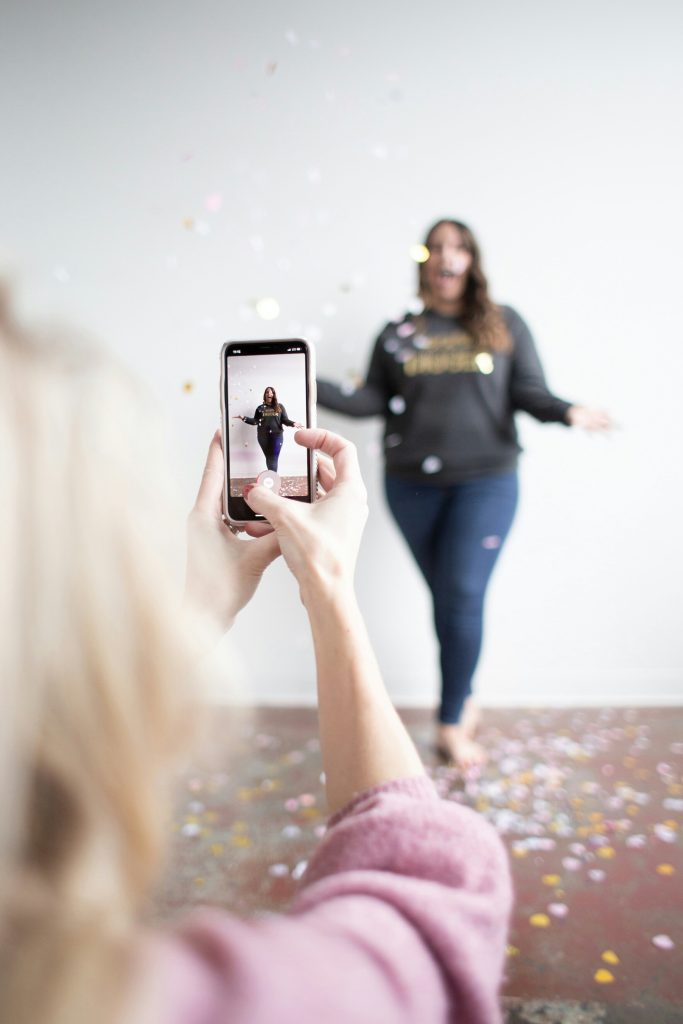
     

    Observed among young users, the behaviour crosses age groups | Image Credit: Amanda Vick on Unsplash


    Even with the risks, it is clear that these tools fill a gap. Many people are not seeking grand emotional narratives or deep conversation. They want a softer kind of company that can sit beside work, chores, or study, and the world does not offer that easily anymore. Technology stepped into the space left behind by changes in work, housing, mobility, and community life.


    The loneliness market is less a verdict on people and more a reflection of the moment. It shows how individuals are rearranging their emotional routines when older forms of casual connection no longer appear without effort. Digital companionship, even when light, offers a sense of continuity that is hard to find elsewhere. The behaviour will shift as the world changes, yet the need that drives it feels durable. People want to move through their day with some feeling of closeness, even when that closeness takes a different shape from what they expected.
  • Where Did All Our Third Places Go?

    On most evenings in mid-20th-century Mumbai, Shivaji Park was not an “amenity.” It was just where people went. Elderly men walked its perimeter. Teenagers practised cricket with taped tennis balls. Women sat on the grass and talked. No tickets. No programming. No expectation that anyone needed to be doing something productive.


    Similar scenes existed elsewhere. In New York, Jane Jacobs wrote about Washington Square Park in the 1950s and 60s as a place people passed through, paused in, argued in, lingered in. In Seoul, neighbourhood parks and local jjimjilbangs functioned as everyday social infrastructure well before the city’s current emphasis on speed, efficiency, and twenty-four-hour productivity. These spaces were not neutral or perfect, but they shared a defining feature: you could be there without explanation.


    That condition has become increasingly rare.


    An al fresco cafè | Image Credit: Sami TÜRK on Pexels


    In 1989, American sociologist Ray Oldenburg gave these environments a name in The Great Good Place. He called them “third places”: informal, low-cost spaces outside home and work where people could gather without obligation. Oldenburg’s argument was not sentimental. He was precise. What made third places work was not charm or design, but accessibility. They tolerated idleness. They allowed regulars without requiring membership. They made room for people whose only reason for showing up was time.


    What has changed since then is not simply taste. It is structured.


    Most third places did not disappear overnight. They were slowly made inhospitable. In Mumbai, Irani cafés like Kyani and Café Ideal once functioned as all-day linger spaces, especially for people who had nowhere else to go between shifts or errands. Rising rents, shrinking margins, and redevelopment pressures have since pushed cafés toward faster turnover. Sitting too long now carries an implicit cost.


    In New York, public seating has been systematically reduced or redesigned. Benches are removed, divided, or made deliberately uncomfortable. Parks that once absorbed unstructured social life are increasingly surveilled, policed, or programmed. The goal is not gathering, but control. Space that does not circulate people efficiently or generate revenue is treated as a problem to be managed.


    This is not accidental. Cities over the last three decades have been redesigned around transit, productivity, and risk mitigation. Loitering becomes a security concern. Lingering becomes inefficiency. Free time, once an ordinary part of public life, starts to read as indulgence.


    So the question is not whether third places mattered. They did. The harder question is why we have become so comfortable designing cities that no longer tolerate them.


    The language follows the logic. “Third place” now appears in real estate decks and brand strategy documents, used to describe co-working cafés, members’ clubs, or lifestyle lounges. These spaces promise community, but only through access. You can belong, but briefly. You can stay, but not for free. Presence is permitted only when it can be justified, monetised, or optimised.


    Functionally, this changes how social life feels.


    When cafés double as offices, sitting without a laptop becomes suspect. When libraries close or shrink, quiet public refuge disappears. When promenades are designed as backdrops for events and content, stillness feels out of place. The value of doing nothing together erodes, replaced by the expectation that time in public must produce something: work, networking, or proof.


    The pandemic accelerated this shift, but it did not invent it. Lockdowns disrupted social reflexes, and the return to public life came with new rules. Interaction felt safer when it was structured: a class, a workshop, a ticketed gathering. Presence alone no longer felt sufficient. There had to be a reason. A receipt.


    What gets lost in this transition is difficult to measure, which is why it is easy to dismiss. It is not just space, but familiarity. The quiet recognition of seeing the same strangers every week. The trust that forms without conversation. These are social capacities that emerge slowly, and only in places where people are allowed to exist without performing usefulness.


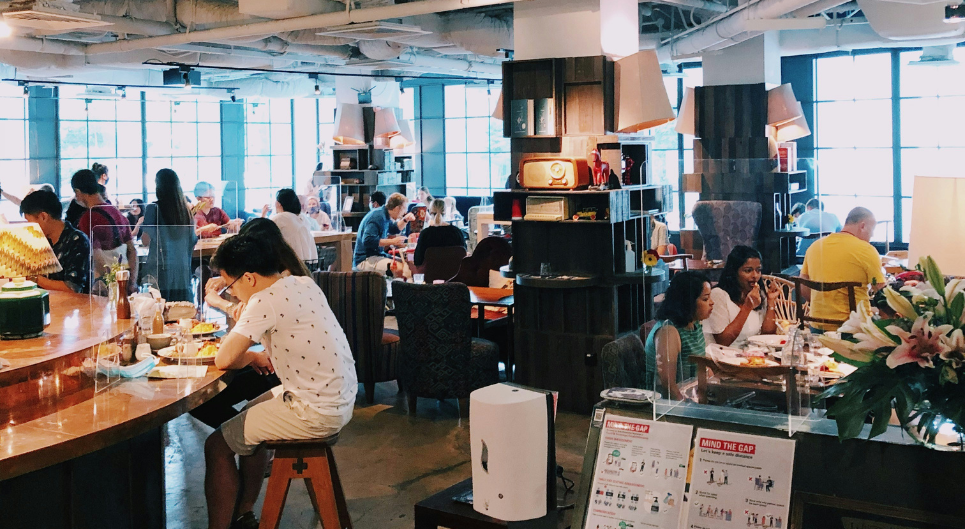
    A crowded restaurant at daytime | Image Credit: CHUTTERSNAP on Unsplash


    People sense this loss, even if they do not name it. That is why new, improvised versions keep appearing. Community fridges on street corners. Zine fairs in half-empty malls. Chai circles in parking lots. Skate crews occupying forgotten patches of city. These are not nostalgic recreations. They are workarounds. Evidence that the desire for unstructured public life persists even as the conditions that once supported it are withdrawn.


    So the question is not whether third places mattered. They did. The harder question is why we have become so comfortable designing cities that no longer tolerate them.


    Not everything needs to be activated. Not every gathering needs a theme. Sometimes what is missing is not innovation, but permission: a place where you can sit, take up space, and not be asked what you are doing there.

  • The Rise of Sober Curiosity in Urban India

    For much of the past decade, alcohol functioned as shorthand for social fluency in cities around the world. Rooftop lounges in Mumbai, weekend brunches in New York, and club nights in Madrid were as much about signalling ease as they were about what was in the glass. To drink was to belong. To refuse a round, even for personal reasons, often came with questions.


    That assumption is beginning to loosen, though not everywhere, and not in the same way. Among Gen Z, shifts in drinking habits and social rituals are becoming more visible. This change is not about wholesale teetotalism. It is about curiosity and choice.


    In recent years, a growing number of people globally have begun questioning their relationship with alcohol. Not by quitting outright, but by asking smaller, situational questions: Do I actually want a drink tonight? Do I need it to socialise? To unwind? To feel like I belong? This orientation has come to be known as sober curiosity, a loosely defined movement that encourages moderation, intentional drinking, or opting out altogether, without moralising abstinence.


    In the United States and Europe, sober curiosity emerged largely as a response to excess. Youth drinking declined, wellness culture took hold, and the pandemic reshuffled ideas of productivity and self-care. Choosing not to drink became associated with control, mindfulness, and even moral clarity.


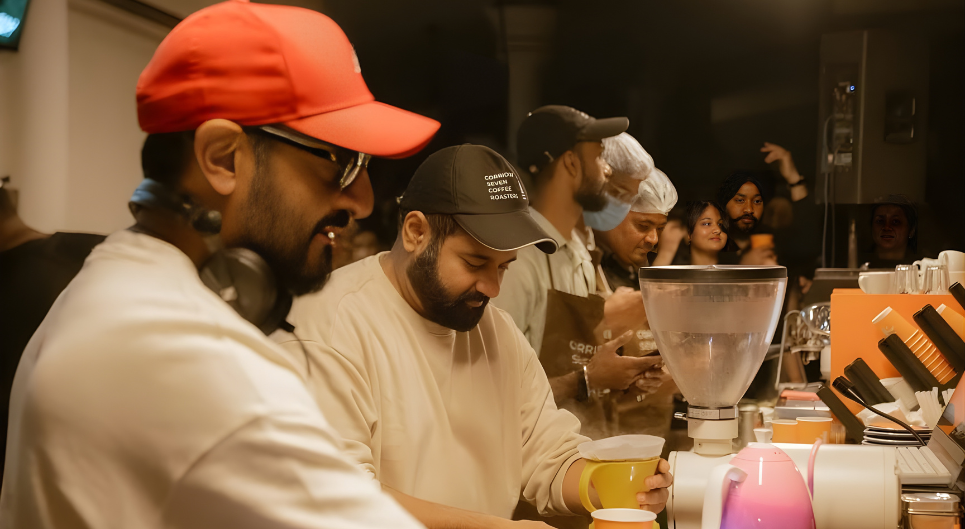
    A coffee rave underway at Corridor Seven Coffee Roasters in Nagpur | Image Credit: Mithilesh Vazalwar on Instagram


    India’s version looks different, and that difference is the story. For much of the past decade, alcohol in India’s major cities also functioned as a social shortcut, but under different conditions. Drinking was not just about taste or leisure. It was about urban fluency. To drink was to signal modernity and belonging in spaces that were already classed, gendered, and regulated.


    Now, across metros and increasingly in tier-2 cities, young professionals are opting out of alcohol situationally rather than ideologically. They are skipping rounds without apology, leaving earlier than expected, or choosing daytime socialising altogether. This is not prohibition, and it is not a backlash. It is conditional participation. Alcohol is no longer an automatic assumption for a social hang.


    Globally, sober curiosity emerged as backlash. In India, it looks more like recalibration. Less about excess. More about time, cost, and permission.


    Globally, this behaviour fits under the banner of sober curiosity. In India, it arrives with complications. Unlike Western markets, where sobriety often signals restraint from abundance, India’s relationship with alcohol has always been uneven. Large sections of the population abstain for religious, cultural, or economic reasons. What is new is not sobriety itself, but who gets to frame it as intention rather than constraint.


    In English-speaking, urban spaces, not drinking is slowly becoming legible as a choice. That shift is visible in the market. India’s non-alcoholic and zero-proof beverage industry, valued at roughly ₹1.37 lakh crore in 2023, is projected to cross ₹2.10 lakh crore by the end of the decade. Bars in Mumbai and Delhi now offer zero-proof cocktails priced like their alcoholic counterparts, complete with garnish, glassware, and ceremony. The point is not abstinence. It is equivalence. You can opt out without opting out socially.


    But the more revealing shift is not happening in bars. Across cities like Pune, Indore, Nagpur, and parts of Mumbai, early-morning “coffee raves” are drawing crowds that once would have gathered at nightclubs. Loud music, packed dance floors, caffeine instead of alcohol, and an exit time before noon. Similar sober daytime parties exist in New York or London, but in India their appeal is structural. They replace nightlife rather than supplement it. They fit around long workdays, shared housing, family expectations, and cost.


    This is where India diverges sharply from Western sober-curious narratives. The appeal is not only wellness or mindfulness. It is also efficiency. Alcohol costs time. Hangovers interfere with already compressed schedules. Late nights disrupt routines in cities where commutes are long, private space is scarce, and burnout is ordinary. In this context, sobriety reads less as self-denial and more as control. Not drinking is not about virtue. It is about being functional.


    A bottle of Pomegranate Kombucha | Image Credit: Shannon Nickerson on Unsplash


    Still, this permission is uneven. Choosing not to drink is celebrated when it appears intentional and curated. It is far less visible when abstention is expected or imposed. Women in India have long navigated sobriety without praise. Working-class abstention has rarely been framed as lifestyle. The current moment becomes visible largely because a certain class can afford to turn moderation into identity.


    That tension is what makes India’s sober curiosity worth paying attention to. This is not a wholesale rejection of drinking culture. Alcohol remains central to many social scenes. What is changing is the default. Refusal no longer requires justification everywhere. Social life is slowly learning to accommodate absence.


    Globally, sober curiosity emerged as backlash. In India, it looks more like recalibration. Less about excess. More about time, cost, and permission. This shift, uneven and easy to overstate, still marks something real. It reflects a change in how people gather, celebrate, and belong. In a culture where participation has long demanded conformity, opting out without disappearing is a meaningful shift.