Author: Sohini

  • It’s 2.14am in Pune, and a university student is lying on their bed. The room is dark except for the soft blue glow of the screen. “I can’t sleep,” they type. Three blinking dots appear, then a reply, “I’m here. Want to talk about it?” The voice on the other side isn’t a friend or a therapist. It’s an AI companion, programmed to listen, remember, and never judge.


    The truth is that loneliness doesn’t look the same everywhere. In New York, it might mean going days without talking to anyone. In Tokyo, it’s coming home to a silent apartment after a long day. In Mumbai, you might be surrounded by people, family, neighbors, the delivery guy who knows your order by heart, and still feel like no one really gets you. And that’s exactly where AI companionship is quietly taking root.


    Globally, 1 in 6 adults experience loneliness, according to the WHO. In India, the numbers climb in cities with nearly 45% of urban Indians saying they feel lonely “often” or “always.” The usual safety nets, extended family, community events, and neighborhood familiarity, aren’t as strong as they once were. Nearly half of Indians also believe mental health struggles should be kept private.



    Around the world, people are rethinking what friendship means. Social circles are shrinking, we’re choosing fewer, deeper bonds, and often drifting away from constant group chats and weekend plans. In the middle of this shift, a new kind of relationship is emerging, one that’s judgment-free, always available, and oddly comforting.


    “For some young Indians, apps like Replika, Anima, Pi, and a new wave of India-based AI companions have become late-night listeners and therapy stand-ins. Maybe that’s the appeal. Here, loneliness doesn’t always come from lack of people. It comes from the pressure to be the chill friend, the funny colleague, or the obedient child. From being in rooms where you can’t be your full self. With AI, there’s no history to manage, no cultural expectations to navigate, no fear of disappointing someone who raised you. You just… talk,” a Mumbai-based developer tells us.


    Intimacy with a machine comes with its own fine print. These apps don’t challenge your worldview. They don’t know the exact sound of your laughter. They won’t show up with coffee when your day collapses. And every conversation, from your most casual vent to your most private confession, is stored somewhere.


    And the talking is getting deeper. Young Indians are confiding in chatbots about sexuality they can’t bring up at home. College students are venting about anxiety without waiting months for a therapist or needing parental approval. People are grieving losses they can’t speak about aloud. Not everyone is looking for a diagnosis or professional advice, some just want a place to be messy, unfiltered, and heard.


    In a country where therapy still feels like a luxury or a stigma, AI friends can feel like a gentle loophole. They’re not replacements for real relationships, but they are quietly filling the gaps where traditional support systems fall short.


    Still, intimacy with a machine comes with its own fine print. These apps don’t challenge your worldview. They don’t know the exact sound of your laughter. They won’t show up with coffee when your day collapses. And every conversation, from your most casual vent to your most private confession, is stored somewhere. That 2:14 a.m. message about your parents? It’s sitting on a server farm thousands of miles away.


    Privacy is part of the unease.



    AI companions aren’t protected by the confidentiality rules that govern therapists, doctors, or lawyers. What you share isn’t covered by legal privilege, and shifting company policies mean your most personal chats can be logged, analyzed, or, in rare cases, accessed by humans for safety or model improvement.


    Studies of emotionally responsive chatbots like Replika and Character.AI show a complicated pattern, heavy reliance can correlate with lower well-being. The more people substitute AI for human connection, the more it strains their emotional landscape, some experts claim.


    And then there’s the deeper paradox.


    What feels like trust is, in reality, a transaction, more of yourself in exchange for constant engagement. These systems are designed for retention, not care. They mimic closeness, but don’t offer the friction, challenge, or reciprocity that shape real relationships.


    Maybe that’s the real signal. The very fact that someone might turn to a chatbot at 2am says something about what’s missing, from affordable therapy, time for each other, the “third places,” cafés, libraries, to even street corners, where people could just exist without performing.


    In that blue-lit room in Pune, the student is still typing. And someone, or something, is still answering.

  • Fashion’s Borrowings Across Borders (Final)

    Kolhapuri chappals have been worn across Maharashtra for centuries, mostly by people who needed shoes that could survive heat, dust, and long days on their feet. They are sturdy, hand-cut, and made to last. In 2019, the craft received Geographical Indication status, a legal recognition that tied the sandal to place, method, and community. In 2025, a near-identical silhouette appeared in Prada’s men’s collection.


    The shoe on the runway was stripped back. Thin leather straps crossed the foot. The sole was flat. The colors stayed within beige and brown. For many Indian viewers, recognition came instantly. Kolhapuris are sold in weekly markets, outside temples, and along highways, often by the same families who make them. Prada’s show notes did not mention that lineage. The backlash that followed focused less on pricing and more on omission. A public apology arrived days later.


    Scenes like this recur in fashion with quiet regularity. Objects that begin as practical or local tend to resurface later as luxury items, separated from their original makers. The transformation is rarely accidental.


    Long before the Prada episode, Paul Poiret built a Parisian craze around what he called “harem pants.” The loose trousers drew loosely from garments worn across parts of the Middle East and South Asia. French newspapers debated their propriety. Critics called them indecent. Poiret, meanwhile, became a celebrity. The people and places that shaped those silhouettes remained largely unnamed.


    By the middle of the twentieth century, American counterculture reached for similar references. Hippies wore kurtas, Nehru jackets, and paisley prints. Paisley had already traveled far. The motif began as the Persian boteh, appeared in Kashmiri shawls, and later entered mass production through Scottish textile mills. In 1960s America, it came to signal rebellion and nonconformity. In Kashmir, weaving continued as a livelihood, disconnected from the pattern’s new cultural meaning abroad.


    Within India, fashion reproduces comparable dynamics. On the runways of Delhi and Mumbai, mirrorwork from Kutch, ikat from Odisha, and phulkari from Punjab appear season after season. Fashion coverage often frames these elements as modern reinterpretations. The artisan clusters responsible for sustaining these traditions receive far less attention than the designers presenting them.


    Cinema has played a role here as well. Bollywood costume design regularly borrows from regional dress. The nauvari sari of Maharashtra and the phanek of Manipur have both appeared on screen, reshaped for choreography and visual drama. Once adapted for film, garments tied to daily life or ritual lose specificity. They become visual cues rather than lived forms.


    Social hierarchy shapes these exchanges further. Dalit and Adivasi designs, including tattoos, beadwork, and woven textiles, surface in urban boutiques as styling statements. The same elements can carry stigma when worn by members of the communities they come from. Context changes meaning.


    Objects that begin as practical or local tend to resurface later as luxury items, separated from their original makers. The transformation is rarely accidental.


    Indian fashion also reflects broader regional circulation. The salwar kameez, worn across South Asia, is common in Indian wardrobes. The angarkha, once tied at the side and worn as everyday clothing, often appears in collections under broad labels. At the same time, Indian luxury houses borrow freely from Western fashion, including tuxedo tailoring, Art Deco motifs, and standardized eveningwear. The flow moves in multiple directions.


    Some designers have tried to approach this terrain with more structure. Stella Jean has worked with artisan groups in Haiti and Burkina Faso, developing collaborations that include attribution and financial return. In menswear, labels such as Wales Bonner and Bode draw from Caribbean tailoring and American workwear through archives, oral histories, and named sources rather than anonymous reference.


    The same elements can carry stigma when worn by members of the communities they come from. Context changes meaning.


    In India, smaller labels offer a similar counterpoint. Raw Mango and Pero regularly identify weavers and workshops in their campaigns and catalogues. Craft appears as a visible relationship, attached to people and place rather than treated as texture alone.


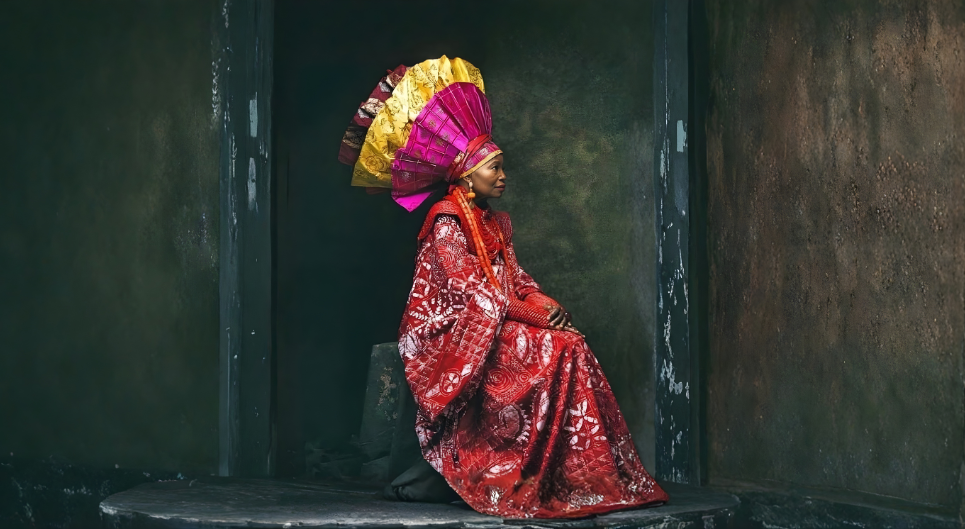
    The tensions around cultural use extend beyond South Asia. In 2019, Gucci listed a turban for sale on Nordstrom’s website. Sikh communities in the United States and elsewhere objected, citing the turban’s religious significance. The listing was removed. In Mexico, the Mixe community has challenged designers over the use of traditional embroidery patterns. Yoruba adire cloth from Nigeria appears in museums and on runways even as many producers remain economically vulnerable. Moroccan caftans drift in and out of Western trend cycles, often described as bohemian, detached from their everyday and ceremonial use.


    These episodes point toward a shared problem. Visibility, credit, and compensation rarely move at the same speed as aesthetic influence. Moodboards and acknowledgements do little on their own. What lasts are contracts, royalties, and names that appear beyond press releases.


    Fashion depends on circulation. Cloth moves. Silhouettes move. Symbols move. When that movement leaves people behind, history thins out. The question is no longer whether borrowing will continue. It already has. The question is whose hands remain visible once the borrowing is complete.

  • Fashion’s Borrowings Across Borders testing

    From ateliers to streetwear drops, fashion often thrives on borrowed traditions. But does recognition, like trends, rarely last?
    Taronish


    For centuries, Kolhapuri chappals have been the footwear of farmers and townsfolk across Maharashtra. In 2019, they were formally recognized as a Geographical Indication, protecting their heritage and regional identity. In 2025, they walked the Prada runway.
    The sandal seemed unremarkable at first glance: slim leather straps, clean lines, a muted palette that matched Prada’s minimalist ethos. Yet, for many Indians, its outline was unmistakable. The centuries-old footwear, long sold in bazaars, carried a lineage Prada never acknowledged; sparking backlash less about the price tag and more about the absence of credit. Within days, the Italian house issued a rare apology.
    The Prada episode was not an isolated misstep but part of a much older story. Fashion has always transformed everyday cultural objects into global commodities, sometimes with credit, often without. Each time, the same questions surface: what separates appreciation from appropriation? And perhaps more urgently, who profits and who disappears in the process?
    A century before Prada’s sandal, Paul Poiret staged a Parisian craze around “harem pants.” The billowing trousers, derived loosely from Middle Eastern and South Asian silhouettes, were marketed as revolutionary, liberating women from corsets and skirts. French society debated their propriety; critics called them scandalous. But for Poiret, the scandal became a celebrity. The garment’s layered histories, its regional makers, were barely in the room.
    Half a century later, American counterculture reached for similar vocabularies. Hippies adopted kurtas, Nehru jackets, and, most iconically, paisley — a motif with its own long, winding journey: once a Persian boteh, then woven into Kashmiri shawls, later mass-produced by Scottish mills, before being rebranded as a universal symbol of bohemia in 1960s America. To wear a paisley shirt in San Francisco was to signal rebellion; to weave one in Kashmir was to survive an economic system that now saw its work framed as “exotic.”
    The tension, then, isn’t simply about “borrowing.” It’s about who gets to be remembered as visionary and who gets left as background. Poiret is remembered as an innovator; the hippies as style revolutionaries. The artisans and cultures whose forms they borrowed were treated as raw material.
    Not Just the West

    influencers
    influencers

    It would beeasy to frame appropriation as asimple story of the West borrowing from “the Rest.” But the truth is more complicated, and less comfortable. Even within India, fashion replicates the same hierarchies of visibility and erasure.

    On the runways of Delhi and Mumbai, mirrorwork from Kutch, ikat from Odisha, or phulkari from Punjab reappear in luxury collections. These crafts are recast as “contemporary Indian chic,” while the artisans themselves remain invisible. A couturier’s reinterpretation might be hailed in fashion glossies, while the cluster that keeps the tradition alive is relegated to the backdrop. The credit sticks to the designer, not the community.


    Dushi is to me the most beautiful side of things, like the part in the movie that everyone is waiting for, or the part in the book where it all makes sense


    Bollywood, too, has been a major appropriator. Costumes borrow freely from regional dress — the nauvari sari of Maharashtra, a nine-yard drape designed for ease of movement, or the phanek of Manipur, a handwoven wraparound skirt with deep cultural and ritual significance. Restyled for spectacle and glamour, stripped of context, what was once an everyday identity marker becomes either caricature or fleeting “trend.”
    The erasures deepen with caste and community. Dalit and Adivasi aesthetics — tattoos, beadwork, woven textiles are sometimes lifted into urban “boho” fashion without acknowledgment. What appears as edgy styling in a Mumbai boutique is the same design stigmatized when worn by its origin community.
    And these borrowings aren’t just internal. Indian fashion has long absorbed silhouettes from elsewhere in South Asia — Pakistani salwar kameez, or the angarkha, a traditional Indian tunic, once tied at the side and flowing like a frock, often flattened under the vague label “Indo-fusion.” Meanwhile, our own luxury houses borrow freely from Western codes of chic: tuxedo tailoring, Art Deco embellishments, the “little black dress.” We are both borrowers and the borrowed-from.
    All of which underscores the deeper point: appropriation isn’t solely about geography — East vs. West, North vs. South. It is about power. Who gets to transform a craft into couture, and who is left unnamed in the process? Who crosses borders freely, and who is told their dress is “too ethnic,” “too traditional,” or “too niche”?
    But cultural borrowing isn’t always doomed to misfire. Done with care, collaboration, and credit, it can open doors rather than close them. Dior’s 2023 show at Mumbai’s Gateway of India, for instance, wasn’t perfect — some critics noted the spectacle outweighed the storytelling, but it did something rare: it placed Indian craft on a global luxury stage, with artisans visibly acknowledged in pre-show materials.
    Elsewhere, designers like Stella Jean have built collections around collaborations with artisans from Haiti to Burkina Faso, ensuring royalties and credit flow back to the communities whose work inspires the clothes. In menswear, labels like Wales Bonner and Bode have shown how heritage can be central, not ornamental — drawing from Caribbean tailoring or American workwear without reducing them to moodboard aesthetics.
    In India, too, smaller labels like Raw Mango and Pero set a different precedent: naming weavers, spotlighting craftspeople in campaigns, and making sure the ‘handmade’ isn’t just marketing gloss but a living partnership.
    In 2019, Gucci marketed a $790 turban on Nordstrom’s website. For Sikh communities in the US and abroad, the sight was painful: a sacred article of faith rebranded as novelty accessory. Nordstrom pulled the listing after backlash, but the incident underscored how cultural symbols are emptied of meaning when filtered through retail systems.

    Patterns Across the World
    This cycle isn’t confined to South Asia. In Mexico, the Mixe community has repeatedly pushed back against designers lifting their traditional blouse patterns without consent. In Nigeria, Yoruba adire — the indigo-dyed resist textile now displayed in global museum shows and reimagined on luxury runways — still leaves its makers with fragile livelihoods. And in Morocco, the caftan drifts in and out of Western trend reports as “boho chic,” stripped of its grounding as a living garment tradition. Across geographies, the story repeats: sacred or everyday dress becomes exoticised, repackaged, resold — with the origin community forced to fight for recognition as custodians rather than decoration.
    What Real Recognition Looks Like
    It’s tempting to keep asking the familiar question — was this respectful, or was it offensive? But that binary feels increasingly inadequate. The more urgent question is: what structures exist to ensure visibility, credit, and compensation travel alongside the aesthetic?
    Homage is not about moodboards or polite footnotes. It’s about contracts that outlive a season, royalties that flow beyond the runway, and credits that show up not just in show notes but on the product tag. Imagine a Kolhapuri sandal carrying the name of its maker as proudly as the house that sells it.
    Fashion has always been about circulation — of cloth, of silhouettes, of symbols. But circulation without recognition is erasure. The industry doesn’t need to stop borrowing; it needs to start acknowledging that borrowing comes with responsibility.
    Because in the end, the Kolhapuri is not just a sandal. The turban is not just a headpiece. The paisley is not just a motif. They are cultural legacies — reshaped, rebranded, resold. And each time they travel, they tell us less about the garment than about the hands we choose to see, and the hands we don’t.

    testing itt