

On a weekday morning in New York, a man pulls a paperback from his tote bag and props it against his knee. In a subway car full of phones, the gesture feels almost declarative. Across the aisle, someone glances over, not out of curiosity, but recognition.
Scenes like this are becoming more noticeable. In London, on the Overground, in Seoul, in study cafés that fill by noon, and even in Bengaluru, in library-cafés where people come as much to sit with a book as to escape the heat. Reading in public isn’t new. What’s new is how visible it feels.
Part of that visibility comes from contrast. Nearly everything else we consume now arrives pre-filtered. The shows we watch, the music we hear, the news we encounter, even the jokes that find us are shaped by recommendation systems designed to anticipate our preferences. The book, oddly enough, still resists that logic. It doesn’t auto-play. It doesn’t refresh. It doesn’t quietly optimize itself to keep you engaged.
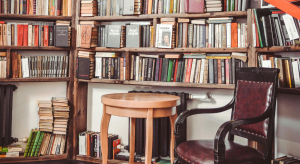
That resistance has started to matter. Despite years of predictions about the death of print, physical books remain dominant. In the United States, print accounted for close to three-quarters of publishing revenue as recently as 2022. Surveys also suggest that print remains the most widely used format across age groups, even as younger readers increasingly move between print, e-books, and audiobooks.
E-books haven’t disappeared, but they haven’t replaced print either. Digital reading has grown steadily, especially in genres like romance, where speed and volume matter. What’s emerging instead is a split. Screens for convenience and paper for presence. The choice feels less about format and more about how people want their attention handled. In markets like India, where access to e-readers, stable connectivity, and digital payment systems is uneven, print remains the default rather than a preference.
That distinction becomes clearer in public. In Tokyo, dedicated reading spaces and silent cafés have emerged as environments designed for sustained focus. In Seoul, book cafés offer multi-hour seating for readers who want to stay in. In India, informal reading communities like SGNP Reads and South Bombay Reads have begun organizing public reading sessions, turning parks and promenades into shared quiet spaces. In New York, the subway has always had readers, but the sight of a paperback now stands out against endless scrolling.
Part of the appeal is physical. A book takes up space. It occupies both hands. It sets a pace you can’t speed up without effort. In a life where work, leisure, and socializing all collapse onto the same glowing rectangle, the book reintroduces a boundary, albeit a modest one.
Yet, that boundary is increasingly rare. Work messages arrive on the same screen as entertainment. News alerts interrupt conversations. Even leisure is measured, tracked, and optimized. The book doesn’t participate in that economy. It doesn’t ask who you are or adjust itself based on past behavior. In a culture obsessed with personalization, the book remains curiously indifferent.
Of course, books are not untouched by algorithms. Covers are tested, titles are optimized, and BookTok can turn a novel into a bestseller overnight. But the act of reading, especially reading in public, still resists total mediation. Once the book is open, the feed stops.

That is perhaps why books have become visual objects again with bold covers. Publishers seem to have leaned into this visibility with spine-forward design becoming more common. Special editions of books like Fourth Wing by Rebecca Yarros, with sprayed edges and highly stylised covers, have been designed as much for display as for reading, particularly within BookTok-driven genres.
Is this nostalgia, or is it compensation? Historically, reading has always moved in cycles. Moments of rapid technological change often produce counter-movements toward slower forms of media.
This shift isn’t exactly a revival. Print never disappeared. What’s changed is how visible and intentional it now feels. Many younger readers move fluidly between print, audiobooks, fan fiction, and online communities. The book offers texture where the screen offers flow. This helps explain why independent bookstores are opening again. In the United States, their numbers have grown by roughly 70 percent since 2020, with more than 400 new stores opening in 2025 alone.
It would be easy to frame this as a romantic shift. But something more pragmatic seems to be underway. In a world where nearly everything is curated in advance, the book remains one of the few experiences that unfolds without anticipating you. It doesn’t adapt, optimize, or respond. It simply demands attention. And increasingly, that seems to be the point.

Leave a Reply