

It is a Wednesday morning and Salim has not carried change in three years.
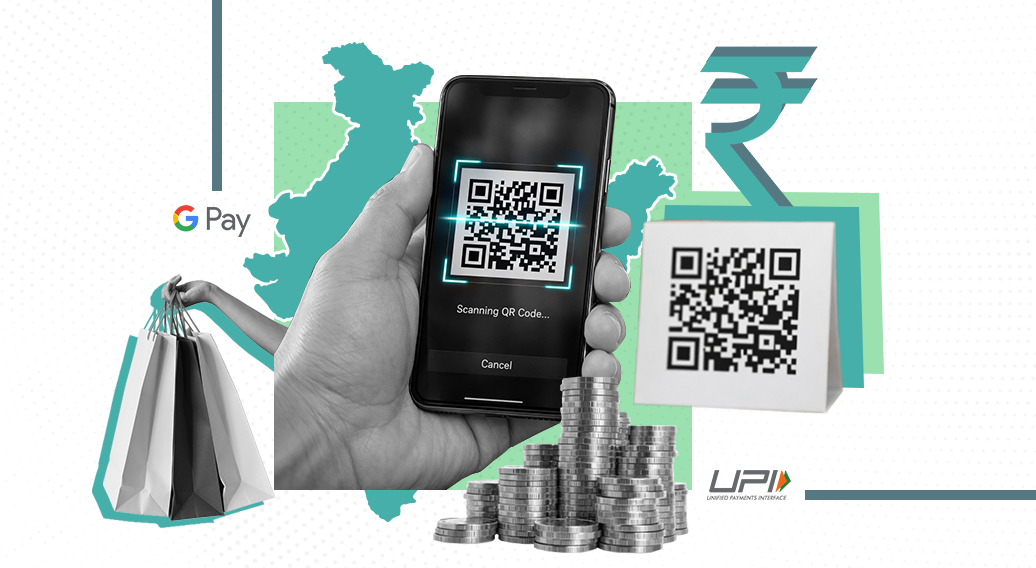
He runs his autorickshaw through the western suburbs of Mumbai, and at the end of every ride, his passenger does the same thing. They open a phone, point it at the small printed QR code taped to the back of the front seat, and pay. No fumbling for change, no negotiation about whether he has a fifty, no waiting while someone searches a bag for coins that may not be there. The money arrives in the driver’s account before the passenger has even put their phone away.
The driver is not an outlier. Across India, a country that ran almost entirely on cash a decade ago, this is often how transactions happen now. From fancy city restaurants to shops in towns that may not even have a bank branch, people now turn to digital payments.
This happens through a system called UPI or Unified Payments Interface. It is a real-time, instant payment system that allows you to transfer funds between bank accounts using a smartphone, QR code, or virtual ID. By the end of 2025, UPI was processing 21.6 billion transactions in a single month.
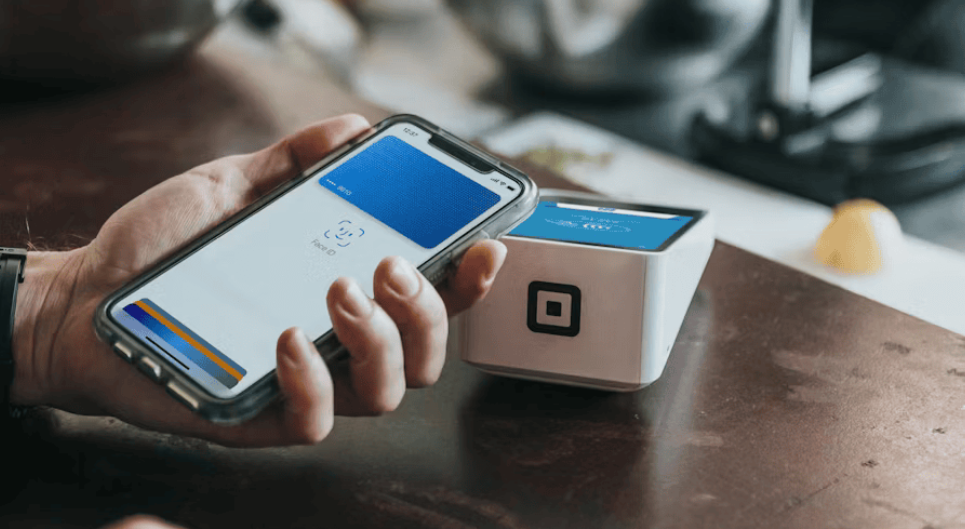
That scale marks a shift. UPI has grown beyond a new system or a policy success into an infrastructure that has become invisible through use. What was once an alternative to cash is now the default layer through which everyday transactions move. At the same time, other markets, including the United States with the launch of FedNow in 2023, are only beginning to build comparable systems. The question has quickly shifted from whether digital payments will take hold to what happens once they already have.
The story of how this happened begins on the night of November 8, 2016. Prime Minister Modi appeared on television at eight in the evening and told the country that its two largest currency denominations, ₹500 and ₹1000 notes, the currency of vegetable vendors and domestic workers and small shop owners, would cease to be legal tender at midnight. Four hours’ notice for 86 percent of the cash in circulation. The lines outside banks began forming before dawn and did not shorten for weeks. The human cost was real and the politics remain fiercely contested. But in the space that the absence of cash opened up, something else took hold. UPI had launched just months earlier to modest interest; suddenly it had the entire country’s attention, not because it had been marketed well, but because there was nothing else to turn to.
To understand what UPI is, it helps to understand what it is not.
It is not an app. Google Pay and PhonePe and Paytm all run on UPI, but UPI is the infrastructure beneath them. The system was built by the National Payments Corporation of India, a non-profit backed by the Reserve Bank of India. It is open to anyone, owned by no one, and available to every bank, app, and fintech company that wants to build on top of it. Any two banks can talk to each other through it and any two apps can transact across it. The system does not privilege one platform over another, which means competition happens in the services built on top of it rather than in the rails themselves.
What it does is simple. It lets anyone send money to anyone else, instantly, from one bank account to another, using only a phone number or a virtual ID. It works across platforms, banks, and users. For those without smartphones, it works through a basic menu system accessible on any mobile phone, the kind that has been around since before the internet was in everyone’s pocket.
In 2023, the United States launched FedNow, its long-awaited instant payment system, welcomed as a significant modernization of American financial infrastructure. By the time it arrived, there was a gap in the two markets that is worth understanding, because it did not happen by accident. The United States built its financial infrastructure around private competition, mainly card networks, fintech platforms, and bank-by-bank systems, a structure reflected in services like Venmo, Zelle, and Apple Pay, which operate within proprietary or limited networks rather than a unified public rail.
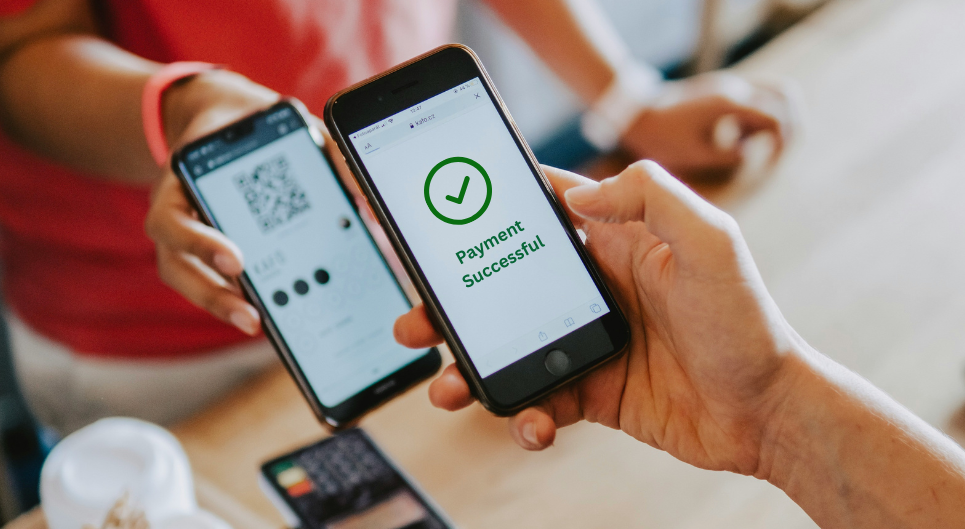
Venmo works within Venmo, Apple Pay works within Apple’s ecosystem, and Zelle works between participating banks. Each is a private solution to a public problem, capturing value for its owner and excluding users not already inside the system. The result is a patchwork that works well enough for most people most of the time. But its gaps fall hardest on the people least able to navigate around them.
What this looks like in ordinary life is harder to convey in numbers. It looks like the domestic worker who receives her salary at midnight on the last day of the month, transferred in seconds, without her employer needing to find an ATM or her needing to be present to collect it. It looks like the small textile shop in Surat whose owner now has a complete digital record of every transaction, with a credit history where none existed before, which means access to loans previously unavailable to businesses like his. It looks like the teenager splitting a food delivery order with four friends, each paying their share in under thirty seconds, none of them thinking of it as a financial transaction at all.
The friction of cash, the exclusion of people without banking relationships, and the invisibility of small economic actors to institutions that allocate credit, was a structural condition shaping which transactions were possible and who could participate in which economies. While UPI did not dissolve that structure, it changed who is visible inside it. The domestic worker with a transaction record is now legible to a bank, visible in data in a way she was not before. The textile shop owner exists, financially speaking, in a way that his years of cash dealings never allowed. Legibility is not equity, and visibility is not access, but you cannot begin to participate in a formal economy that has no record of your existence, and for millions of people, UPI created that record for the first time.
None of this is without complication. The same infrastructure that processes Salim’s fares also creates a permanent, state-accessible record of every payment every Indian makes. India still lacks comprehensive data protection legislation that would give citizens clear rights over this information. Who can access transaction data, under what conditions, with what oversight, these remain contested and unresolved, and the scale of the system makes the stakes of those questions large.
There is also the question of cost. UPI’s zero-fee model for small transactions drove adoption, but running the infrastructure is not free, and where that cost falls, and who decides, are governance questions the system’s success has deferred rather than answered. And then there is the more enduring concern, the one of an infrastructure that does not flatten inequality by existing. It changes its shape. The textile shop owner has a credit history now, but does that translate into a loan at a fair rate? That depends on systems well beyond UPI’s reach.
The payment revolution was not televised. It happened in the hands of hundreds of millions of people who needed it to work, on a Wednesday morning when a man in an autorickshaw stopped carrying change and did not miss it.
It was scanned, though. It was absolutely scanned.




Leave a Reply