

What happens when one of the world’s biggest luxury stores meets one of the world’s biggest festivals? The answer, for most of us, came via Instagram, when Harrod’s of London lit up its entire facade to celebrate Diwali. Within those multi-coloured walls, the store offered exclusive Indian couture designed by Gaurav Gupta, and a multitude of Diwali-focused food and beauty experiences.
When one of the world’s most recognisable luxury department stores dedicates an expansive program to Diwali, the significance extends well beyond festive merchandising. Harrods’ growing engagement with the festival reflects how dramatically the cultural and commercial landscape of global luxury is changing, and how India is increasingly becoming central to that conversation. It’s no wonder that Harrod’s is choosing to woo the South Asian consumer. This report says that the retailer saw a 50% swell in footfall by Indian consumers this festive season alone.
The fact that Harrods has increased its investment in Indian labels including Verandah, 100Hands and Kartik Research across menswear and womenswear, is also an indicator that Harrod’s attention to the community is not trend-led; it is in fact, a wider shift accommodating brands of Indian origin that sit cheek by jowl with other Western labels.
Harrods is just one of many though. Across the luxury sector, international brands are developing increasingly elaborate India-focused initiatives. News just dropped about Anita Dongre creating an exquisite carrom board, a cultural artefact of sorts, for Gold House, marking their ‘Gold Diwali’ celebration. Ferragamo and Burberry have both introduced dedicated Diwali collections, while Jimmy Choo has marked the festival through multiple seasonal initiatives. Bvlgari has taken the engagement further with its first global Diwali campaign, Passing the Light, a collaboration with Indian artist Doyel Joshi on an installation featuring 4,500 handcrafted terracotta elements inspired by the traditional diya. From Christian Louboutin designing exclusive designs for India inspired by Navratna gemstones last year, to Franck Muller’s limited edition watch that pays tribute to Lord Ram, onwards to Jo Malone’s London potli designed in partnership with Arpita Mehta, international luxury brands are looking beyond conventional festive campaigns to engage with India’s cultural identity. And this is just a small smattering of examples.
India’s economic growth has served its elite very well, making them amongst the most sought-after consumer audience for international luxury businesses. Businesses know that Diwali is not the time for a tight fist. Diwali is a time for spending, and has long been one of the country’s biggest occasions for luxury spending, especially in jewellery and fashion, and the numbers underline this. Industry figures cited for the September-to-early-November festive period put Indian consumer expenditure at $27 billion, representing a 25 per cent increase year on year.
There is certainly a pragmatic reason for this: as mainland China’s personal luxury market shrank by 3% to 5% in 2025, the next obvious market was India. But the significance of this market cannot be measured by spending alone. Indian consumers are not simply a customer segment to be activated during a festival. They are part of a wider shift in luxury consumption, in which cultural identity, craftsmanship, provenance and exclusivity increasingly influence purchasing decisions.
For Harrods, Diwali offers an opportunity to connect with several audiences simultaneously: Britain’s established South Asian communities, affluent Indian visitors to London, customers from across South Asia and the Gulf, and international shoppers interested in discovering new designers and cultural experiences.
Perhaps the more interesting development is the way Indian design is being positioned. For years. Indian designers have been buttonholed into designing traditional Indian clothes usually associated with weddings and festive apparel. European heritage, craftsmanship and cultural codes shaped the aspirations of Indian luxury buyers. Today, those same global brands are looking towards Indian heritage to create products that resonate with local consumers while drawing on the richness of the country’s cultural identity.
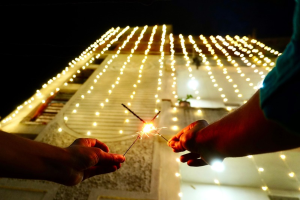
The decision to turn the store’s façade into a public Festival of Lights display is therefore significant. It takes Diwali beyond the transaction and into the public cultural life of London. The conversation is no longer pigeonholed into global luxury brands making themselves relevant to India. It is about Indian culture becoming a source of relevance, aspiration and desirability on the global luxury stage.
There is also a longer-term ambition at work. Harrods has said that the Diwali Gift Box performed beyond expectations last year, prompting increased volumes this year.
Yet luxury retail is increasingly about cultural relevance and emotional connection, not simply access to expensive products. For a department store such as Harrods, recognising the importance of Diwali is a way of recognising the communities and cultural influences shaping the future of its customer base.



Leave a Reply