

We all have a few medicines that sit in the back of the cupboard, ones perhaps our grandmother brought over on her last visit, citing their numerous health benefits. Often bottled in green and brown-hued glass jars with handwritten labels sourced from the local vaid (Ayurvedic healer), we associate them with a past time; one where kitchen ingredients were the most sought-after medicines and all it took for a fever to wear off was a cold-water compress and a good night’s sleep.
However, even as modern-day science progresses by leaps and bounds and accessibility to Western medicine is growing by the minute, the younger generations are reaching back for those old bottles; only this time, they’re packaged and marketed as high-value supplements instead of simple cabinet finds. The most recently viral Ayurvedic ‘wonder’ is Berberine, a natural plant compound taking grocery stores and household cabinets by storm, said to work as ‘Nature’s Ozempic’.
The Berberine compound has been in rotation in Eastern medicine for over 3000 years, with roots in Mesopotamia, China, and India. While its uses span treatment of infectious diseases and digestive disorders, its recent surge in popularity is attributed to its alleged efficacy in weight loss. This identity comes from its studied use in the treatment of type-2 diabetes. Now sold as a dietary supplement, its global market share is expected to reach a whopping USD 1520.8 million by 2034, with North America capturing 44.5% as of 2024.
This constitutes a larger movement towards the use of supplements aiding in metabolic health and nutrition, with approximately 75% of Americans taking a daily dietary supplement, according to the Food and Drug Administration (FDA).
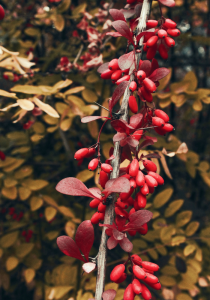
But why the US, and why now? While it is easy to assume that eastern medicine is fairly new to the West, interest in the field began in the late 1800s and early 1900s – with Indian spiritual leaders such as Swami Vivekananda and Ayurvedic doctors bringing this knowledge with them when they visited the country. Its prominence has ebbed and flowed over time, but its reintroduction to mainstream American health routines can be credited to a growing preference for organic, long-term health benefits in an effort to maintain a ‘clean’ lifestyle.
Such a lifestyle has seen growing importance on social media, with wellness creators showing off their whole foods diet, borderline-obsessive workouts, and 10-step morning routines. Berberine as Ozempic isn’t the only ‘healthy’ alternative the internet has come up with; basil seeds are said to work as natural Botox, and apple cider vinegar is considered a sure shot for weight loss and dental care. Natural becomes moral, while mass-produced pharmaceuticals become impure. But the intent never changes; skinny is still sexy, whether it is achieved through biology or chemistry.
Some doctor-turned-creators such as @doctorsoood tout the benefits of Berberine as aiding in insulin sensitivity and metabolism, garnering tens of thousands of views. Actor Ian Somerhalder has his own supplement company, The Absorption Company, which sells Berberine and other natural supplements said to have “pharmaceutical-grade absorption”. Indian creators such as @twoinrhythym and @yogwishi also populate Instagram and Facebook with descriptions of their Ayurvedic wellness habits and ancient Indian health and beauty secrets.
This raises a pertinent question: is the growing popularity of natural remedies driven only by a commitment to holistic wellness, or also by social media narratives that make particular beauty ideals feel more attainable to a wider audience? Indian or not, the objective standards of beauty remain the same. The popularization of Ayurveda and the turn to older, simpler practices both echo the sentiment of perfection dressed up as wellness. It is interesting to note that the use of Allopathy hasn’t subsided; Ayurveda is the fad of the moment, for some. Those old bottles our grandmothers brought us weren’t a quick fix to get that hot summer bod everyone seems to be after, but part of a holistic lifestyle that favored internal health over external beauty.
This is not to say that Ayurveda isn’t well respected in the West. Through many medical institutes and practitioners devoted to the study – the California College of Ayurveda, the Kerala Ayurveda Academy located in California and Washington, and the Kripalu School of Ayurveda in Massachusetts – we see the seeds that Yogis planted flourishing. Ayurvedic medicines are regulated as dietary supplements in the US, with its legitimacy as an FDA approved drug hanging in the balance. And yet, India rises to an estimated value of USD 286.1 billion by 2030 in the medical tourism market, indicating that institutional recognition need not affect proliferation.

The commodification of Ayurveda is thus a double-edged sword. While it brings millions of new eyes to the ancient practices of Eastern medicine, it also enables the perpetuation of an economy where big Indian brands like Vadham sell Berberine supplements for around $16, and Target sells them for $20 to $40 a pop. This juxtaposition is concretized when the same ingredient is sold in India under its traditional name, Daruharidra, for just about $5 to $6. The jar in the cupboard remains collecting dust while its newer, plastic covered counterparts with shiny branding takes its place in the forefront.
Social media trends, brand marketing, and institutional authorities will come and go. What matters is the people, and the habits and practices passed down from generation to generation that are finally making their way around the world. Our grandmothers were truly onto something; it is up to us to find it.





Leave a Reply