

Maybe twenty years ago, India had a fledgling but passionate rave subculture. If you were in college, or perhaps a young office worker, the whispers would go round: so-and-so’s bungalow, sitting just on the fringes of Mumbai city, or a farmhouse in the Delhi suburbs, was opening its doors to ravers for the weekend. There was never anything official about it. People in the know would tell their friends, and so on and so forth, until the weekend came, and the bungalow would overflow. Electronic music would play all night. Sometimes the police would come round and bust the party; this was a matter of some pride. The next morning, exhausted hedonistic dancers would be scattered everywhere like ninepins, already keen to go for the next rave, held who knows where.
Cut to 2026. Imagine sitting at Rajasthan’s Magnetic Fields Festival. For years, the festival was held in the state’s Shekhawati region, in a 17th C palace, with attendees flooding into courtyards and balconies. Its programming included international underground names like Four Tet, Bicep and DJ Koze alongside the creme de la creme of Indian electronica as well as local Rajasthani folk artistes). Magnetic Fields (and its current offshoot Magnetic Fields Nomad) collaborates with Hoegaarden, and sells cool merch, including bandanas, mugs, totes and T-shirts. Naturally, there is also press accreditation required. It began by hosting 500 people; it now boasts of at least 3,000. Glorious it certainly is. Underground? Debatable.
The causes are fairly obvious. Economic growth has produced a middle class with more disposable income than ever. Even more significant is the advent of the Internet and social media, which has completely altered the music available to listeners, widening the field beyond imagination. And it also did away with the whisper network; one Reddit post, one Instagram story, and the word spread like wildfire. There is now an Instagram page called Indian Ravers, with 189k followers – apparently “#1 Place For All The Electronic Music Updates in India, Connecting with Ravers around the World.”
The festivals that anchor the scheme now are annual, commercial and multi-day, and they cater largely to young, urban, cosmopolitan Indians. There is now the Namas’cray Experience, held everywhere from Sri Lanka to Goa. There is Goa’s Sunburn, a multi-stage electronic festival co-founded by Nikhil Chinapa, the VJ / DJ who then acrimoniously parted ways to start Supersonic, supported by the television channel VH1. A legal scuffle would ensue.
Everyone has brand partners to fund artists and shows, and some promoters believe that they are a necessity. Others believe that they muddy the cultural waters, detracting from the soul of a festival. The scene has completely transformed: influencers are everywhere, wielding camera phones and seeking cultural clout, while everyone seeks access to the VIP table. And the most recent travesty is the growth of the baby ‘rave‘, which contrary to its name, is not just a small-sized rave; it is a party for children, where a DJ spins songs like Baby Shark. None of this is bad or wrong, but it is a leap away from the old days.
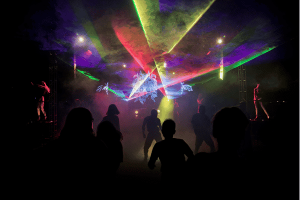
These complaints are not particularly Indian. The same complaints echo in the Western music-scape as well, with veterans complaining that raves have become simulations of the real thing, that being seen is that ‘EDM’ is simply a corporate version of punky, rebel musical culture.
What would a healthier scene look like? The answer perhaps would be for organizers to focus on the collective transformative experience, rather than privileging influencers or VIPs. India’s audience has never been tied to particular names, having come to the music through sound rather than celebrity. Its festivals have already shown that a Rajasthani palace can hold a dancefloor. And its illegal parties, however small, suggest that the itch for something less polished has not gone away. In India, as elsewhere, the real party is the one that is the hardest to find.


Leave a Reply