

Maitreyi Ramakrishnan rarely talks about being simply “South Asian”. The Canadian actor, best known for Never Have I Ever, is always precise about her origins: she is Sri Lankan Tamil. In interviews, she has spoken openly about her family’s heritage, Tamil culture and the experience of growing up in a Sri Lankan Tamil household in Canada. Her identity is not an incidental detail of her biography, but something she returns to, explains and sometimes brings into her work.
But Ramakrishnan’s origins are beside the point of this piece. Her insistence on specificity, on the other hand, is very much the point. For a long time, the South Asian – and Indian – diaspora were painted with the same brush. Whether their roots were from the Konkani-speaking communities of Goa or the Punjabis up north, ‘Indian’ became a useful shorthand and a way of communing with diverse communities in a strange land.
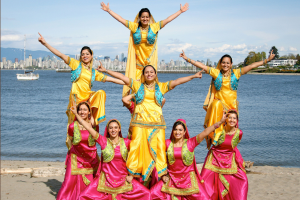
But across the diaspora, a subset of the younger generation is gradually growing curious about the languages their parents spoke, the regions their families left, the communities they belonged to and the histories that were compressed into the simple word ‘Indian’. An older generation trying to fit into a new country urged their children to learn the English language; speaking it with facility signalled belonging in a way nothing else would. But their kids are equally comfortable in their native tongues, fluent in Bengali, Punjabi, Tamil or Malayalam. Others are researching family histories, returning to ancestral towns, following regional creators on YouTube or consuming the specific music, films, literature of their parents and grandparents.
Indians are the second-largest Asian-origin group in America, accounting for about one-fifth of the Asian population, After Hindi, Telugu, Gujarati and Tamil are among the most common languages spoken in Indian American homes. Weekend schools are often the hinge to this linguistic education, such as the American Tamil Educational and Cultural Center in St Louis. Similarly, the Illinois Tamil school, a nonprofit Tamil center has taught up to 300 students on the weekend. And in Massachusetts, Shishu Bharati began as a Sunday study group for immigrant parents and now offers programmes in Gujarati, Hindi, Marathi, Tamil, Telugu and Kannada.
The Internet has of course considerably smoothed this process. There is suddenly a boom in regional language videos, and many vloggers such as America lo Telugodu Vlogs have built large diaspora followings by documenting American life in Telugu. Regional cinema and streaming services have built their own diaspora audiences as well, on platforms like Hoichoi, Chaupal and Sun NXT selling subscriptions abroad.
Younger viewers are more likely to encounter their heritage through social media. Brooklyn-based Chaheti Bansal, who posts as RootedInSpice, built an audience of nearly 800,000 TikTok followers and 406,000 Instagram followers by posting reel after reel about the specific Indian dishes she grew up eating.
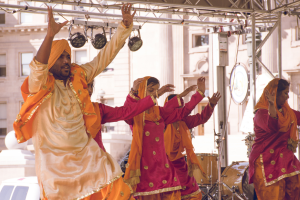
Older generations kept their heritage alive, in part, through temple communities, and regional-language newspapers. The younger generation can claim all of those things, plus an algorithm that can lead from a Tamil language lesson to a Telugu comedian, a Bengali film, a Punjabi podcast or an obscure account of a family tradition.
The result is a more complicated relationship with heritage. A young Indian American may feel little attachment to the broad category of “Indian culture” and yet be deeply interested in Tamil literature, Punjabi music, a Gujarati grandmother’s stories or the history of a particular town in Kerala. The search is becoming more specific as it becomes more accessible.
The question is no longer simply whether the second generation will remain connected to its heritage. It is what happens when it starts asking what that heritage actually is.



Leave a Reply