

Time and again, scientists from India have made news on the global stage, shaping our understanding of how the world functions with groundbreaking scientific discoveries and theories.
C.V Raman discovered an effect that was named after him: the Raman Effect, which is a discovery of the phenomenon that light changes color and wavelength when scattered by a transparent material. Satyendranath Bose was renowned for his research in quantum mechanics, even working with the legendary Albert Einstein. Homi J. Bhaba was revolutionary in the field of nuclear physics, and is widely regarded as the Father of India’s nuclear program.
Their legacy is now being carried forward by a new generation of academics, researchers, and forward-thinking Indians who are trying to grapple with the challenges most concerning humankind in this century.
Two Indian scientists, Roxy Mathew Koll and Neelima Satyam have earned major international recognition as awardees of the American Geophysical Union in 2026. This association celebrates research and innovation in advanced earth and space sciences. Another scientist of Indian origin, Anima Anandkumar earned a place for herself on TIME magazine’s 100 AI List in 2026 for her pioneering work which sits at the intersection of artificial intelligence and science; she aims to accelerate simulation and understanding of the physical world. Her work covers several crucial domains, including weather forecasting, nuclear fusion, medical technology and quantum chemistry.
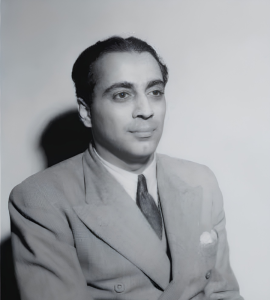
Atanu Nath, won the Breakthrough Prize in Fundamental Physics, often referred to as the ‘Oscars of Science’. He shared this honor with 376 scientists, including eleven from his own country. Nath, along with his peers, was recognized for collaborative work on the groundbreaking Muon g-2 experiment, conducted across several research institutions of international repute such as CERN, Fermilab and Brookhaven National Laboratory.
Theoretical physicist Professor Deepak Dhar was awarded the 2026 Dirac Medal by the International Centre for Theoretical Physics (ICTP) for his contributions to statistical mechanics and complex systems. This award was established in 1985 to celebrate achievements in the field of physics, and Dhar was only the second scientist working in India to become a recipient. Dhar, an INSA Distinguished Professor at the International Centre for Theoretical Sciences in Bengaluru, shares this honor with other scientists such as Bernard Derrida, Marc Mézard, and Haim Sompolinsky. He is famously recognized for his work on the ‘sandpile model’, which advanced understanding of large-scale phenomena such as traffic gridlocks, neural networks and earthquakes. In the past, Dhar has also won the Boltzmann Medal and highlighted the expanding interdisciplinary impact of his research on optimization, neuroscience, and artificial intelligence.
At the Sudha Gopalakrishnan Brain Centre in IIT Madras (Chennai), researchers have achieved a crucial breakthrough in neuroscience with the development of ANCHOR (Atlas of Neurochemical Characterisation of the Human Brainstem with 3D Reconstruction). This has been recognized as the world’s most detailed three-dimensional atlas of the human brainstem. It was constructed over a period of 18-months, by a multidisciplinary team applying their minds to this project. This technology spans several versions of medical imaging and serves as an invaluable diagnostic tool for understanding complex neurological conditions. This includes Alzheimer’s and Parkinson’s disease, as well as strokes. After coming up with this technology, IIT Madras made it freely accessible online to scientists and professionals throughout the world, thereby signifying bolstering international efforts to decipher the complexities of the human brain and also ensure neurological treatments are meted out more efficiently to patients.
India was among the first countries to adopt the principle of ‘scientific temper’ in its constitution; the 42nd Amendment in 1976, declared that it shall be the duty of every citizen to develop a scientific temper, humanism and the spirit of inquiry and reform. Yet, according to a report dated 2023, India spent merely 0.66% of its GDP on science and technology – which is the lowest among all the BRICS nations. However, scientists of Indian origin continue to thrive in their fields and win major scientific accolades, giving us plenty of reason for optimism about the future of the country’s scientific temperament.





Leave a Reply