

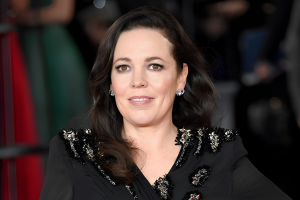
Rufus Sewell cast as Mr. Bennet in Netflix’s new Pride and Prejudice — alongside Olivia Colman as Mrs. Bennet — is a small but telling detail in a much larger cultural churn. Even in an adaptation built around five young sisters and their paramours (suitable or otherwise), the platform picked a charismatic and striking-looking older pair to play their parents, rather than casting them aside as insignificant.
The same curious thing is happening on screens everywhere. Airport displays are full of retirees solving murders, sixty-something spies returning to the field, and older women taking down crime rings or starting over in unexpected ways. The Thursday Murder Club sits beside Lessons in Chemistry. Harrison Ford headlines a comedy. Helen Mirren anchors a Western period drama. The older protagonist has become the star of the moment.
Is it nostalgia? Is it just sentimental? Or is it a long-overdue correction?

For decades, popular storytelling treated youth as the only place where ‘real life’ happened. Films revolved around chosen ones, coming-of-age arcs, twenty-something prodigies, star-crossed lovers who had to figure everything out by 30. The assumption was simple: youth is the site of possibility, middle age is the plateau, and old age is the epilogue.
But the 2020s would rewrite that scripture. People are living longer, working longer, divorcing later, moving cities later, and falling in love again later. The timeline stretched, and with it, the idea of when a life can turn. A late-life beginning no longer feels symbolic, it feels honest. Reinvention in your sixties fits the era more closely than reinvention at twenty-two.
There’s also a cultural fatigue at play. Younger generations came of age in a world that promised everything and delivered volatility instead. Millennials did all the ‘right things’ and still hit economic walls. Gen Z is already exhausted by the pressure to optimize for every moment of youth. A 70-year-old woman who decides to rewrite her life feels strangely relieving, a reminder that time isn’t a race and that agency doesn’t expire.
Experience, too, has regained its value. In moments when institutions feel unreliable and expertise is constantly questioned, competence looks almost radical. The older protagonist becomes a sort of anchor, someone who knows how to navigate uncertainty because they’ve lived through several versions of it. The Old Man works not just because Jeff Bridges plays a former operative, but because the story assumes that resilience grows with age, not despite it.
Equally important is that the shows and films themselves range across genres, rather than confining themselves to any one. Netflix’s A Man on the Inside, with Ted Danson as a widowed retiree who goes undercover as a detective in a retirement home, returned for a second season in November 2025. John Lithgow starred in Jimpa (2025) as an older gay man providing a safe space for his nonbinary grandchild. In 2026, came The Boroughs, a sci-fi series set in a New Mexico retirement community, with Alfred Molina as a grieving widower alongside Geena Davis, Alfre Woodard, Denis O’Hare, Clarke Peters, and Bill Pullman. The Marlow Murder Club joined The Thursday Murder Club, Hacks, The Diplomat, and Only Murders in the Building as shows offering nuanced portrayals of aging.
There have been no dearth of awards either. At the 2026 Academy Awards, 75-year-old Amy Madigan won her first Oscar in 2026 for Best Supporting Actress for her role as Aunt Gladys in the horror movie Weapons. The same year, 75-year-old Stellan Skarsgård won a Golden Globe for Best Supporting Actor for Sentimental Value, about an older man’s complicated relationship with his adult daughters — signs that honest portrayals of older characters with sharp edges are being rewarded as well.
Economics has shaped this shift as well. Streaming platforms discovered that older viewers are their most dependable audience. Cozy mysteries exploded into global phenomena. Stories led by women over 50, once treated as niche, now draw mass audiences. Markets tend to follow attention, and attention has drifted upward in age.
But beneath all of this sits something more cultural. For a long time, age, especially for women, was treated as disappearance. Past 40, characters were relegated to sidelines as mothers, mentors, or even cautionary tales. Today’s stories push against that. They suggest that visibility can expand with age rather than contract. They reframe later life as another act, not the closing credits.
Of course, the trend comes with its own risks. Some portrayals romanticize older characters the way earlier eras romanticized youth, turning them into quirky sages or charming eccentrics rather than complex people. Representation can flatten just as easily as it can liberate. But even with these tensions, the shift feels significant.
Maybe the rise of the older protagonist has less to do with age and more to do with possibility. The world no longer follows a neat sequence of education, career, marriage, children, and retirement. Life loops, pauses, restarts, and detours, sometimes many times over. A sixty-year-old detective solving crimes with friends in a retirement village feels right for a culture where everyone, young or old, is trying to work out what comes next.
The stories we tell about age reveal what we believe about time. And right now, the culture seems to be saying that life does not stop being interesting once it becomes experienced. It might become interesting because it is.
Perhaps that’s why these protagonists resonate so widely. They widen the horizon. They stretch the idea of when a person can begin again. And in a moment when so many people feel stuck, that stretch feels like hope.





Leave a Reply