

On a Thursday evening in New York, someone opens Netflix looking for something to watch. Instead, the home screen suggests a game, a bright, playful icon tucked between dramas and documentaries, as if it has always belonged there. Across the world, a commuter in Seoul opens a banking app and is greeted not by her balance, but by a progress bar. In London, a coffee chain asks customers to “level up” for better rewards. In Bengaluru, a learning app congratulates a student with animations once reserved for arcade victories. None of these people are “gaming” in the traditional sense. Yet, all of them are moving through systems built to feel like games.
Why is this happening? Well, perhaps somewhere along the way, companies stopped competing for attention and began competing for participation. The shift isn’t only technological. It’s also cultural, a quiet collapse of passive life, and the rise of interactive time.
For decades, entertainment relied on one-way flow with shows to watch, news to read, apps to scroll, and products to buy. But the ground beneath that model has been thinning. Streaming growth has slowed, social media has grown noisier, and content alone no longer holds people the way it used to. When stillness stopped being sticky, companies looked to the one space where engagement never dipped: games.
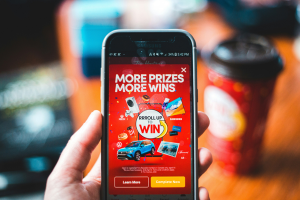
But this was not limited to video games alone. It was more about the logic behind them, the sense of entering something, influencing it, and perhaps earning your way through it.
To understand why this logic spread so quickly, it helps to remember where gaming comes from. Long before it became entertainment, gaming began as simulation. Early computer programs used to teach systems, model outcomes, and explore possibilities. By the arcade era, games had become communal, a place where people gathered the way older generations gathered around cinema. By the 2000s, games grew beyond being pastimes. They became their own worlds with rules, progression, lore, and communities. For Gen Z and Gen Alpha, games became the architecture of childhood with Minecraft servers, Roblox economies, or Fortnite concerts.
So today, when a chain like Pret A Manger in London uses levels and perks in its subscription program, or when a digital-first bank in Seoul rewards customers with streaks, badges, and animated progress bars for saving and spending, companies are tapping into the first language of the generation they want to keep.
Another reason the shift has accelerated is simply that everything has an app now. From cafés to classrooms to pharmacies and even banks, nearly every service lives behind a download icon on the same device, the smartphone. And apps don’t survive unless they are opened. Gamified mechanics like streaks, levels, badges, and challenges became a reliable way to pull people back in, sometimes every day. What began as game design has quietly become the operating system of app-based life. So now, beyond the downloads, companies also want rituals.
Once game logic escaped the gaming industry, it moved fast. Netflix hired game designers to rethink what a story could be. The New York Times discovered that people return more faithfully for Wordle than for news, with over 10 million daily players and millions of subscribers on Games bundles, a phenomenon so large that NYT’s “gaming wing” is now one of its most powerful digital engines. Airlines reshaped loyalty programs into tiered quests where every mile moves you toward a higher status. Fintech apps like Monzo, Nubank, CRED, and Groww used streaks, milestones, and XP-like progressions to teach people to save or pay on time. Even meditation platforms, designed to slow people down, added stars, badges, and daily rewards.
It wasn’t enough to capture attention anymore. Companies wanted to structure it.
IMAGE
Globally, the pattern is unmistakable. In South Korea, GS25 convenience stores run rotating app-based challenges to pull customers back in. In Brazil, Magalu built a digital ecosystem where every purchase advances you through tiers. In India, education apps like Byju’s and Cuemath normalised progress maps and trophies, making study habits feel less like effort and more like advancement. These are signs of a new cultural baseline of a life delivered through mechanics.
Another reason this resonates is that people already live inside metrics. We count steps, track sleep, monitor screen time, measure productivity, and watch our daily averages shift like weather. Gaming logic didn’t introduce quantification; it simply made quantification feel rewarding. When every aspect of life is scored, charted, or compared, levels and streaks don’t feel foreign — they feel familiar.
Part of the appeal is structural. Games offer clarity with their rules, goals, and feedback in a world where clarity is scarce. When work feels unstable, when public life shifts weekly, when the economy feels like weather, a system that rewards completion feels strangely comforting. Even a tiny gesture like collecting a point or completing a streak can feel like reclaiming a fragment of control.
And another part is emotional. In uncertain times, micro-moments of agency matter. A streak becomes stability. A task completed becomes momentum. Progress — even artificial — becomes a soft form of reassurance.

But there is also a lineage here. Cinema has experimented with immersion for decades. Disney built entire universes long before digital platforms existed. You could find their immersive worlds on your GameBoys or PlayStations. But cinema offered entry without agency. You stepped into a world but could not move inside it. Games changed that. They turned world-building into something participatory. What companies want today is the cinematic expansiveness of Disney combined with the interactive grammar of games.
While a thousand shows can entertain you, perhaps only a game-like system can involve you. And so, this is the deeper cultural shift, a move from watching to entering.
Economically, this makes perfect sense. If the 2010s ran on attention, the 2020s run on engagement loops. Participation produces more sessions, more loyalty, more data, and more predictable revenue. It transforms users from audiences into ongoing actors from customers who visit to players who return. Progress is a powerful retention strategy, streaks are stronger than notifications, and a sense of advancement outperforms any advertisement.
But there is a cost. When every service asks you to participate, autonomy blurs. When every action earns a reward, desire becomes guided. What begins as play can harden into protocol, the less interesting parts of a game can often feel like chores disguised as quests. The risk isn’t that life becomes gamified. It’s that life becomes the grind.
And yet, beneath this shift sits something more generous. Participation, at its best, is a form of meaning-making. To move inside a system and feel it move back, even in small ways, is to feel less like a spectator in your own life. A Wordle streak becomes a form of morning ritual. A savings milestone becomes reassurance. A progress bar becomes a quiet reminder that movement is possible.
Maybe that’s why this moment doesn’t feel fully dystopian or celebratory. It simply reflects a truth about how people want to move through the present. If life must be navigated, people want some say in how.
Games understood that long before the rest of the world did. Now the world is borrowing the insight. And perhaps that is why so many companies are becoming gaming companies. Not because they want us to play more, but because they sense what people are seeking. If the future is interactive, maybe it isn’t because technology demanded it. Maybe it’s because people did.




Leave a Reply