

For the longest time, India’s nightlife was all about scale. Think sprawling beach raves in Goa, packed dance floors in Mumbai, and clubs where the bass dropped harder than the covers at closing time. The bigger, the better. And while those spaces remain, lately, something quieter, more private, more personalized and possibly more lasting, has been taking hold. Across metros, holiday towns, and even smaller cities, a different kind of social space is rising.
It’s a shift that mirrors broader changes in how Indians are choosing to spend their evenings. Baithaks, jazz nights in someone’s living room, tucked-away bars with no signage — these aren’t exceptions anymore. They’re the new standard for those seeking connection over chaos, curation over crowd.
The Baithak Reboot
Once a word for informal gatherings in Indian homes, baithaks have taken on new life. Today’s versions might look like a small gig in a garden café, a supper club in a warehouse, or a Sunday poetry reading with chai, or even, in some rare delightful cases, traditional baithaks. These aren’t events that thrive on mood. The lights are soft, the music thoughtfully picked, the conversations unhurried.
And what makes them feel so fresh is, ironically, how old the instinct is. India has always had a culture of intimate, cultural gathering — of mehfils and jalsas and evenings that unfold slowly. We’re just finding new ways to do it again.
In Johri Bazaar in Jaipur, for instance, the four-generation Seth family recently opened their 289-year-old haveli to a small gathering that traded music for family history. Meanwhile, Baithaki Jaipur defines itself as a living library that treats each guest of honour as a kind of story-filled book, and invites approximately fifteen guests to experience each baithak.
In Bengaluru, Marham, a poetry-and-music collective offers intimate ticketed events that feature poetry, Sufi storytelling and personal narratives, all twined into one. G5A in Mumbai, a contemporary culture center, hosts live music gigs, poetry recitals, plays and readings, all in a tiny, beautiful space. And across India, vinyl bars such as Mumbai’s Baroke have sprouted, bringing people together for an intentional, shared retro experience.
The Intimate Dinner
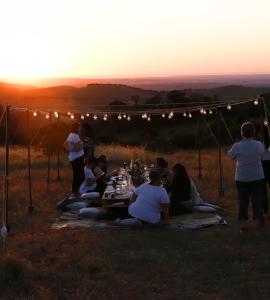
This yearning for intimacy has spilled over in the country’s dining spaces. Supper clubs are surging everywhere from Mumbai (The Find Atelier) to Jaipur (The Shared Table Supper Club), set up in homes and small, private spaces open to 10-25 people at a time. And tiny restaurants with 8 to 20 seats are creating a new kind of dining experience, where the chef, food and story take centre stage. From Bengaluru’s Guerilla Diner and Naru to Mumbai’s Papa’s and Goa’s A Table in the Hills, diners are chasing limited seats and highly focused menus.
Why Now?
The pandemic did a hard reset on what many of us seek from social life. Safety became non-negotiable, sure, but so did intention. Many of us came out of lockdowns with a craving for spaces that feel personal — and quieter.
Add to that a generational pivot. For many millennials and Gen Zers, wellness isn’t limited to fitness and food anymore. It’s about mental space, emotional closeness, and slower rhythms. The classic “night out” just doesn’t hit the same anymore.
And then there’s social media. Ironically, the more performative it gets, the more people seek what feels real — that one perfect candlelit corner, the acoustic set no one else heard, the off-the-grid party that wasn’t broadcast to death.
“
For many millennials and Gen Zers, wellness isn't limited to fitness and food anymore. It's about mental space, emotional closeness, and slower rhythms.
”
There’s also a shift in how we define social status. It’s more about being part of something that feels special now. Maybe even secret. The new cachet is belonging: to a circle, a vibe, a space that knows your name and your drink order. Artists are feeling it too. DJs, musicians, even chefs say they get more out of smaller rooms, everything from a deeper connection to a freer canvas. The room really listens, and that changes everything.
For venues and hospitality folks, this vibe shift is a design brief. Instead of fitting in more tables or louder speakers, the focus is on storytelling, setting, and soul. In Goa, for example, that’s translated into villa parties, curated pop-ups, and boutique properties that double as cultural venues. It’s not about packing the house — it’s about filling it with the right kind of energy.
From the looks of it, this isn’t just a post-COVID phase. It’s part of a larger cultural move toward reclaiming time, space, and connection. But there’s a caveat. Intimacy can sometimes tip into exclusivity. If these spaces are to thrive in the long run, they’ll need to stay open — not just to a niche crowd, but to everyone.
For now though, the message seems to be clear: India’s social life is slowly trading the neon for the nuanced. And in that shift, it’s building something far more lasting and interesting.





Leave a Reply