

For generations before the millennials, translated literature in India was often synonymous with the works of European authors: Tolstoy, Dostoevsky, Camus, Cervantes, Hugo, Kafka. However, today’s bookstores will tell you a different story.
Japanese and South Korean fiction (translated to English) has become increasingly popular, and younger generations of readers are beckoned by stories set inside mysterious cafés in Tokyo, Japanese neighborhoods famous for their bookshops, convenience stores beside the sea, and the streets of South Korea’s capital, Seoul.
Last year, at the Kolkata International Book Fair, publishers reported particularly strong interest in Japanese and Korean fiction among Gen Z and younger millennial readers, linking the shift partly to the popularity of manga, anime, K-pop and K-dramas. While writing about trends, a visitor to the book fair noted, ‘Relatively new to the trends list is South-East Asian literature, specifically Korean and Japanese literature, which, thanks to the influence of writers like Haruki Murakami and Han Kang, is also doing relatively well in terms of sales. Books translating the works of Hayao Miyazaki into text have also garnered attention, thanks to Gen-Z’s love for the Studio Ghibli films.’
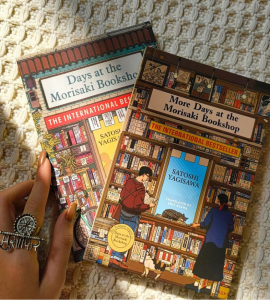
One might argue that literature from Japan has long been privy to international prestige through writers such as Yukio Mishima, Yasunari Kawabata and Haruki Murakami. What appears different about the current wave is the popularity of a more subdued and possibly gentler category of translated fiction which is centered around themes of comfort, healing and everyday life.
Days at the Morisaki Bookshop by Satoshi Yagisawa, for instance, has sold more than 3,00,000 copies in India, making the country its second-largest market after the UK. While attending a literature fest in India this year, Yagisawa noted “I was very surprised and happy to learn that my books have such a big fan following here. I was encouraged to come here and am really happy that Indians have been so welcoming towards me,” Books such as Michiko Aoyama’s What You Are Looking for Is in the Library and Durian Sukegawa’s Sweet Bean Paste use similar themes i.e. libraries, bookshops, food and small human encounters to explore loneliness, change and belonging.
A recent selection by Tokyo Weekender offers several more introductions to this particular mood. Sonoko Machida’s The Convenience Store by the Sea is based on a 24-hour convenience store called Tenderness, where an assortment of workers and customers gradually form unexpected connections. Yuta Takahashi’s The Curious Kitten at the Chibineko Kitchen combines three of the most recognizable ingredients of Japanese ‘healing fiction’ — food, cats and grief — as its protagonist discovers a seaside restaurant serving remembrance meals that briefly reconnect diners with those they have lost. Noriko Morishita’s memoir Every Day a Good Day reflects on what 25 years of studying Japanese tea culture taught her about patience, attention and accepting the gradual nature of understanding.
The appetite for Japanese books has also been fuelled by a much larger global infrastructure of Japanese cultural consumption. Books Kinokuniya, founded in Shinjuku in 1927, has helped make Japanese publishing culture internationally visible. Today its network encompasses 71 stores in Japan, 17 in the United States and another 19 across countries including Singapore, Malaysia, Thailand, Australia, Taiwan and the UAE, making the total more than 100 stores. Its international branches are stocked with Japanese and English-language books along with manga, stationery and cultural products. The Kinokuniya store in New York City is located in the heart of Manhattan, close to Bryant Park and the Stephen A. Schwarzman Building of the New York Public Library — a spot that is bound to attract footfall to the store. In this way, the concept of a Japanese bookstore itself has become a cultural export.
South Korean literature has arrived through a somewhat different route. The rather accelerated popularity of K-pop and K-dramas across the globe has provided Indian audiences with familiar ways of approaching South Korea. BTS, Blackpink and K-dramas have introduced viewers not simply to entertainment (read: soft romances) but also to Korean food. The late Baek Se-hee authored I Want to Die But I Want to Eat Tteokbokki. The content of the book is centered around mental health issues and therapy, and yet the title is one that seeks to evoke a feeling of comfort through the mention of food.
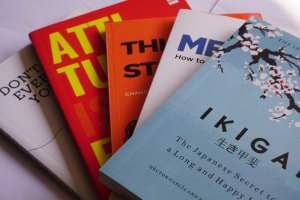
Add to that the keenness that many young Indians now show towards learning the language and adopting their sense of fashion. For those who identify as readers, literature becomes the next stage of that curiosity: having encountered South Korea through a screen, they are curious to see how it reads in print.
The books themselves, however, have established identities independent of Hallyu (The Korean wave). Min Jin Lee’s Pachinko became a major success among Indian readers, while Han Kang’s The Vegetarian was an introduction for many to the stranger, darker possibilities of contemporary Korean fiction. After Han Kang received the 2024 Nobel Prize in Literature, Indian bookstores experienced a surge in demand for her work. Cho Nam-joo’s Kim Jiyoung, Born 1982, meanwhile, has found readers through its exploration of gender and the expectations placed upon women in contemporary Korean society.
What has emerged, then, is more than a passing fascination with two countries and their culture. Japanese and Korean literature are expanding the definition of what it means to have a translated bookshelf in India. And perhaps their popularity also reveals what many contemporary readers here are seeking: stories that might be culturally unfamiliar and yet resonate with them emotionally.





Leave a Reply