

For young, status-conscious Indians, sneakers have become the new collectible. The craze began gathering pace around 2016, when Nike and Adidas expanded their general releases across the country, and Anand Ahuja launched VegNonVeg, India’s first multi-brand sneaker boutique. A decade on, the market is estimated at nearly $3.9 billion and is projected to approach $6 billion in the early 2030s.
But for a growing cohort of Indian sneakerheads, the appeal of building a sneaker collection is no longer its rarity or its cost. Instead, it is all about the story behind the shoe and how it makes them feel. Just in time, then, for the slew of homegrown sneaker brands that are popping up all over our social media. These brands use Indian material, and pull from South Asian inspiration – ikat, block prints, rangoli designs – turning the sneaker into a status symbol in itself.
These sneakers sit between two extremes. On one side, international brands with sophisticated storytelling but little connection to Indian culture. On the other are products that lean so heavily into ‘Made in India’ that they turn into souvenirs rather than wearable lifestyle products.
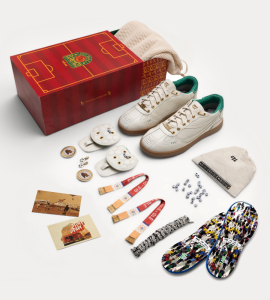
Gully Labs, the Delhi-based label founded in 2023 by Arjun Singh and Animesh Mishra, is betting that the answer lies somewhere in between. Its proposition is straightforward: Indian identity can be a source of design and storytelling without becoming a gimmick. The brand has emerged as one of the homegrown names attracting attention in India’s increasingly crowded sneaker market, releasing a new drop roughly every 60 days. Its designs use incorporate everything from rangoli motifs, Devanagari script and, in one case, a boot inspired by Kerala’s chundan vallam, or snake boats.
The result is an attempt to make an Indian sneaker that feels less like a souvenir and more like a statement of contemporary identity.
For Singh, the shift was cumulative. Studying in Australia, he watched a sneaker culture where “every shoe had a story… People knew why they were buying what they were buying.” Watching international brands lift Indian textiles and handicrafts was deeply upsetting: “We were paying hundreds of dollars to have our own culture sold back to us.” Coming home, he found manufacturing muscle without design confidence: “India didn’t lack craftsmanship, it lacked confidence in its own design language.”
Mishra, who left Bain to build Gully Labs, says what convinced him was customers “wanting to know why the shoe existed. That’s when I knew we weren’t building another sneaker company. We were building a brand.”
“Five years ago, most conversations around sneakers in India started with ‘How do I get this pair?’” says Singh. “Today they’re starting with ‘What does this pair say about me?’”
This then, is the real marker of change in the Indian sneaker scene. Not the profusion of international brands, but homegrown ones finding their identity and their audience. Consumers were no longer buying just logos. They were buying stories, design and identity.
Social media made authenticity impossible to fake. Consumers nowadays are immediately able to tell when a design feels forced. Sriraam Padmanabhan, who leads brand strategy at Gully Labs, ties this to a generational break from looking West for cultural approval. For the longest time, India used to look towards the West until younger generations began to question that, thanks to the Internet: “suddenly artists start to emerge from their living rooms and bedrooms and… find an audience.”
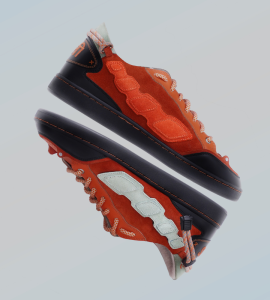
The sneaker landscape is changing incontrovertibly, but hurdles still abound.
For one, pricing psychology plays a big role. “When a Nike or an Adidas comes here and sells something for Rs 5,000, there’s an immediate acceptance of quality,” says Padmanabhan. “But when an Indian brand comes in and does all the same things, there’s a trust barrier we have to go through.” This, even though Indian artisans and craftspeople can create pretty much everything any North American brand does.
Padmanabhan also cites pushback from within sneaker circles themselves, for being too desi. “It’s almost this resistance that sneaker culture should be western and not Indian,” he says, comparing it to the skepticism that Indian musical acts like Indian Ocean used to face: “It takes a long time. We just keep convincing people that we are coming with great intentions.”
Reflecting on Gully Labs’ U.S. pop-ups, Singh says the experience confirmed something he had believed all along: “People don’t connect with products just because they’re Indian; they connect because they’re authentic.” Padmanabhan attributes the diaspora’s warmer reception to distance itself: “because they’re one removed in some ways… they see it much better.” The pop-ups were “really encouraging,” he says, enough that Gully Labs is now planning “exclusive sort of artist collabs with Indian-American artists.”
But this is much larger than a singular brand. The bigger story here is that the aesthetic vocabulary of a very urban shoe reverberates not just within the North American diaspora, but also throughout smaller cities around India. Tier II and III cities are connecting with homegrown sneakers perhaps because the stories and crafts feel familiar to them.
This can happen only when Indian sneaker identity draws from lived material, not iconography. “An authentic Indian sneaker brand isn’t one that puts random motifs or tricolours on a shoe,” Singh says. “It’s one that starts with a story that could only come from here.” He gestures at Gully Lab’s Kulfi collection — built around “the ordinary Indian memory” of waiting for the kulfi vendor — and the Kara collection, inspired by Karnataka’s tea plantations and the state’s Kasuti embroidery, as the clearest tests of that idea.
As Padmanabhan puts it: “Let’s stop borrowing culture, let’s just start to celebrate what we have — and I think what we have is truly cool.”





Leave a Reply