

Imagine, if you will, an evening in a Bengaluru household. A daughter scrolls through a Korean thriller in the bedroom; her brother is three episodes into a Japanese anime series on his phone; her mother has a Malayalam crime drama paused in the kitchen; the television in the living room is blaring the latest Bollywood blockbuster for her dad. The entire family used to gather around one big television screen; once an evening ritual, it has now shattered into as many screens as there are family members.
For a country as polyphonic as India, Bollywood has long had an outsize sway over its cinema screens. No more. Star-spangled films now perform unevenly at the box office, and the reason is not, as teeth-gnashing producers sometimes grumble, piracy or poor marketing.

Covid-19 changed many things about India, not least amongst them, the country’s viewing habits. Knuckled into watching OTT films and shows, Indians discovered Korean dramas, Spanish thrillers, German mysteries and Japanese anime.
Streaming platforms, sensing captive audiences, invested in dubbing and subtitles at a scale that made the original language nearly irrelevant. What began as a lockdown habit has since congealed into a watching preference.
English, once the language through which Indians accessed global culture became merely one option among many. A new Hindi film release competes not against last month’s Hindi release but against Squid Game, The Devil Wears Prada 2, a Marathi romcom or a Malayalam supernatural thriller.
This in no way means that star power has ebbed completely. A jingoistic, big-budget macho film Dhurandhar: The Revenge, starring Ranveer Singh and Akshaye Khanna, raked in collections of ₹1,850 crore worldwide, no mean feat. Perhaps unsurprisingly, younger male viewers predominated.
However, it was the only Bollywood film that even came close to such numbers.
Amazon Prime Video’s Made in India: A Titan Story and Netflix’s India’s Got Latent both drew enormous audiences this year even as regional cinema — Malayalam, Marathi, Gujarati — found viewers well beyond its home states.
The most surprising of all is the rise of anime, which offers the clearest evidence of the new geography of Indian taste. Once confined to pirated downloads and online forums, it has become one of the country’s fastest-growing fandoms, and not in the cities one would expect. Nagpur ran its own anime convention before many larger cities attempted one. Japanese films now open in towns that had never screened Japanese animation before. Comic conventions once devoted to superheroes now reserve entire halls for manga. Ramen shops and Naruto backpacks have followed.
These too, have been Indianized. Fans are adding an Indian taste to anime characters through art and AI reels. This is globalization created by fan clubs and convention organizers, rather than handed down by any big budget Bollywood studio.
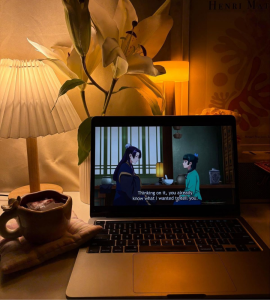
Back in the fragmented living room, the threshold for spectacle has risen along with everything else; it must now be earned, not merely advertised.
What Indians watch has become, in other words, a rough census of what they will no longer tolerate: a familiar face standing in for a good story, a single industry standing in for the world. In a country long defined by the boundaries of language and geography, the algorithm has found a shared taste that owes nothing to either.




Leave a Reply