

A pointed arch. A flying buttress. A gargoyle. A ribbed vault. These familiar features of Mumbai’s Gothic Revival architecture seem almost designed to be miniaturised into pendants, brooches or charms. Likewise, the rounded balconies, porthole windows and sunburst motifs of the city’s Art Deco buildings lend themselves naturally to cabinets, furniture and decorative objects. Increasingly, designers are treating Mumbai’s architecture not simply as heritage to be preserved, but as a vocabulary that can be worn, displayed and collected.
South Mumbai offers one of India’s most recognisable architectural landscapes. Its Gothic Revival buildings, adapted to local climate and built from locally available materials, have long attracted visitors to the area’s heritage souvenir shops. But where most souvenirs stop at magnets, t-shirts and coffee mugs, some designers are aiming for something more enduring.
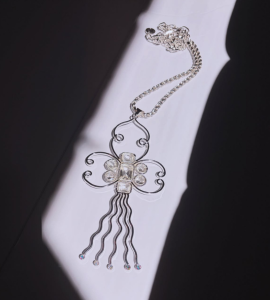
One example is Valliyan’s Bombay Gothic collection, which translates Gothic Revival motifs into pendants, brooches and cuffs. Like many of the brand’s earlier collections, including Metal Crush, Hot Tropics, Hip Hop and Evil Eyes, it draws on a recognisable visual language, but this time its source material is the architecture of South Mumbai. Pieces named after the Sistine Chapel echo the pointed-arch doorways found across the city’s buildings.
Nitya Arora, who founded the brand nearly 18 years ago, grew up on Marine Drive, and the Gothic features of the schools she attended left a lasting impression. She says these structures still hold her interest in a way newer buildings don’t. Asked who she designs for, she says: “People with a personality and imagination, an open mind, who are sure of themselves and know who they are and enjoy being unique rather than having mob mentality as you often see on Instagram and Pinterest. Individuality has largely died. I design for people who enjoy beauty and expressing themselves through art and fashion.”
Among the best-known examples of this style are the Brihanmumbai Municipal Corporation building, designed by Frederick William Stevens and completed in 1893; Chhatrapati Shivaji Terminus (formerly Victoria Terminus), finished in 1887 to mark Queen Victoria’s Golden Jubilee; and the Rajabai Clock Tower on the University of Mumbai campus. All three have shaped Arora’s design sensibility.
Similarly, brands such as Mysticum Luna, which retails in India, or Donna Veverka’s brand of jewellery, based in Boston, also miniaturize Gothic Revival-inspired motifs into jewelry. On Pinterest too, it is an aesthetic much sought after, with search results turning up multiple options.
If Gothic Revival supplied the city’s monumental identity, Art Deco shaped its everyday life. Art Deco, short for arts décoratifs, spread internationally through the twentieth century, appearing not just on buildings but on bridges, trains, trucks and radios. In Mumbai, most Art Deco construction dates to the 1930s through 1950s, and it transformed Marine Drive, Churchgate and the Oval Maidan into one of the largest concentrations of Art Deco architecture anywhere in the world. Buildings along Marine Drive carry names like Framroze Court, Keval Mahal, St. James’ Court and Zaveri Mahal. Rather than copying European precedents directly, local architects adapted the style to Bombay’s tropical climate and cosmopolitan culture, favouring rounded balconies, streamlined facades, porthole windows, sunburst motifs, chevrons, stepped ziggurats and curved corners.
Gothic Revival architecture could be associated with imperial authority, since it was the style seen in monumental civic institutions—public education, legal bodies, administration—bearing a semblance of grandeur. Art Deco, on the other hand, could be associated with the day-to-day life of people residing in Bombay: apartment buildings, cinemas, commercial blocks, many of them seen during commutes along Marine Drive, overlooking evening promenades and continuing to house generations of residents.
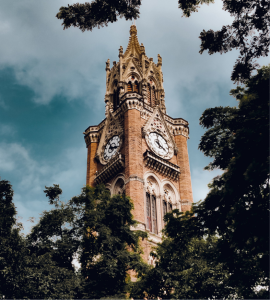
It is this emotional familiarity that has made Mumbai’s Art Deco heritage increasingly attractive to contemporary designers and luxury brands, who, rather than reproducing historic buildings in literal form, are sourcing their visual inspiration from what they see around them, then translating those visuals into consumer objects.
Bobby Aggarwal’s Marine Drive Graffiti collection of limited-edition bar cabinets is an example of this approach. Inspired by landmarks around Churchgate, Marine Drive and the Oval Maidan, including Metro Cinema and Liberty Cinema, the collection distils recognisable architectural features such as bas-relief façades, stepped forms, chevron patterns and curved silhouettes into furniture that functions simultaneously as design object and cultural artefact.
Aggarwal himself describes the collection not as a recreation of Art Deco but as a “dialogue with the city,” suggesting that the cabinets reimagine the memories associated with architecture. In his works, one also finds illustrations of balconies, parapets, windows, drying clothes, air-conditioners, yoga mats, pigeons and street furniture, meant to evoke the lived realities of Mumbai’s residents through the elements that interact with the structure of the building. The cabinet becomes a portable fragment of Mumbai’s urban identity. Buyers are therefore not only acquiring a functional piece of furniture but also an emotional connection to the city’s architectural past.
It would be easy to dismiss these objects as another example of heritage becoming merchandise. Yet they also reveal something about the changing relationship between cities and luxury. Increasingly, consumers are buying not simply craftsmanship but memory. Gothic Revival and Art Deco have become more than architectural styles; they have evolved into visual identities that can be worn, displayed and collected. In that sense, Mumbai’s skyline no longer exists only in stone and concrete. It now lives in cabinets, brooches and pendants, carrying fragments of the city into people’s homes and wardrobes.




Leave a Reply