

There’s no denying India’s love for dairy. Ghee, butter, milky mithai, buttermilk, yogurt – the evidence is everywhere. But what about Indian cheese?
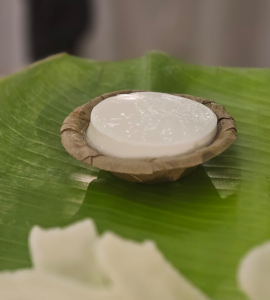
Paneer of course is indelibly twined with Indian cooking, but in fact the country is home to multiple iterations of cheese: Ladakh’s chhurpi, traditionally made from yak milk, chewy, dense and smoky; of course the Parsi community’s voluptuous topli (basket) paneer, served in a pool of salt water; crumbly, smoke-sluiced Bengali Bandel discs; Jammu’s kalari cheese, supple and stretchy, usually eaten pan fried.
This makes eminent sense since India is the world’s largest producer of milk, accounting for nearly a quarter of global production. Yet, for decades, the only pan-Indian staple was processed Amul cheese, its salty, gooey texture a beloved accompaniment for everything from pizzas to dosa stuffing.
But the tide is turning, and a new generation of artisanal cheesemakers is helping Indians rediscover the country’s dairy traditions while building a market for high-quality, locally-made cheeses. In the process, they are also earning recognition on some of the world’s biggest stages.
In fact, the rise of artisanal cheesemaking began in the 1970s, with cheeses such as Gouda and mozzarella. Their products found local audiences but rarely travelled beyond the regions where they were made.
The past five years, however, have brought a noticeable shift. Pandemic-era disruptions elbowed consumers, retailers and restaurants to look closer to home for ingredients; the fromageries levelled up, and consumers began to empty their pockets.
According to market research firm IMARC Group, India’s cheese market was worth 88.9 billion rupees in 2023 and is projected to grow to more than 512 billion rupees by 2032. Of this, the artisanal segment is nascent, but burgeoning. Across India, artisan cheesemakers such as the Spotted Cow Fromagerie, Begum Victoria, Eleftheria and Käse are crafting products that rival their European counterparts.
Not only is there a stampede for cheese by customers looking to buy cheeses online, there is now a huge B2B demand as well. “Last year, 77% of our business was B2B,” says Namrata Sundaresan of Käse, who supplies to Papa’s, the Oberoi group of hotels and a host of others. There is now also a swelling pool of eaters who wish to learn cheese-making – Sundaresan takes class after class in Ooty (and online). Smoked Cheddar, Gouda, Pepper Jack, Camembert, Brie, Feta, Belper Knolle – this is the new Indian palate.
And the world is beginning to sit up and take notice.
In April 2026, PM Modi tweeted:
“Cheese from India makes its mark globally… India made an impressive debut at the Mundial do Queijo do Brasil 2026, which is a vibrant international competition for cheese and dairy products. Four Indian products won medals, including 1 Super Gold, 2 Golds and 1 Silver. The Super Gold was won by Eleftheria Gulmarg (Brie Style), the Golds were won by Yak Churpi-Soft, Nordic Farm, Leh, Ladakh and Eleftheria Brunost (Whey Cheese) while the Silver was won by Eleftheria Kaali Miri (Belper Knolle Style). Congratulations to Mausam Narang and Thenlay Nurboo. Such successes strengthen India’s artisanal dairy sector on the world stage.”
The cavalcade of prizes point of course to the rising prominence of Indian fromageries on the global stage. But they illumine something else too: not only are Indian cheesemakers the cream of the crop, indigenous Indian cheeses such as chhurpi are now rubbing shoulders with the Camemberts of the world. Thus is the Western gaze inverted.
Many fromageries are also incorporating distinctly Indian flavours into European styles. One of Käse’ semi-hard cheeses is studded with fenugreek seeds, then aged. Eleftheria’s Belper Knolle-style cheese is daubed with crushed garlic, Himalayan pink salt, and Kerala black pepper. And at The Cheese Collective, Mansi Jasani infuses cabécou with pav bhaji masala. Meanwhile, Spotted Cow Fromagerie cheekily winks at their cheeses’ hallowed origins by naming them Bombrie, Camembay, and Tomme de Bombai.
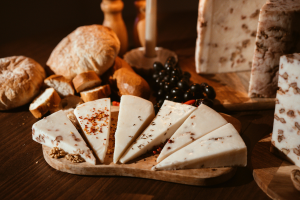
This also reflects the current moment in Indian fine dining more broadly — creators beholden to a yoke of two origins, plucking and borrowing from and subsuming Indian and international flavors with abandon. Cheese purists may scoff, but the suggestion that there is only one standard, preserved in aspic, for what a cheese should be, is specious. Cheese, like everything else, adapts and acclimatizes to its home, wherever in the world it may be.
Clearly, Indian restaurants subscribe to this view as well, since the border-bending inventiveness of cheese-besotted chefs seems endless. Bombay Canteen takes salan, a dish foundational to Hyderabad, and plops a burrata into it. In Bengaluru’s LUPA, a slow-smoked Roma tomato galette is coupled with a Five Cheese Boursin on thinly-rolled puff pastry. At Bandra Born in Mumbai, creamed stracciatella is served with podi butter and cumin focaccia.
But perhaps at the end of the day, all we need are hunks of bread torn by hand, the bright sweet crunch of a perfectly ripe tomato and a plate of cheese – crumbly, gooey, oozing, melting – for the perfect meal.





Leave a Reply