Kolhapuri chappals have been worn across Maharashtra for centuries, mostly by people who needed shoes that could survive heat, dust, and long days on their feet. They are sturdy, hand-cut, and made to last. In 2019, the craft received Geographical Indication status, a legal recognition that tied the sandal to place, method, and community. In 2025, a near-identical silhouette appeared in Prada’s men’s collection.
The shoe on the runway was stripped back. Thin leather straps crossed the foot. The sole was flat. The colors stayed within beige and brown. For many Indian viewers, recognition came instantly. Kolhapuris are sold in weekly markets, outside temples, and along highways, often by the same families who make them. Prada’s show notes did not mention that lineage. The backlash that followed focused less on pricing and more on omission. A public apology arrived days later.
Scenes like this recur in fashion with quiet regularity. Objects that begin as practical or local tend to resurface later as luxury items, separated from their original makers. The transformation is rarely accidental.
Long before the Prada episode, Paul Poiret built a Parisian craze around what he called “harem pants.” The loose trousers drew loosely from garments worn across parts of the Middle East and South Asia. French newspapers debated their propriety. Critics called them indecent. Poiret, meanwhile, became a celebrity. The people and places that shaped those silhouettes remained largely unnamed.
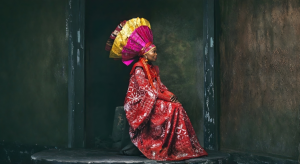
By the middle of the twentieth century, American counterculture reached for similar references. Hippies wore kurtas, Nehru jackets, and paisley prints. Paisley had already traveled far. The motif began as the Persian boteh, appeared in Kashmiri shawls, and later entered mass production through Scottish textile mills. In 1960s America, it came to signal rebellion and nonconformity. In Kashmir, weaving continued as a livelihood, disconnected from the pattern’s new cultural meaning abroad.
Within India, fashion reproduces comparable dynamics. On the runways of Delhi and Mumbai, mirrorwork from Kutch, ikat from Odisha, and phulkari from Punjab appear season after season. Fashion coverage often frames these elements as modern reinterpretations. The artisan clusters responsible for sustaining these traditions receive far less attention than the designers presenting them.
Cinema has played a role here as well. Bollywood costume design regularly borrows from regional dress. The nauvari sari of Maharashtra and the phanek of Manipur have both appeared on screen, reshaped for choreography and visual drama. Once adapted for film, garments tied to daily life or ritual lose specificity. They become visual cues rather than lived forms.
Social hierarchy shapes these exchanges further. Dalit and Adivasi designs, including tattoos, beadwork, and woven textiles, surface in urban boutiques as styling statements. The same elements can carry stigma when worn by members of the communities they come from. Context changes meaning.
Indian fashion also reflects broader regional circulation. The salwar kameez, worn across South Asia, is common in Indian wardrobes. The angarkha, once tied at the side and worn as everyday clothing, often appears in collections under broad labels. At the same time, Indian luxury houses borrow freely from Western fashion, including tuxedo tailoring, Art Deco motifs, and standardized eveningwear. The flow moves in multiple directions.
Some designers have tried to approach this terrain with more structure. Stella Jean has worked with artisan groups in Haiti and Burkina Faso, developing collaborations that include attribution and financial return. In menswear, labels such as Wales Bonner and Bode draw from Caribbean tailoring and American workwear through archives, oral histories, and named sources rather than anonymous reference.
The same elements can carry stigma when worn by members of the communities they come from. Context changes meaning.
In India, smaller labels offer a similar counterpoint. Raw Mango and Pero regularly identify weavers and workshops in their campaigns and catalogues. Craft appears as a visible relationship, attached to people and place rather than treated as texture alone.

The tensions around cultural use extend beyond South Asia. In 2019, Gucci listed a turban for sale on Nordstrom’s website. Sikh communities in the United States and elsewhere objected, citing the turban’s religious significance. The listing was removed. In Mexico, the Mixe community has challenged designers over the use of traditional embroidery patterns. Yoruba adire cloth from Nigeria appears in museums and on runways even as many producers remain economically vulnerable. Moroccan caftans drift in and out of Western trend cycles, often described as bohemian, detached from their everyday and ceremonial use.
These episodes point toward a shared problem. Visibility, credit, and compensation rarely move at the same speed as aesthetic influence. Moodboards and acknowledgements do little on their own. What lasts are contracts, royalties, and names that appear beyond press releases.
Fashion depends on circulation. Cloth moves. Silhouettes move. Symbols move. When that movement leaves people behind, history thins out. The question is no longer whether borrowing will continue. It already has. The question is whose hands remain visible once the borrowing is complete.
Leave a Reply